General News of Tuesday, 24 March 2026
Source: www.ghanaweb.com
Catholic Bishop Conference 'enters' Wesley Girls-Muslim student case

The Ghana Catholic Bishops' Conference has filed an amicus curiae brief in the Supreme Court suit challenging the ban on hijabs and other Islamic rites by Wesley Girls' Senior High School.
The affidavit was filed on behalf of the bishops’ conference by Most Rev Fr Joseph Kwaku Afrifah-Agyekum, the Bishop of Koforidua and Episcopal Chairman for Education of the Catholic Bishops’ Conference.
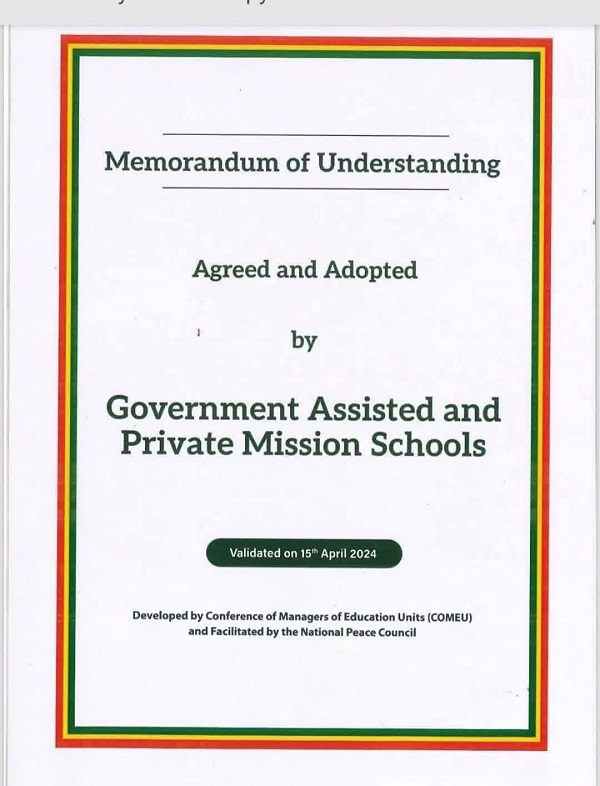
In the affidavit, Bishop Afrifah-Agyekum presented evidence of the Memorandum of Understanding (MOU) to Guide Religious Tolerance in Schools, Agreed and Adopted by the Government-Assisted and Private Mission Schools, which was validated on April 15, 2024.
“I am advised by the Church's lawyers and verily believe that my present affidavit is required to verify the facts and documents relied upon in the amicus curiae brief. I hereby depose to my instant affidavit verifying the facts contained in the statement of case filed for and on behalf of the Church.
“The only document referred to in the amicus curiae brief is the Memorandum of Understanding to Guide Religious Tolerance in Schools, Agreed and Adopted by the Government-Assisted and Private Mission Schools, validated on April 15, 2024, which is marked CS,” part of the affidavit filed in the Supreme Court by the conference reads.
The move is expected to assist the court in its determination of the matter.
About the suit:
Shafic Osman, a private citizen, filed a suit at the Supreme Court on December 24, 2024, against the Office of the Attorney General, the Ghana Education Service, and the Board of Governors of Wesley Girls' Senior High School, under the Supreme Court's original jurisdiction, invoking Articles 2(1)(b) and 130(1)(a) of the 1992 Constitution.
The suit centres on allegations that Muslim students are barred from wearing the hijab, fasting during Ramadan, and observing other Islamic rites, actions that the plaintiff says violate constitutional guarantees of freedom of religion.
The plaintiff is seeking multiple declarations, including a ruling that the school's policy of compelling students to practise a compulsory school religion in a public institution contravenes Articles 21(1)(b), (c), and 26 of the 1992 Constitution.
Catholic Bishops, Christian Council wade into Wesley Girls Muslims' rights debate
He further contends that the restrictions conflict with international human rights standards recognised under Article 33(5).
In addition to the declarations, the plaintiff wants the court to direct the Ghana Education Service to develop constitutional guidelines to regulate religious practices across all public schools.
About the MOU
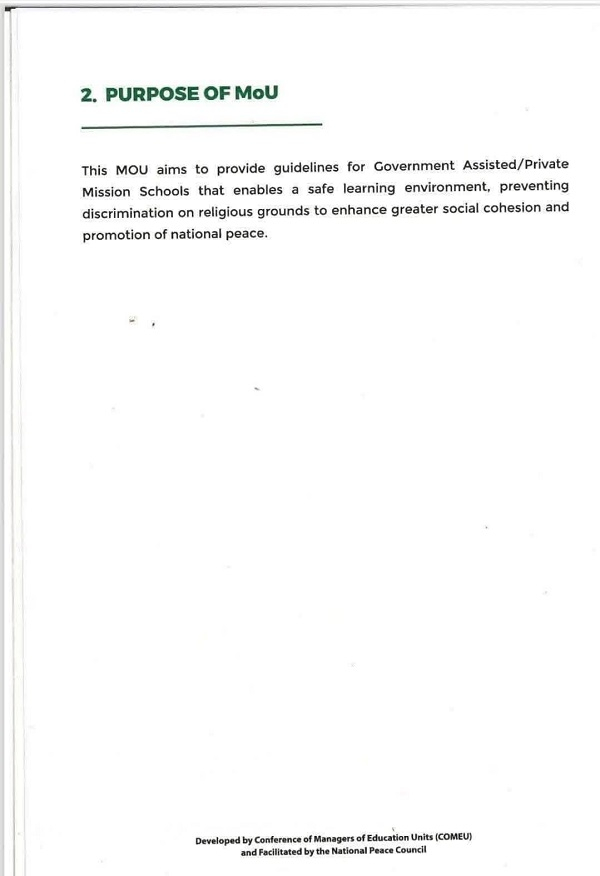
The MOU, which was agreed and adopted by Government-Assisted and Private Mission Schools and validated on April 15, 2024, was developed by the Conference of Managers of Education (COMEU), facilitated by the National Peace Council.
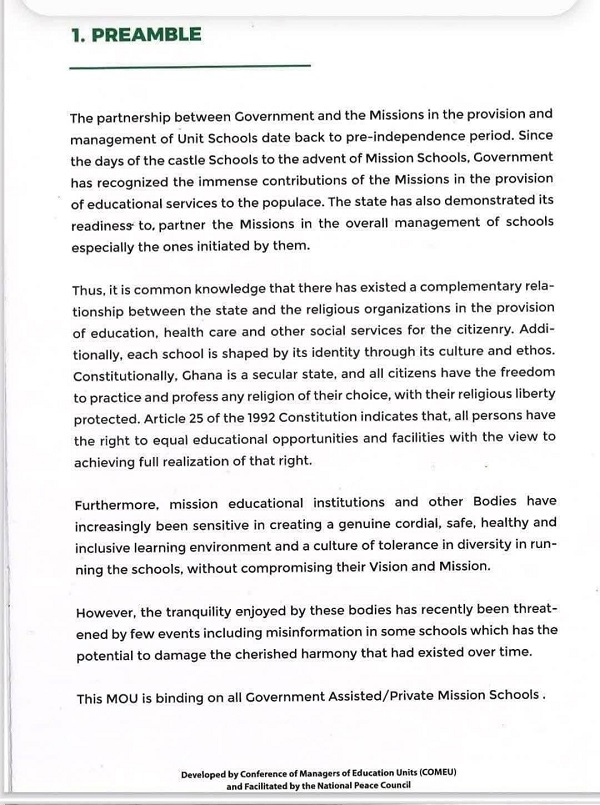
It outlined measures for the practice of various religious beliefs in the country's mission schools, ensuring that students practise their respective faiths.
It pointed out that students must be made aware of the values of the schools they are choosing and be ready to accept them before opting to attend these schools.
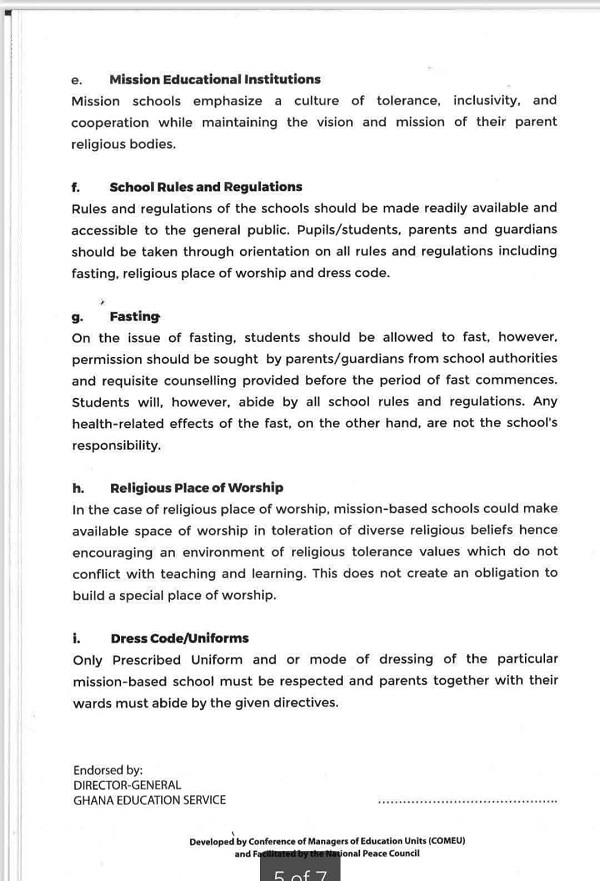
The document especially touched on the issue of fasting, stating that students are allowed to fast in accordance with their faith, but they still have to obey the laws of their schools while observing their fast.
On the issue of dress code, the MOU pointed out that only provided uniforms must be respected by parents and students.
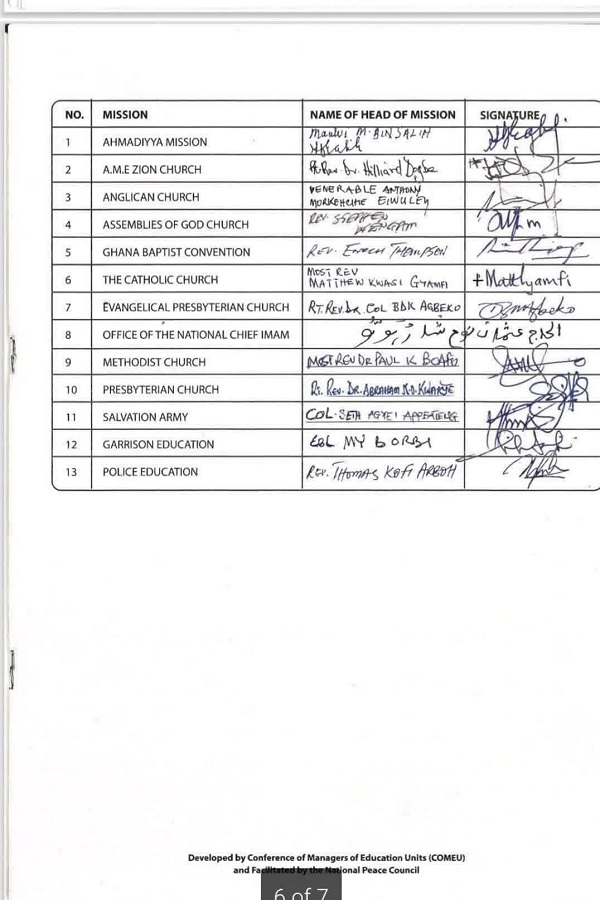
The MOU was signed by the leaders of the various faith-based organisations in the country, including the Catholic Church, the Methodist Church, and the Office of the National Chief Imam.
Read the full document below:
BAI
Children of a popular pastor identified as victims of the tragic Tema helicopter crash