The Cape Coast Teaching Hospital (CCTH) has, for years, grappled with rising cases of stroke without the benefit of a specialised treatment facility.
The facility often received patients in critical condition as dedicated health professionals worked under challenging circumstances to save lives, amidst the absence of a fully equipped stroke unit.
Relief has, however, come to both patients and caregivers with the inauguration of an eight-bed Stroke Care Unit on Tuesday, dedicated to providing specialised and timely intervention for stroke cases.
The Unit, funded and supported by the Korea Foundation for International Healthcare (KOFIH) Ghana, is equipped with modern monitoring systems, new hospital beds, and diagnostic tools.
Officials from KOFIH and CCTH inspected the facility before its official unveiling.
At the ceremony, hospital authorities recounted the journey towards establishing the unit, expressing optimism that it would significantly reduce preventable deaths, enhance recovery outcomes, and strengthen neurovascular care.
Dr Eric Ngyedu, Chief Executive Officer of CCTH, said the partnership between KOFIH Ghana and the hospital stemmed from a shared vision to minimise mortalities and long-term disabilities associated with stroke. Through sustained funding, technical support, and collaboration, the vision had been realised, he noted.
Describing the unit as “a gift of life” to residents of the Central Region and beyond, Dr Ngyedu said CCTH had also invested in training healthcare personnel to ensure high standards of operation.
He anticipated notable reductions in stroke-related deaths within the first year, alongside improved quality of life for survivors and their families.
Dr Ngyedu added that the broader goal was to position CCTH as a leading centre for stroke and neuromuscular care in Ghana and across West Africa.
Mrs. Seoyon Kook, Deputy Country Director of KOFIH Ghana, reaffirmed the organisation’s commitment to strengthening Ghana’s healthcare system.
Stroke, she said, remained one of the country’s leading causes of death and disability. Establishing the dedicated unit at CCTH would therefore improve survival, rehabilitation, and long-term recovery outcomes.
She underscored the importance of strong partnerships in advancing healthcare, noting that the collaboration with CCTH continued to demonstrate KOFIH’s dependability.
Dr Romeo Boaheng, the lead of the project, outlined plans for rapid-response protocols to ensure swift assessment and intervention the moment a stroke patient arrived. Improved diagnostics and coordinated care pathways, he said, were expected to drastically reduce complications.
Stakeholders later toured the facility before it was officially opened for operation.
Witnesses give details of Mamprobi Polyclinic kidnapping incident
Health News of Thursday, 19 February 2026
Source: GNA
CCTH unveils Stroke Unit to help reduce long-term disability, preventable deaths
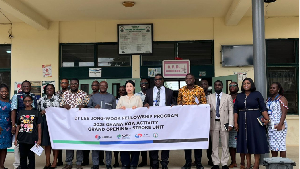 The dignitaries at the Cape Coast Teaching Hospital when the place was unveiled




Entertainment