A Ghanaian media personality and gender advocate has called on women to shift their focus from demanding equal rights to building systems that ensure equality.
Josephine Oppong-Yeboah said progress would depend on creating structures that guarantee rights, rather than seeking recognition from existing power systems.
“It is not a matter of asking permission to be equal, but building systems that make equality a reality,” she said.
Her comments follow her participation in the 70th session of the Commission on the Status of Women (CSW70), held at the United Nations headquarters.
The annual meeting, which focuses on advancing gender equality, saw an unusual break from tradition this year.
For the first time in decades, the Commission’s Agreed Conclusions; a key global policy document, were not adopted by consensus, but instead passed through a recorded vote.
The resolution was approved with 37 countries voting in favour, one against - the United States - and six abstentions, including Côte d’Ivoire, the Democratic Republic of the Congo, Egypt, Mali, Mauritania and Saudi Arabia.
Oppong-Yeboah described the outcome as historic, saying it reflected both progress and ongoing resistance.
“Being in those rooms made me more committed than ever,” she said. “We are no longer asking for permission to be equal; we are building the systems that guarantee it.”
According to UN Women, women worldwide have only 64% of the legal rights enjoyed by men, a disparity Oppong-Yeboah described as a “grave injustice”.
She said the gap highlighted deep-rooted inequalities embedded in legal systems and institutions.
“This is not just a statistic; it reflects the lived realities of women and girls globally,” she added.
She also pointed to barriers such as high legal costs, limited access to legal aid, and systemic biases, which continue to hinder women’s access to justice. Socioeconomic challenges, including poverty and caregiving responsibilities, further restrict opportunities, particularly for women in rural areas.
At the conference, the United States proposed amendments seeking to remove references to gender identity and reproductive health from the document. These were rejected by the majority of member states.
Oppong-Yeboah said the decision demonstrated a commitment to maintaining broader protections for women’s rights despite political divisions.
The theme for this year’s session was “Rights. Justice. Action. For All Women and Girls”.
She said the theme reflected a turning point in the global movement for gender equality.
“Progress may not always come through consensus, but through courage and the willingness to stand firm,” she said.
Regional News of Friday, 27 March 2026
Source: Kwame Zadok, Contributor
Build systems for equality - Women advocate urges
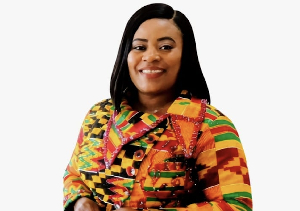 Josephine Oppong-Yeboah is a women advocate