Borrowing costs could fall to about 10 percent by the end of 2026 – earlier than initially envisaged as macroeconomic conditions continue to improve, according to Bank of Ghana Governor Dr Johnson Pandit Asiama.
Speaking at the central bank’s year-end festival of carols and thanksgiving services, Dr Asiama said the disinflation trend, currency stability and improving growth outlook have created room for a faster decline in lending rates, even as risks persist in the global and domestic economy.
“I am on record as having said that I would like to see lending rates below 10 percent before the end of my term,” Dr Asiama told staff. “If there is one thing I pray for each morning, it is that our businesses can borrow below 10 percent, that the youth of this country who are so innovative can borrow below 10 percent and do things for themselves. I believe we are already on course.”
Governor Asiama said the Ghana Reference Rate (GRR), the lowest benchmark for lending, is currently around 15 percent – down sharply from levels seen earlier in the economic adjustment period. Based on current trends, the central bank now expects the economy could reach the 10 percent lending rate threshold by end of next year rather than within the originally projected three-year window.
“When we came in, lending rates were well beyond where they should be,” he said. “Now we are hopeful that by end of next year we could actually get to the 10 percent I was envisaging for the next three years. These outcomes are worth giving time for and we do not take them lightly.”
The Governor however cautioned that Ghana remains exposed to global shocks as a small, open economy. He pointed to geopolitical tensions, volatile trade conditions and an uneven global recovery as external risks that could quickly affect inflation, food prices and financial conditions.
“Something remote can go wrong somewhere in the Middle East or the U.S. economy and it impacts us,” he said, adding that while fundamentals have improved, risks “have not disappeared”.
He said the progress made in 2025 was a result of discipline and restraint, noting that the central bank and wider economy avoided a repeat of the instability seen in 2022. According to him, pressures were contained before they escalated into crises, helping to preserve trust in institutions and stabilise expectations.
The Governor also highlighted recent legislative reforms including amendments to the Bank of Ghana Act, which he said have strengthened governance and operational independence and reduced the risk of crisis-driven liquidity injections. Those changes, he noted, were designed to ensure that the conditions which led to the domestic debt exchange and pension losses in 2022 do not recur.
In addition, Dr Asiama said passage of the Virtual Asset Service Providers law has brought crypto-related activity into a regulated framework, allowing the central bank to manage risks rather than ignore them.
The Bank expects to continue reforms that will improve efficiency, deepen supervision and invest in staff development through a new people strategy, while also moving to unlock value from idle real estate assets held by the Bank.
“Progress has given us room to move,” Dr Asiama said. “But it also calls for vigilance. The work is not finished. This is just the beginning.”
Business News of Tuesday, 23 December 2025
Source: thebftonline.com
Borrowing costs could fall to 10% by end 2026 – BoG Governor
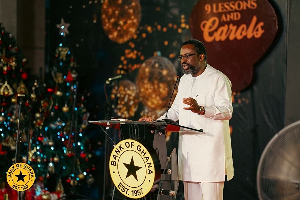 Dr Johnson Asiama, Bank of Ghana Governor