The Africa Sustainable Energy Centre (ASEC) has stated that the fire outbreak at the Akosombo Substation should never have escalated to the level it did, describing the incident as a preventable engineering and structural failure.
The comments follow the report form the investigation committee, which concluded that the fire was caused by insulation failure linked to ageing infrastructure rather than sabotage.
In a statement issued in Friday, June 12, 2026, ASEC stressed that the incident exposed major weaknesses in Ghana's power transmission infrastructure that require urgent attention.
"The lessons from Akosombo are clear. We must move beyond reactive maintenance and embrace predictive technologies. We must improve protection coordination, strengthen fire suppression capabilities, and introduce robust redundancy across the grid. The reliability of Ghana's power system depends on it," ASEC stated.
According to the Centre, the findings of the investigation revealed several technical deficiencies that contributed to the incident and highlighted the need for immediate reforms across the country's electricity transmission network.
ASEC argued that one of the key lessons from the incident is the need to make Infrared (IR) thermographic inspections a standard maintenance practice across substations, transformers and cable systems.
The organisation explained that such inspections can detect overheating, insulation deterioration, overloaded circuits and loose connections before they develop into major failures.
It also called for the installation of modern fire detection and automatic fire suppression systems at critical transmission facilities nationwide.
"The rapid spread of the fire highlights weaknesses in existing fire response mechanisms," the Centre noted, adding that modern substations should be capable of detecting and suppressing fires within seconds of ignition to minimise equipment damage and service disruptions.
The energy policy think tank also urged GRIDCo and other stakeholders to prioritise redundancy in the design and operation of critical power infrastructure.
It said backup protection systems, alternative transmission pathways, secondary power supplies and emergency control facilities are essential to preventing localised faults from developing into national power emergencies.
ASEC further called for a shift from reactive maintenance practices to predictive maintenance approaches supported by technologies such as artificial intelligence, thermal imaging analytics, asset health management platforms and condition monitoring systems.
The organisation warned that ageing infrastructure and deteriorating assets continue to pose significant risks to Ghana's electricity network and must be addressed proactively.
ASEC also said the focus should now be on modernising maintenance systems, strengthening fire safety measures and improving grid resilience.
ASEC further expressed concern about the protection systems at the substation, pointing to findings that one transformer continued feeding the fault after another had already tripped.
According to the Centre, this suggests shortcomings in protection coordination and fault management systems.
"No transmission system should allow a fault to continue feeding unchecked due to inadequate protection coordination," it stressed.
They urged authorities to use the incident as an opportunity to build a safer, more reliable and future-ready electricity system.
ANAS
GRA pushes digital tax reform with ITAS stakeholder engagement
Business News of Friday, 12 June 2026
Source: www.ghanaweb.com
Akosombo substation fire should never have escalated – ASEC
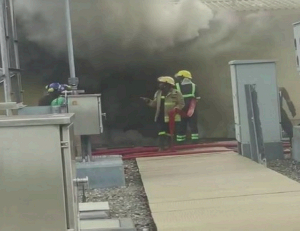 A file photo of Akosombo Substation