Air pollution has emerged as Ghana's top killer, surpassing HIV/AIDS, malaria, and road traffic accidents.
According to a new study by PSS Urbania Consult, air pollution accounts for over 30,000 annual deaths linked to related illnesses such as asthma, lung cancer, and cardiovascular diseases.
The research was conducted with technical and financial support from the Clean Air Fund, a global philanthropic initiative aimed at reducing air pollution worldwide.
The study cited in a report by graphic.com.gh, on September 17, 2025, revealed that pollution sources including vehicular emissions, open waste burning, firewood use, agricultural pesticides, and road construction dust are factors that drive the crisis.
The research found that air quality in many areas, particularly the Greater Accra Metropolitan Area, far exceeds standards set by Ghana’s Environmental Protection Agency (EPA) and World Health Organisation (WHO) guidelines.
Air pollution kills 28,000 Ghanaians each year - Experts
The one-year project, launched in August 2024 and extended to September 2025 due to data challenges, monitored over 60 sites across Greater Accra Region.
Key hotspots identified include Ablekuma Central, Ablekuma North, Ablekuma West, Adentan, Ablekuma South, Ashiedu Keteke, Okaikoi South, Ayawaso Central, Ayawaso East, Ayawaso North, Ayawaso West, Korle Klottey, La Dade Kotopon, La Nkwantanang Madina, and Okaikwei North Municipalities.
Each site recorded data on PM2.5 (fine inhalable particles which poses major health risks), PM10 (larger particles causing respiratory issues), sulfur dioxide, and nitrogen dioxide over one week.
The findings were unveiled on September 16, 2025, during a high-level validation workshop for Air Quality Action Plans (AQAPs) developed for 13 Metropolitan, Municipal, and District Assemblies (MMDAs) in Greater Accra Region.
Lead Consultant Dr Joseph Ayitio and Air Quality Specialist Frederick Otu-Larbi of PSS Urbania presented the data and findings during the workshop.
The workshop, featuring presentations, discussions, and group sessions, gathered stakeholders from the Ministry of Local Government, Chieftaincy and Religious Affairs; Greater Accra Regional Coordinating Council; National Development Planning Commission; and Ghana Institute of Planners.
Accra ranked second most polluted city in Africa
The Director of Policy Planning, Monitoring and Evaluation at the Ministry of Local Government, Usama Iddrisu Samu pointed to air pollution as a national priority, noting that it causes over 28,000 deaths yearly, more than malaria and HIV combined.
He praised the Clean Air Fund for supporting monitoring and hotspot identification, aligning with Ghana’s new Air Quality Management Regulation and district planning.
“Cleaner air is not just an environmental aspiration, but a development priority that must be at the heart of our national agenda,” he said.
The Director of Planning at the Greater Accra Regional Coordinating Council, Jemima Lomotey speaking for the Regional Minister Linda Ocloo, reaffirmed the region’s commitment to implementing AQAPs, tackling pollution amid urbanisation and industrialisation.
Dr Elvis Kyere Gyeabuor, Clean Air Fund representative, urged local ownership post-validation, while Dr Lily Owusu of the NDPC called for integrating AQAPs into medium-term development plans, highlighting its impact on vulnerable groups and Ghana’s 2040 WHO standards goal.
Ayawaso West Municipal Chief Executive, Dr Michael Mensah, stressed the importance of collaborative efforts to combat rising emissions, noting its alignment with Sustainable Development Goal 11 which focuses on healthier urban spaces.
GA/VPO
Will Ghana pass the Anti-Witchcraft Bill? Find out in the latest episode of The Lowdown on GhanaWeb TV in this conversation with Amnesty International:
General News of Wednesday, 17 September 2025
Source: www.ghanaweb.com
Air pollution becomes leading cause of deaths in Ghana – Report
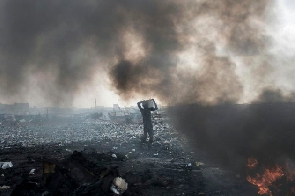 The research found that air quality in many areas of Ghana far exceed standards set by EPA