Africa must take control of its digital future by investing in infrastructure, software development and digital skills to ensure that technology-driven education responds to the continent’s unique needs and realities, the Minister of Education, Haruna Iddrisu, has said.
He said the continent must build educational systems that empowered its people, strengthen institutions and promote collaboration among African nations.
Speaking at the 19th Edition of e-Learning Africa in Accra on Wednesday, the minister called on stakeholders to find practical solutions to key questions about Africa’s role in providing digital infrastructure, developing software and equipping learners with essential soft skills for the future.
This year’s event was on the theme: ‘Africa’s Time, Africa Terms: Learning for Sovereignty, Strength and Solidarity,’ and brought together participants from across the continent.
Iddrisu noted that Ghana had made significant progress in digital education, including the distribution of tablets to senior high school students and teachers, with plans to extend the initiative to kindergarten and junior high school levels.
He also announced that coding, artificial intelligence, augmented reality and electronics would soon be integrated into foundational learning to prepare students for the digital age.
The President of the Accra Institute of Technology, Professor Clement Dzidonu, called for a transformation of Africa’s education systems to equip young people with the skills and capabilities needed to shape the continent’s future.
He urged a shift beyond expanding access to education toward enriching learning experiences that foster creativity, adaptability and problem-solving skills.
Prof Dzidonu introduced the concept of the “sovereign learner”, saying under this, an individual who takes ownership of learning, adapts to change and actively creates opportunities.
He added that Africa’s youthful population presents a major development opportunity, but said this potential can only be realised if learning systems prioritise capability over certification.
Chaired by Dr Aida Opoku-Mensah, he urged African countries to champion learning sovereignty, innovation and unity to drive sustainable development across the continent.
She said Africa was at a defining moment marked by rapid technological advancement, demographic growth and emerging economic opportunities.
Dr Opoku-Mensah noted that the continent’s education technology sector had expanded significantly since the first conference in Addis Ababa in 2006, with more than 600 home-grown edtech startups now operating across Africa.
She called on governments to align policies, protect data sovereignty, support local research and promote innovation while also commending the Government of Ghana and partners for hosting the conference successfully.
Policy Advisor for Education Policy and Advocacy at the All Africa Students Union (AASU), Cindy Arko Nyamekye, on her part, called for greater youth participation in shaping Africa’s education and digital transformation agenda.
She said AASU represented over 300 million students across Africa and the diaspora, stressing that their concerns must be central to policy discussions.
She highlighted challenges such as unemployment, limited access to quality education and digital exclusion.
Business News of Friday, 5 June 2026
Source: ghanaiantimes.com.gh
Africa must take charge of its digital future – Haruna Iddrisu
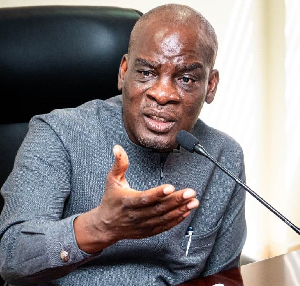 Haruna Iddrisu is the Minister of Education




Entertainment