The Member of Parliament for Manhyia South, Nana Agyei Baffour Awuah, has called on the Supreme Court of Ghana to adopt more thorough and forward-looking interpretations of the constitution to support the nation’s legal and democratic development.
Baffour Awuah stressed that while no constitutional framework is perfect at inception, it is the responsibility of the judiciary to interpret the constitution in a manner that enables growth and progress.
“As a people, we must appreciate that nothing is perfect from the beginning. I was not expecting a flawless constitution, but I did expect a progressive society and a progressive Supreme Court; one that, when given the opportunity to interpret provisions, would offer a more forward-thinking and constructive perspective,” he indicated.
According to an adomonline.com report on May 15, 2025, Baffour Awuah pointed to Article 146 of the 1992 Constitution, which outlines the process for removing judges as an example of a provision where, in his view, the Supreme Court has fallen short.
“Let me be quoted correctly: I believe that on the issue of Article 146, it is the Supreme Court of the Republic of Ghana that has disappointed us, not the framers of the constitution,” he stated.
Referencing former Chief Justice Sophia Akuffo’s concerns about deficiencies in Article 146, Baffour Awuah also drew comparisons with the US judicial system, which he praised for its evolving interpretations, despite having a shorter constitutional text.
He cited three major cases — Attorney General vs Ghana Bar Association, the Agyei Twum case, and the Thierry case as evidence of inconsistencies and lack of depth in the court’s approach to interpreting Article 146.
“In the Ghana Bar Association case, a certain perspective was taken. Then in Agyei Twum, the court went a step further. But in the Thierry case, the court did not even base its opinion on ratio decidendi, but on obiter dictum regarding what should be done with prima facie determinations,” he argued.
Baffour Awuah stressed the importance of comprehensive and future-conscious rulings that can guide Ghana’s legal framework for generations.
Beyond the judiciary, he also called on fellow politicians to adopt a more nationalistic and less partisan approach to governance.
“Let us, as politicians, begin to look at issues from a national perspective. When we are in office, it is for just four years. Tomorrow, the people of Manhyia South may decide that I should not return. That’s why we must act beyond partisan interests and think about the national good,” he said.
He further urged the establishment of clear and consistent procedures to govern the operations of committees dealing with Article 146, arguing that the current ad hoc system undermines fairness and transparency.
“It is inappropriate for committees to create procedures on an ad hoc basis. There should be proper regulations, clearly established and known ahead of time, to govern such proceedings. That is the right and fair approach,” he added, the report said.
MRA/AE
Meanwhile, watch GhanaWeb's tour of Odweanoma Paragliding Field below:
General News of Friday, 16 May 2025
Source: www.ghanaweb.com
Adopt forward-looking constitutional interpretations to cases – Manhyia South MP to Supreme Court
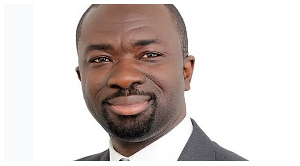 Nana Agyei Baffour Awuah, Member of Parliament for Manhyia South. File photo.