The Government of Spain has provided €300,000 in financial support to the Narcotics Control Commission (NACOC) towards the completion of its first forensic laboratory.
The support forms part of efforts to strengthen the Commission’s investigative and prosecutorial capabilities in the fight against illicit drug trafficking and transnational organised crime.
The Spanish Ambassador to Ghana, Ángel Lossada, announced the support during a brief ceremony to present the funding package to NACOC management.
He said the assistance was intended to deepen bilateral cooperation between Spain and Ghana in combating illicit drug trafficking and organised crime.
The Ambassador reaffirmed Spain’s commitment to supporting NACOC through capacity building, specialised training and technical assistance.
He disclosed that the Spanish government was stepping up efforts to strengthen cooperation with Ghana in tackling illicit drug trafficking and organised crime.
He said the collaboration could be pursued through the European Union’s Security and Defence Partnership or through bilateral agreements with the Ministry of the Interior.
Lossada also pledged support for training forensic officers to ensure the effective operation of the laboratory once it is completed.
Receiving the support, NACOC Director-General, Major General Maxwell Obuba Mantey, expressed appreciation to the Spanish government for its continued partnership and commitment to strengthening Ghana’s fight against drug trafficking.
He described the assistance as timely, noting that the establishment of a modern forensic laboratory had been one of his key priorities since assuming office.
According to him, the absence of a dedicated forensic laboratory has been a major operational challenge for the Commission, particularly in investigating and prosecuting drug-related offences.
He explained that NACOC currently relies on other state institutions to conduct forensic examinations, a situation that often delays the receipt of laboratory results and the prosecution of cases.
Major General Mantey said completing the laboratory would significantly enhance the Commission’s capacity to conduct timely forensic examinations, strengthen investigations and facilitate the effective prosecution of drug-related offences.
General News of Wednesday, 28 October 2026
Source: ncc.gov.gh
Spain provides €300,000 to complete NACOC's first forensic laboratory
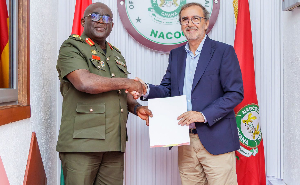 The Ambassador reaffirmed Spain’s commitment to supporting NACOC