Minority Chief Whip and Nsawam-Adoagyiri MP, Frank Annoh-Dompreh, has made a passionate plea to government to consider criminalising mass destruction of the environment, particularly, water bodies, under a proposed ecocide law.
Speaking in Parliament on Monday, March 9, 2026, he described the country’s rivers, forests, and farmlands as being pushed to the brink, largely by illegal small-scale mining (galamsey).
With up to 60% of Ghana’s water bodies already polluted, he warned that the damage is no longer just an environmental issue as it threatens the health, food security, and future of ordinary Ghanaians.
“Honourable Speaker, I rise today with a profound sense of urgency and responsibility to speak on a matter that transcends partisan politics, economic growth, and short-term development agenda,” he said.
Annoh-Dompreh explained that ecocide is a clear legal concept gaining traction worldwide over unlawful or reckless acts that cause severe, widespread, or long-term harm to ecosystems.
“Ecocide, as defined by an independent expert panel convened by Stop Ecocide International, refers to ‘unlawful or wanton acts committed with knowledge that there is a substantial likelihood of severe and either widespread or long-term damage to the environment,” he added.
He pointed out that while genocide, war crimes, and crimes against humanity are already international crimes, peacetime ecocide still falls into a legal gap, allowing polluters, companies, and individuals to escape real accountability.
“This absence in international law creates a legal vacuum: corporations, state actors, and individuals can commit ecological destruction, deforestation, industrial pollution, oil spills, and climate-amplifying activities with limited criminal liability,” he stressed.
He cited the Niger Delta as one failed circumstance where decades of oil spills have poisoned water, soil, and communities, with full recovery still decades away.
He argued that galamsey has turned once-fertile cocoa farms into moon-like craters filled with toxic water, which has not only poisoned fish stocks but poses serious health risks to both adults and children in mining areas.
He highlighted growing global momentum on ecocide law in at least 11 countries, including France, Belgium, Ecuador, and several former Soviet states.
He indicated that the above countries have already made ecocide a domestic crime, with Belgium becoming the first EU nation to pass the law in 2023.
“This is not merely environmental law; it is justice law,” he said.
Annoh-Dompreh called on Parliament to pass clear, standalone legislation defining and punishing ecocide, while also pushing Ghana to lead Africa in advocating for it to become the fifth international crime under the Rome Statute.
“Protecting our ecosystems is not an optional policy. It is a fundamental commitment to future generations. Let us give meaning to that commitment by making ecocide a crime under Ghanaian law,” he said.
For many Ghanaians watching rivers turn milky brown and farmlands disappear, today’s call is a reminder that the time to treat nature’s destruction as the serious crime will soon arrive.
NA/VPO
Rev Dr Ebenezer Conduah arrested and remanded into custody
#TrendingGH: Love or Pressure? Ghanaians speak on Valentine's Day celebration:
Health News of Monday, 9 March 2026
Source: www.ghanaweb.com
Minority Chief Whip pushes for ecocide law as 60% of water bodies polluted
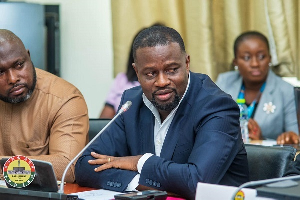 Frank Annoh-Dompreh is the Minority Chief Whip and Nsawam-Adoagyiri MP