The introduction of Ghana's redesigned cedi banknotes has triggered public debate, not only over the choice of personalities selected for the various denominations but also over concerns about the accuracy of some of the portraits used.
While some have questioned the inclusion or omission of historical figures, others have raised objections to the portraits believed to represent certain personalities, including arguments over whether the images used accurately depict the individuals being honoured.
These controversies have, to some extent, overshadowed the histories and remarkable contributions of the personalities featured on the new currency, including Justice Annie Ruth Jiagge, the pioneering Ghanaian jurist whose portrait appears on the new GH¢10 banknote.
Although she may not be as widely celebrated in everyday public conversations as some of Ghana's prominent political figures, Jiagge left an extraordinary legacy in the country's judiciary, the advancement of women's rights and international human rights advocacy.
Her life, spanning 1918 to 1996, was marked by several historic achievements, including becoming Ghana's first female High Court judge, presiding over the Court of Appeal and contributing to an international declaration against discrimination against women.
Here is a look at the life and achievements of the woman whose portrait now features on Ghana's GH¢10 banknote.
Early life and educational background
Justice Annie Ruth Jiagge, born Annie Ruth Baeta, was born on October 7, 1918, in Lomé, in what was then French Togoland.
She received her early upbringing and education in the Gold Coast, where she was sent to live with her grandmother in Keta.
Her academic journey took her to Achimota College, where she obtained a teaching certificate in 1937.
She subsequently began her professional career as a teacher before rising to become the headmistress of the Evangelical Presbyterian (E.P.) Girls' School at Keta.
Her commitment to education was evident during her time as headmistress. When sea erosion damaged the school's buildings, she reportedly organised pupils into a drama group and toured communities to raise funds for rebuilding.
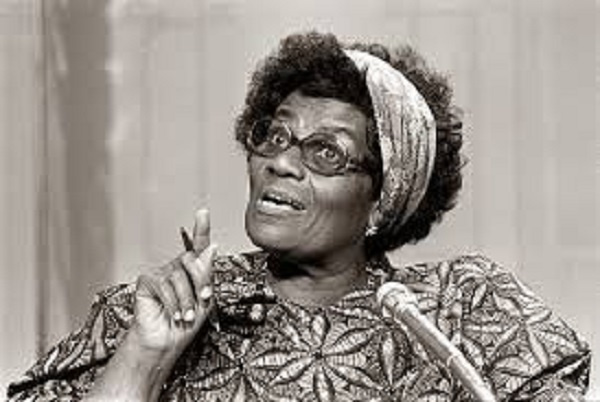
The initiative demonstrated her resourcefulness and commitment to ensuring that girls continued to have access to education despite the challenges facing the institution.
Jiagge later pursued legal studies in the United Kingdom, attending the London School of Economics before being called to the Bar at Lincoln's Inn in 1950.
Her transition from teaching to law would eventually make her one of the most influential women in Ghana's legal history.
Breaking barriers in Ghana's judiciary
At a time when the legal profession and judicial institutions were largely dominated by men, Jiagge broke significant barriers through her professional achievements.
She began her judicial career as a magistrate in 1953 and subsequently became a Circuit Court judge in 1959.
In 1961, she was appointed a High Court judge, becoming the first woman to occupy that position in Ghana.
Her appointment represented a significant milestone for women in the country's legal profession, demonstrating that women could rise to the highest levels of judicial responsibility.
She continued to distinguish herself in the judiciary and was appointed to the Court of Appeal in 1969.
In 1980, she made history again when she became President of the Court of Appeal, a position she held until her retirement in 1983.
Her achievements placed her among the most prominent legal figures of her generation and helped expand the possibilities for women seeking leadership positions in Ghana's judicial system.
Her contribution to women's rights and the United Nations
Beyond her judicial responsibilities, Jiagge was a passionate advocate for women's rights and gender equality.
Her contribution extended beyond Ghana, particularly through her work with the United Nations Commission on the Status of Women.
She served on the commission from 1962 to 1972 and became its president in 1968.
One of her most significant contributions was her involvement in the development of the Declaration on the Elimination of Discrimination Against Women, which was adopted by the United Nations General Assembly in 1967.
The declaration sought to establish international standards for addressing discrimination against women and promoting equality in areas including education, employment, political participation and family life.
Her involvement in the process placed her among the women who helped shape the international conversation on gender equality during that period.
She also became the first African President of the World Young Women's Christian Association (World YWCA), serving from 1975 to 1983.
Through these roles, Jiagge helped advance women's participation in public life and contributed to international efforts to improve their social, economic and political conditions.
Establishment of the National Council on Women and Development
Jiagge's commitment to women's empowerment was not limited to international advocacy.
In Ghana, she played an important role in the establishment of the National Council on Women and Development in 1975.
The institution was created to promote the development and advancement of women and encourage their participation in national development.
Her work also extended to initiatives aimed at improving women's economic opportunities, including efforts associated with Women’s World Banking.
These contributions reflected her belief that women's advancement required more than legal recognition; it also required opportunities for education, economic independence and participation in decision-making.
Appointment to Ghana's Council of State
Even after retiring from the judiciary in 1983, Jiagge continued to serve the country in public life.
In 1993, she became a member of Ghana's Council of State, an advisory body established under the 1992 Constitution to counsel the President on national matters.
Her appointment further demonstrated the confidence reposed in her experience and contributions to public service.
She remained a member of the Council until her death on June 12, 1996, in Accra, at the age of 77.
Her contributions earned her several recognitions, including the Grand Medal and an honorary Doctor of Laws degree from the University of Ghana.
Why Justice Annie Jiagge is on the new GH¢10 banknote
The Bank of Ghana's decision to feature Jiagge on the new GH¢10 banknote forms part of its Cedi Heritage Series, which seeks to celebrate individuals whose contributions have shaped Ghana's history and development.
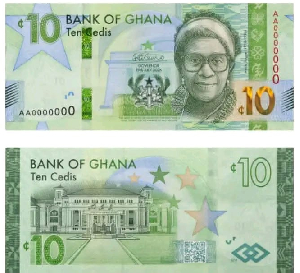
The green-coloured banknote is dedicated to the theme of justice and equality, with Jiagge's portrait appearing prominently on the front.
The reverse features the Supreme Court of Ghana, representing the country's judicial system and its commitment to the rule of law.
The note also incorporates the Adinkra symbol 'Epa', which depicts handcuffs and represents law and justice.
The combination of Jiagge's portrait, the Supreme Court building and the Adinkra symbol reflects the values the denomination seeks to celebrate.
The new GH¢10 note was unveiled by President John Dramani Mahama on November 12, 2026, alongside other redesigned denominations under the Heritage Series.
The new banknotes are expected to enter circulation on December 1, 2026, and will circulate alongside the existing notes, which remain legal tender.
For Jiagge, the appearance of her portrait on the new currency represents recognition of a lifetime dedicated to justice, public service and the advancement of women.
It also offers Ghanaians an opportunity to rediscover the story of a woman whose achievements helped shape the country's legal institutions and contributed to the global struggle for gender equality.
“We Like the Design, Release It Now” – Ghanaians React to New Currency Notes
General News of Wednesday, 18 November 2026
Source: www.ghanaweb.com
Meet Justice Annie Ruth Jiagge, the woman on the new GH¢10 banknote
 From Ghana's first female High Court judge to the new GH¢10 note – The story of Annie Jiagge