The National Chairman of the National Democratic Congress (NDC), Johnson Asiedu Nketiah, has called on African governments and international institutions to move beyond declarations and take concrete steps towards achieving reparative justice for Africans and people of African descent.
Speaking at an assembly of the Movement for Freedom of Nations in Moscow, Russia, Asiedu Nketiah stressed the need for practical measures to address the historical injustices associated with slavery, forced labour, colonial exploitation, dispossession and the seizure of African cultural property.
He argued that although Africa had made significant progress in securing international recognition of historical injustices, such recognition must translate into meaningful remedies that restore the rights and dignity of affected communities.
According to him, reparations must be supported by credible evidence, clearly established responsibilities and practical arrangements capable of implementation.
Johnson Asiedu Nketiah cited Ghana’s Cape Coast and Elmina castles as enduring reminders of the transatlantic slave trade, noting that the historical records preserved at the sites demonstrate how human captivity became an international commercial enterprise.
He said the consequences went beyond historical records, leaving behind separated families, weakened communities and generations deprived of the freedom to determine their own destinies.
The NDC National Chairman also highlighted the return of Asante royal regalia to public display at the Manhyia Palace Museum in Kumasi as an important example of the need to distinguish between restitution and temporary arrangements.
He noted that while some of the cultural objects had been fully returned, others were brought back from British museums on loan, stressing that a loan should not be confused with a transfer of ownership.
He maintained that reparative justice must be assessed based on the actual rights restored and obligations accepted by those responsible.
Calls for stronger African Union leadership
Johnson Asiedu Nketiah acknowledged the efforts of the African Union (AU) in advancing the reparations agenda, particularly following the 2023 Accra Reparations Conference.
He recalled that the AU designated 2025 as the Year of Justice for Africans and People of African Descent Through Reparations and subsequently established the Decade of Justice and Reparations covering 2026 to 2035.
He said the African Union Committee of Experts on Reparations and its Reference Group of Legal Experts were working towards developing a Common African Position to address the legal, economic, cultural and institutional dimensions of reparations.
He described the initiative as necessary for transforming historical grievances into coordinated positions that African governments could confidently present during international negotiations.
He also welcomed cooperation between the African Union and the Caribbean Community (CARICOM), particularly efforts to coordinate legal analysis and diplomatic engagements on reparations.
Commends Mahama’s role in reparations campaign
The NDC Chairman recognised President John Dramani Mahama’s leadership as the African Union Champion on Reparations.
He also commended Ghana’s role in securing United Nations General Assembly Resolution 80/250 on March 25, 2026, saying the 123 votes in favour represented significant international recognition of the gravity of the trafficking and enslavement of Africans.
He further pointed to consultations held in Accra in June 2026 as an important step in advancing the international discussion.
Warns against treating development projects as reparations
Johnson Asiedu Nketiah cautioned against describing ordinary development projects as reparative justice without establishing a direct connection between historical wrongdoing and the proposed remedy.
He explained that reparations could take different forms, including formal apologies, restitution, compensation, access to historical archives, educational interventions and institutional reforms.
However, he insisted that every proposed remedy must address a specific historical injury and remain open to scrutiny by the communities expected to benefit.
He further called for affected communities to be actively involved in designing reparative agreements and given the opportunity to hold responsible parties accountable.
He stressed that governments must also demonstrate transparency in negotiating and implementing agreements to ensure that commitments made are fulfilled.
Urges international cooperation
On the role of the Movement for Freedom of Nations, Johnson Asiedu Nketiah said the organisation could support the reparations campaign by facilitating access to archives, encouraging dialogue with museums and public authorities, and using its relationships with governments and parliaments.
He, however, warned that the movement should not establish competing structures alongside the African Union but rather strengthen existing institutional efforts.
He argued that political support and practical assistance to established African Union and CARICOM mechanisms would produce better results than creating additional platforms.
Concluding his address, Johnson Asiedu Nketiah said Africa had reached a stage where it must move beyond repeatedly presenting its historical grievances and concentrate on securing lasting remedies.
He maintained that the ultimate success of the reparations campaign would depend on whether international recognition was followed by concrete action, accountability and sustainable remedies for affected communities.
He urged members of the Movement for Freedom of Nations to be remembered for their contribution to achieving tangible results rather than creating another platform for repeating historical grievances.

Politics of Sunday, 22 November 2026
Source: Eric Obeng Boateng, Contributor
Johnson Asiedu Nketiah calls for action beyond declarations on African reparations
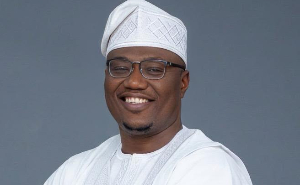
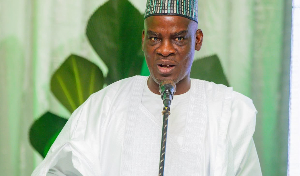
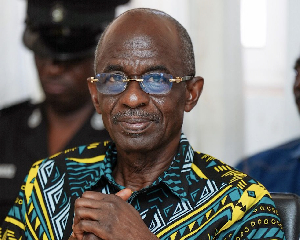 Picture of Johnson Aseidu Nketiah, NDC national chairman