The Judicial Service Staff Association of Ghana (JUSAG) and the Senior Staff Association of the Judicial Service of Ghana (SSAJUG) have suspended their indefinite strike, effective Tuesday, November 10, 2026, following fresh government commitments to address their outstanding salary and allowance demands.
The decision comes after the two unions received official correspondence from the Office of the President and held further engagements with the Chief Justice and Judicial Service Management over the Government's revised proposal.
In a joint statement dated November 9, 2026, the unions said the Government's revised position had largely addressed the outstanding issues that triggered the industrial action, paving the way for the suspension of the strike.
According to the statement, the union leadership also submitted a revised position on the commitments communicated by the President as part of efforts to reach a final resolution of the dispute.
The unions, however, made it clear that the suspension is pending the finalisation of the commitments received from the Government.
The development followed a meeting with Judicial Service Management, led by the Chief Justice and supported by Supreme Court Justice Gabriel Scott Pwamang and the Judicial Secretary, Mr Ahamed Musah, to consider the revised government approval.
JUSAG and SSAJUG commended President John Dramani Mahama, the Chief Justice, the President of the Supreme Court, Justice Paul Baffoe-Bonnie, Attorney-General and Minister for Justice Dr Dominic Ayine, and the Judicial Service Management for their roles in resolving the impasse.
They also praised members of staff for their support throughout the industrial action and thanked the media for its coverage of the strike.
The suspension is expected to pave the way for the restoration of normal activities within the Judicial Service, although the unions are still awaiting the full implementation of the commitments agreed upon.
The statement was signed by JUSAG National President Samuel Afotey Otu and SSAJUG National President Marilyn E. M. Suttah on behalf of the national executive councils of the two associations.
Five key reasons behind the suspension
The unions' November 9 announcement points to five developments that made the suspension possible:
1. Official communication from the Presidency: The unions received formal correspondence from the Office of President John Dramani Mahama addressing the outstanding salary and allowance concerns.
2. Revised government approval: The Government presented a revised position which the unions said had largely addressed the outstanding issues.
3. Intervention by the Chief Justice: The Chief Justice led a meeting with union leaders and Judicial Service Management to consider the Government's revised proposal.
4. Further negotiations on government commitments: The unions submitted a revised position on the commitments received from the Presidency as a final step towards resolving the dispute.
5. A pathway towards a settlement: The developments provided sufficient grounds for the unions to suspend the strike while awaiting the finalisation of the commitments.
Important distinction: The unions have not announced that every outstanding commitment has been fully implemented. They have suspended the industrial action pending the finalisation of the commitments.
Background to the strike
The strike began on November 2, 2026, following months of disagreements over the approval and payment of revised salaries and allowances for Judicial Service staff.
JUSAG had demanded presidential approval of the Judicial Council's recommendations for the 2026 salary review, with payment of the revised salaries in November and arrears covering January to October 2026.
The association said the process had started in December 2025 but had suffered prolonged delays despite repeated appeals to the Judicial Council, Judicial Service Management and the Government.
The dispute was linked to Article 149 of the 1992 Constitution and the Judicial Service (Terms and Conditions of Service) Regulations, 2025 (C.I. 141), which provide the framework for determining the salaries and conditions of service of Judicial Service staff.
JUSAG had also complained that other public-sector workers had received their 2026 salary adjustments while its members were still waiting for theirs.
The industrial action disrupted court operations across the country, leaving several court premises closed and affecting the delivery of judicial services.
Although the Ministry of Finance had earlier approved a two-instalment arrangement for the payment of salary arrears, the unions maintained their industrial action while awaiting a satisfactory resolution of the outstanding concerns.
EA
General News of Tuesday, 10 November 2026
Source: www.ghanaweb.com
JUSAG strike: 5 developments that forced suspension
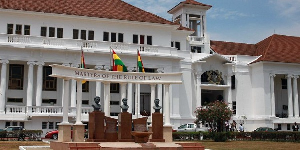 Photo of Supreme Court of Ghana