Fort Prinzenstein in Keta remains a hauntingly beautiful yet rapidly vanishing evidence of the trans-Atlantic slave trade.
Built in 1784 by Danish traders, the fort was originally intended as a defensive stronghold after Danish forces defeated the local Anlo Ewe people and secured trading rights in the area.
It was one of four major forts constructed by the Danes along what was then the Danish Gold Coast.
For decades, Fort Prinzenstein served as a key holding site where enslaved Africans were kept before being shipped across the Atlantic to plantations in the Caribbean and Americas.
The fort also played an active role in wider trade of goods such as gold and ivory in exchange for muskets, textiles, cowrie shells and other European products.
Historic sites face climate change destruction
Before the fort was built, the Dutch West India Company had constructed an earlier post on the same site in 1734, but that installation was abandoned after a series of conflicts and attacks.
When the Danes re-established their presence, they fortified the location to strengthen their colonial foothold on the coast.
Up until the early 1800s, the fort’s dungeons echoed with the suffering of captives from regions including Accra, Togo, Dahomey (present-day Benin) and the northern Volta, who were marched to Keta and sold at nearby slave markets before being transported overseas.
In 1850, Denmark sold its possessions on the Gold Coast, including Fort Prinzenstein, to Britain, marking the transition of the site into British colonial territory. The fort was later used as a prison for a period.
Today, only a fraction of the original structure remains. Years of coastal erosion and rising sea levels have battered the fort, with more than half of the original building already lost to the Atlantic Ocean.
In some places, only the dungeons where enslaved Africans were once held can still be seen.
Despite its deteriorating condition, Fort Prinzenstein and other forts and castles along Ghana’s coast have been recognised as UNESCO World Heritage Sites because of their “enormous historical relevance”, symbolising centuries of European-African contact and the origins of the African Diaspora.
The fort now draws visitors from around the world, including people of African descent seeking to connect with their history.
However, heritage advocates warn that without urgent restoration and protection, the fort, which holds rich history of Ghana’s colonial past may be lost to time and tide.
SO/VPO
Security officer's accusation triggered mob attack on Austin Tengeeh - Girlfriend speaks
General News of Tuesday, 3 March 2026
Source: www.ghanaweb.com
Historic Fort Prinzenstein fades as sea continues to devour Keta coastline
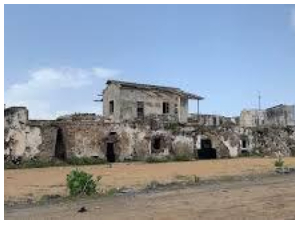 Some of the remnants of the Fort Prinzenstein in Keta