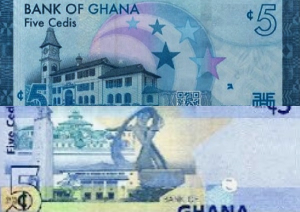
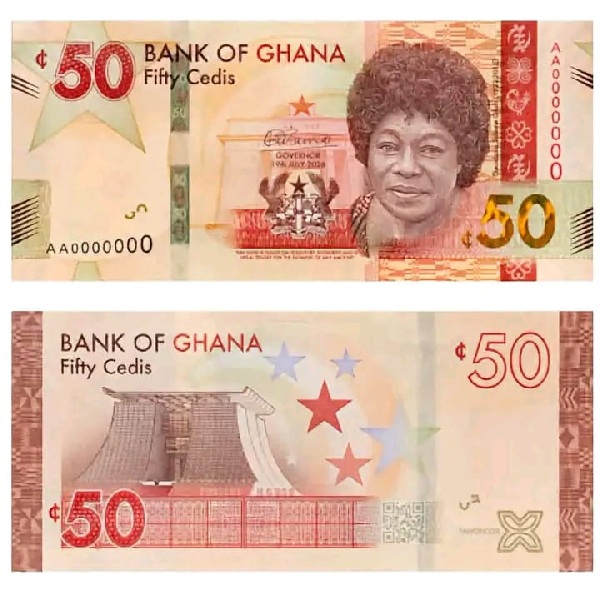
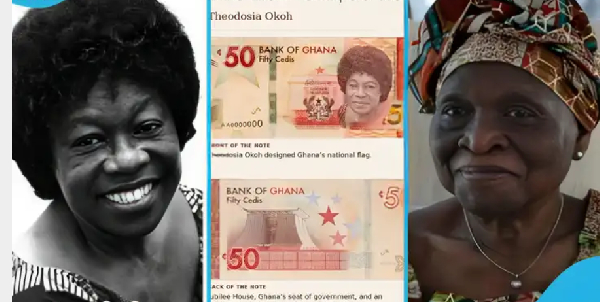
The unveiling of Ghana's new GH¢50 banknote, which honours the country's national flag designer, Theodosia Salome Okoh, has sparked controversy after a member of her family claimed that the portrait on the currency may not be hers.
Dr Eddie Obeng, a son of renowned Ghanaian scientist Dr Letitia Eva Obeng and nephew of Theodosia Okoh, raised concerns after examining the newly unveiled banknote. He suggested that the picture used to represent his aunt was actually that of his mother, who was also a distinguished Ghanaian trailblazer.
In a LinkedIn post, Dr Obeng expressed surprise at what he considered an apparent mix-up, saying he initially felt proud that his aunt had been honoured before noticing that the portrait resembled his mother.
The controversy has since attracted public attention, particularly because both sisters were remarkable women who made significant contributions to Ghana's history.
The Bank of Ghana, however, has defended the portrait, with board member Beatrice Annan explaining that three authentic photographs of Theodosia Okoh were used to develop the engraved image on the banknote. She said the artistic process involved adjustments to meet banknote production and security requirements.
While the debate over the portrait continues, here are some important things to know about Dr Letitia Obeng, the scientist whose name has resurfaced in the controversy.
Who was Dr Letitia Obeng?
Dr Letitia Eva Takyibea Obeng was a pioneering Ghanaian zoologist and environmental scientist widely regarded as one of the most influential women in Ghana's scientific community.
Born on January 10, 1925, at Anum in the Eastern Region, she became the first Ghanaian woman to obtain a doctorate in science.
She was also the younger sister of Theodosia Salome Okoh, the woman credited with designing Ghana's national flag, which was adopted at independence in 1957.
Dr Obeng earned recognition for her groundbreaking work in zoology, parasitology, aquatic biology and environmental conservation.
Her achievements in science and research earned her the description "grandmother of female scientists in Ghana", as she paved the way for generations of women interested in science and academic research.
Her educational background and historic PhD achievement
Dr Obeng's academic journey began in Ghana, where she attended primary school in Abetifi and later continued her middle school education in Kyebi.
Between 1939 and 1946, she attended Achimota College, one of the country's leading educational institutions.
Her academic performance earned her a government scholarship to study at the University of Birmingham in the United Kingdom, where she pursued a degree in Zoology between 1948 and 1952.
She graduated with a Bachelor of Science degree, becoming the first Ghanaian woman to earn a degree in Zoology.
She subsequently obtained a Master of Science degree in Parasitology in 1962 before completing her doctorate in Tropical Medicine in 1964 through the Liverpool School of Tropical Medicine.
The achievement made her the first Ghanaian woman to obtain a PhD in science, a milestone that placed her among the pioneers of women's participation in scientific research in Ghana.
She was Ghana's first female science lecturer at KNUST
After completing her studies in the United Kingdom in 1952, Dr Obeng returned to Ghana and began a career in academia and scientific research.
She was appointed the first female science lecturer at the then College of Science and Technology in Kumasi, now the Kwame Nkrumah University of Science and Technology (KNUST).
Her appointment was another milestone in Ghana's academic history, as she broke barriers in a field that was largely dominated by men.
See the new Heritage Series Ghana cedi notes
She taught at the institution between 1952 and 1959, inspiring students and helping to strengthen science education in the country.
She later joined the research staff of the National Research Council and the Ghana Academy of Sciences, where she continued her work in parasitology and aquatic biology.
Her contribution to aquatic biology and environmental research
According to the Commonwealth Human Ecology Council, one of Dr Obeng's most significant contributions was her work in aquatic biology and environmental research.
Between 1965 and 1974, she served as Director of the Institute of Aquatic Biology under the Council for Scientific and Industrial Research (CSIR).
She played an important role in research into Ghana's freshwater ecosystems, particularly the environmental and biological effects of the Volta Lake.
Her research examined the relationship between human activities, water resources and the environment, helping to build knowledge about the impact of large dams and other development projects on aquatic ecosystems.
She also studied the black fly, which transmits the parasite responsible for river blindness, medically known as onchocerciasis.
Her doctoral research involved examining the aquatic stages of the black fly, an area of research that contributed to scientific understanding of the disease.
Her work earned her recognition as a leading authority in freshwater ecology and tropical environmental research.
She became a senior official of the United Nations Environment Programme
Dr Obeng's expertise eventually took her beyond Ghana, where she became one of the pioneering African women in international environmental management.
In 1974, she joined the United Nations Environment Programme (UNEP), becoming its first African female senior staff member, a report by gov.uk stated.
She later became the first African woman to head UNEP's Regional Office for Africa in 1980.
During her time with the organisation, she contributed to international efforts to address environmental challenges, including water management, pollution and sustainable development.
Her work at UNEP further established her reputation as a scientist whose expertise extended beyond academic research to environmental policy and international development.
First woman to head Ghana Academy of Arts and Sciences
Another major achievement in Dr Obeng's career was her leadership of the Ghana Academy of Arts and Sciences.
She became the first woman elected as a Fellow of the Academy and was subsequently unanimously appointed its first female president in 2008.
Her appointment was a significant moment for women in Ghana's academic and scientific community, reflecting the recognition she had earned through decades of research, teaching and public service.
She also maintained links with several international scientific organisations, including the International Water Management Institute, where she served on its Board of Governors.
Between 2008 and 2012, she chaired the Global Water Partnership, an international network dedicated to improving water resource management.
These appointments demonstrated her influence in scientific research and environmental policy at both national and international levels.
Her awards and honours
Dr Obeng received several national and international recognitions for her contribution to science, environmental management and education.
Among her notable honours was Ghana's Order of the Star of Ghana, the country's highest national award, which she received in 2006.
In 1997, she received the Council for Scientific and Industrial Research (CSIR) Award for Distinguished Career and Service to Science and Technology.
The CSIR also named one of its facilities, the Letitia Obeng Block, in her honour in recognition of her contribution to scientific research.
In 2017, she received an honorary Doctor of Science degree from the Kwame Nkrumah University of Science and Technology.
A year later, the Liverpool School of Tropical Medicine also honoured her with an honorary Doctor of Science degree during its inaugural graduation ceremony.
The institution recognised her pioneering research into river blindness and her contribution to freshwater research and environmental science.
She was also an author
Beyond her work as a scientist and academic, Dr Obeng was an accomplished author who used her writings to share knowledge about science, the environment and development.
In July 2019, she launched Anthology of a Lifetime, a 381-page publication that brought together her speeches, research papers, writings and contributions spanning more than 60 years.
The book explored several subjects, including water resources, environmental conservation, culture and development.
She also authored A Silent Heritage: An Autobiography, published in 2008, in which she reflected on her life, education and professional journey.
Other publications associated with her work include Man-made Lakes (1969), Volta Lake: Physical and Biological Aspects (1973) and Should Dams Be Built? The Volta Lake Example (1977).
Her writings reflected her longstanding concern about the management of Ghana's natural resources and the need to protect freshwater bodies for future generations.
Her death
Dr Letitia Obeng died on March 23, 2023, at the age of 98.
Her death was announced by her family and attracted tributes from Ghana's scientific and academic communities, with many describing her as a trailblazer who opened doors for women in science.
The Liverpool School of Tropical Medicine, where she obtained her doctorate, also paid tribute to her, recalling her pioneering research into the black fly and her contribution to understanding river blindness.
The International Water Management Institute similarly remembered her for her immense contributions to science and freshwater ecology.
Her death marked the end of a remarkable career spanning more than six decades, during which she served as a scientist, lecturer, researcher, international environmental expert and academic leader.
Her relationship with Theodosia Okoh
Dr Letitia Obeng and Theodosia Okoh were sisters who made remarkable contributions to Ghana in different fields.
While Theodosia became nationally recognised for designing Ghana's national flag, Letitia made history through her achievements in science and environmental research.
The two women were among the distinguished daughters of the Asihene family, with their father, Very Rev E.V. Asihene, serving as Moderator of the Presbyterian Church of Ghana.
Their achievements placed them among Ghana's notable female pioneers, although their contributions were in different areas of national development.
Interestingly, the confusion over their photographs is not entirely new. In 2020, the South African publication The Continent issued a correction after publishing a photograph of Dr Letitia Obeng while identifying her as Theodosia Okoh in an earlier edition.
The publication acknowledged the error and clarified that the woman in the photograph was actually Dr Obeng, noting that the two sisters had sometimes been misidentified in photographs published elsewhere.
The latest controversy surrounding the GH¢50 note has therefore brought renewed attention to the two sisters and their respective legacies.
BAI
Dr Cassiel Ato Forson presents the 2027 Budget Statement and Economic Policy
General News of Friday, 13 November 2026
Source: www.ghanaweb.com
GH¢50 Note Controversy: Meet Theodosia Okoh's trailblazing sister whose image was allegedly used
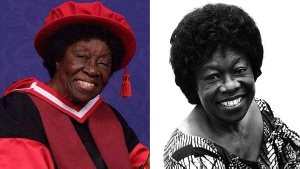 Theodosia Okoh’s sister, Dr Obeng, is regarded as the ‘grandmother of female scientists in Ghana'