


- Agriculture, Fishing & Mining
- Automobile & Motorcycle
- Bars & Restaurants
- Building, Construction & Engineering
- Business Services
- Computers & Internet
- Education, Employment & Research
- Entertainment
- Financial & Legal
- Health & Beauty
- Home & Garden
- Manufacturing & Wholesale
- Media & Communication
- Public & Social Services
- Shops
- Sports & Leisure
- Tourism
- Transportation
Business Directory
-
 UNILEVER GHANA
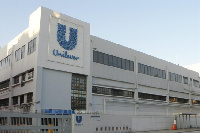
Unilever Ghana PLC (Tema Factory) Heavy Industrial Area, Plot No. IND/A/2/3A-4, Publishing Road, P. O. Box 721, Tema, Greater Accra, Ghana, GREATER ACCRA REGION
-
Business Information
Founded in 1992 through the merger of UAC Ghana Limited and Lever Brothers Ghana Limited, both subsidiaries of Unilever PLC .
Ownership: Approximately 66.7% is held by Unilever PLC, with the remaining ~33% held by public investors, including about 11,000–12,000 Ghanaian shareholders .
Public Listing: Listed on the Ghana Stock Exchange under the symbol UNIL since 1991–1992, with an issued share capital of about 62.5 million shares and stated capital of GHS 1.2 million .
---
Operations & Products
Headquarters & Factory: Located in Tema, where it manufactures a broad range of fast-moving consumer goods (FMCGs) .
Product Segments:
Foods: Margarine, spreads, tea, soups, sauces, snacks, mayonnaise, salad dressings, olive oil, ice cream, frozen foods, and more .
Home Care: Laundry detergents and other household cleaning products.
Personal Care: Skin cleansing, skincare, oral care (e.g., Pepsodent, CloseUp), deodorants, and soaps (e.g., Key Soap, Lux, Geisha, Sunlight) .
Brands: Includes both international names like Pepsodent, Key Soap, Lux, Geisha, Omo, Sunlight, and Lipton, as well as trusted local brands like Annapurna, Blue Band, Royco, and Food Seasoning .
---
Market Presence & Reach
Distribution: Through approximately 46 key distributors, Unilever products reach over 100,000 retail, wholesale, and other outlets across Ghana. They also export to Nigeria, Kenya, South Africa, and the Ivory Coast .
Market Position: It is the largest quoted manufacturing and marketing company in Ghana’s consumer goods sector .
2023 Financial Performance: Revenue reached GHS 908 million—up 44% from GHS 632 million in 2022; profit stood at GHS 141 million, up from GHS 15 million; and the company held a positive cash position of GHS 109 million, reversing a prior deficit .
---
Sustainability & Community
Initiatives: Active in recycling and environmental sustainability through partnerships like the Ghana Recycling Initiative by Private Enterprises (GRIPE) .
Community Empowerment: Runs livelihood programs—like product-based loans to women in the Upper West Region—and delivers oral and personal hygiene education and donations to schools and communities .
---
Corporate Governance & Strategy
CEO: Chris Wulff-Caesar (current as of recent listings) .
Board & Management: Features a multi-member board with skills across finance, supply chain, marketing, and HR .
Core Focus: The company streamlined operations in the late 1990s to concentrate on consumer goods manufacturing and shed non-core assets like textiles and plantations, though it retains interests in oil palm plantations such as Twifo Oil Palm and Benso Oil Palm Plantation .Photos
Product and Services
- ●Foods & Nutrition Includes staples such as Annapurna iodized salt, spreads like Blue Band, and other daily consumables.
- ●Home Care Products such as Omo laundry detergent and dishwashing liquids for household cleaning.
- ●Personal Care A robust lineup including soaps (e.g. Lux, Geisha, Sunlight), deodorants, lotions (Vaseline, Dove), oral care products (Pepsodent, CloseUp), among others.
- ●Unilever Ghana has a robust distribution network spanning: More than 40 local distributors reaching over 100,000 retail outlets (grocery stores, supermarkets, kiosks, etc.) across Ghana.
- ●Products are also available through online platforms, notably the Unilever Official Store on Jumia Ghana—where consumers can order products like Vaseline, Geisha soap, Pepsodent, and more with home delivery .
Contacts
- ●+233 (0) 50 781 9430
- ●030 221 8888
- ●030 268 7477
- ●CustomerCare.Ghana@Unilever.com
- ●sumatageorge@gmail.com
- ●WhatsApp: +233 (0) 20 594 1416
Rating