


- Agriculture, Fishing & Mining
- Automobile & Motorcycle
- Bars & Restaurants
- Building, Construction & Engineering
- Business Services
- Computers & Internet
- Education, Employment & Research
- Entertainment
- Financial & Legal
- Health & Beauty
- Home & Garden
- Manufacturing & Wholesale
- Media & Communication
- Public & Social Services
- Shops
- Sports & Leisure
- Tourism
- Transportation
Business Directory
-
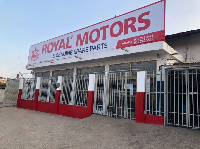 ROYAL MOTORS GHANA LIMITED(MAIN HEADQUARTERS ACCRA)
No. 14 Klan Street, North Industrial Area, Accra, Ghana, GREATER ACCRA
-
Business Information
Royal Motors Ghana Limited was established and incorporated in 2001 in Accra, Ghana. 
• The company is reported to be an affiliate of the Lee Group (NIG) which is said to have “around 60 factories and companies in West Africa”. 
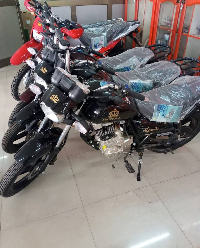
• Its core business: assembling and supplying motorcycles and tricycles (in the 110 cc – 200 cc range) across Ghana and neighbouring markets. 
• Headquarters are located in the Greater Accra Region, with one address listed as Otublohum Rd, North Industrial Area, Accra. 
⸻
Products & Services
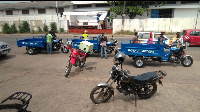
• The company’s focus is on motorcycles and tricycles: They assemble, supply and distribute these vehicles. 
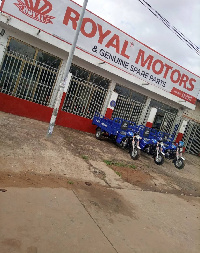
• They offer genuine spare parts and quality service, which they promote as a major differentiator in the Ghana market. 
• Their product range includes engines, fully assembled bikes/trikes, and unassembled units (for trade/distribution) — at least according to listings for their branches. 
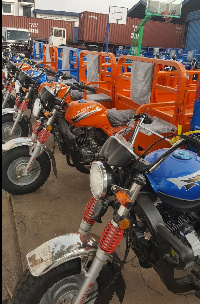
• Tricycles (three-wheeled vehicles) are particularly emphasised in some documents (not only for transport but for utility applications). 
⸻
Network & Reach
• While they are based in Ghana, they claim presence (or at least affiliation) in other West African countries: Nigeria, Niger, Mali, Côte d’Ivoire, etc. 
• Domestically, they advertise “around 20 branches” in major towns of Ghana, allowing broad distribution and service coverage. 
• For example: branch listings in Tamale, Techiman, Tema. 
• The company serves not only individual retail customers, but also government and large-corporate clients (“big companies”) according to their own description. 
⸻
Market Position & Value Proposition
• The company positions itself as a pioneer in the Ghanaian market for motorcycles and tricycles in its range (110 cc–200 cc). 
• Their emphasis on “genuine spare parts and quality service” suggests that after-sales service is a key value proposition, which is important in the Ghanaian automotive environment where maintenance and parts availability can be challenges. 
• Having a large branch/distribution network is a strength for coverage and customer reach.
• Serving institutional clients (government, companies) adds credibility and diversified revenue streams beyond just retail.
⸻
Operational Details & Highlights
• Their product focus: motorcycles from 110cc up to 200cc. This covers a large segment of the “commercial bike” market in Ghana (e.g., commercial motorbike taxis “okada”, private bikes). 
• They assemble and supply tricycles (which in many African countries serve as “keke” or goods transport vehicles) with claims of “ultra-strong bodies and lowest fuel consumption”. 
• Branch operation hours for the head office (per a directory listing) are Monday to Friday 08:00-12:00 & 13:00-17:00, Saturday 08:00-12:00. 
• The company has had at least one high-profile incident: in 2018, an armed robbery at their Accra (Industrial Area) premises where suspects broke in, stole cash, and even a vehicle. 
⸻
Challenges & Considerations
• As with many automotive/vehicle businesses in Ghana, ensuring consistent service quality and parts supply is a continuous challenge. While they emphasise “genuine spare parts”, the market sometimes struggles with counterfeit parts or poor service.
• The incident in 2018 highlights security and operational risk in the business environment (robbery, theft) which could impact operations and cost. 
• Though they claim broad branch coverage, maintaining quality control across a large distribution network is challenging — especially in more remote locations.
• The market for motorcycles/tricycles is competitive, with many players (importers, assemblers, second-hand bikes) — so differentiation (service, parts, brand reliability) is key.
• Regulatory/registration issues: In Ghana, vehicles (especially two- and three-wheelers) face regulatory and registration hurdles, safety considerations, which could affect customer uptake.
⸻
Contribution & Significance in Ghana
• By focusing on motorcycles and tricycles, Royal Motors plays a role in Ghana’s informal transport sector and goods-transport economy (especially tricycles used for goods delivery, waste collection, etc). For instance, in the Ghana Accra Metropolitan area’s community planning, their tricycles were referenced as options for waste collection – showing utility beyond just passenger transport. 
• The presence of a Ghana-based assembler/distributor helps local employment (assembly operations, branch staff, service technicians) and supports local value-chains rather than purely imported units.
• Their wide distribution network means they help bring mobility (via bikes) to both urban and regional Ghana — which is significant given the role of two-wheelers in Ghana’s transport ecosystem.
• Their role supplying institutional clients means they interface with broader sectors (government, goods transport, waste management) beyond just private consumer sales..Photos
Product and Services
- ●Royal Motors Ghana Limited specializes in assembling and supplying a variety of motorcycles, ranging from 110cc to 200cc. These bikes are designed with strong chassis and low fuel consumption in mind, making them both durable and cost-effective.
- ●Royal Motors Ghana Limited specializes in assembling and supplying a variety of motorcycles, ranging from 110cc to 200cc. These bikes are designed with strong chassis and low fuel consumption in mind, making them both durable and cost-effective.
- ●They maintain a team of well-trained, dedicated technicians to deliver comprehensive after-sales support. This includes maintenance, repairs, and ensuring you get the most out of your purchase. 
- ●Nationwide safe delivery services
Contacts
- ●+233 (0) 50 781 9430
- ●+233 (0) 30 500 8900
- ●info@royal‑motorcycle.com
- ●WhatsApp: +233 20 594 1416
Follow Us
Rating