This blog is managed by the content creator and not GhanaWeb, its affiliates, or employees. Advertising on this blog requires a minimum of GH₵50 a week. Contact the blog owner with any queries.
Virgin Blogger Blog of Thursday, 22 October 2026
Source: Christopher A. Ranson
Ghana Is Not on Trial - Seth K. Awuku to Ambassador Roey Gilad
- Share:


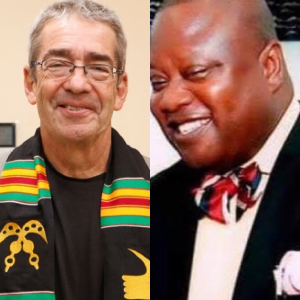
Israel’s Ambassador to Ghana, Roey Gilad, has challenged President John Dramani Mahama’s diplomatic consistency. Why, he asks, is Ghana vocal about Israel’s conduct in Gaza but apparently quiet about Russia’s invasion of Ukraine?
It is a reasonable question. But diplomacy has a curious habit of turning reasonable questions into political cross-examinations. Suddenly, a sovereign country must explain not merely what it says, but why it has not said something else, somewhere else, with equal force.
One wonders when foreign policy acquired a speaking-time requirement.
Yet before Ghana is invited into the witness box, the record deserves examination. Ghana’s representative at the United Nations Security Council condemned Russia’s invasion of Ukraine in 2022, described it as a violation of the UN Charter and called for Russian troops to withdraw. Ghana’s position was hardly a declaration of affection for Moscow.
The prosecution, therefore, must first establish its case. Is the charge that Ghana has never condemned Russia, or that it has not condemned Russia loudly enough? These are different allegations, and they require different evidence. A country speaks not only through presidential speeches, but also through its votes, diplomatic statements and official positions. The court of international opinion should examine the whole record, not just the exhibits most convenient to the prosecution.
I have written previously about Israel’s military actions, including letters addressed to Israel’s ambassador in Ghana. My concern has consistently been whether international law binds powerful states as firmly as it binds the weak.
Israel has legitimate security concerns. The security of Israeli civilians cannot be dismissed, nor can attacks against them be excused. But security is not a diplomatic password that opens every door and excuses every action. A legitimate concern does not make every response legitimate.
The same principle applies to Russia.
Arguments about NATO expansion, Russian security anxieties and the rivalry between Moscow and the West help explain the background to the war in Ukraine. They do not automatically justify invading a sovereign neighbour. Explanation is not exoneration, just as presenting a defendant’s circumstances does not necessarily establish a defence.
Here lies the elementary test of consistency. If sovereignty matters in Ukraine, Palestinian self-determination matters too. If civilian lives deserve protection in Europe, they deserve protection in Gaza.
International law cannot be a courtroom in which the rules of evidence change according to the identity of the accused. Nor can the international community behave like a jury that listens sympathetically to one victim while treating another as an inconvenient witness.
Justice loses its credibility when the identity of the defendant determines the standard of judgement.
Must President Mahama, then, condemn every international crisis with equal volume to prove his consistency? Must every presidential statement about Israel be accompanied by a matching denunciation of Russia, as though the presidency were operating a diplomatic buy-one-get-one-free offer?
Foreign policy is not conducted by matching quotations. Different conflicts have different histories and circumstances. Nevertheless, Ghana must ensure that its actions reflect consistent principles. If the evidence reveals an inconsistency, it should be addressed. But no sound judgement can be reached by examining one part of the record and ignoring the rest.
Our independence was not won so that we could replace the Union Jack with our own flag and then wait for somebody else to tell us what to think. Kwame Nkrumah understood that political independence without independent judgement would be a rather expensive exercise in symbolism.
Ghana should neither become a megaphone for Western foreign policy nor mistake opposition to the West for proof of African independence. We do not need to rent our conscience from Washington, Moscow or Jerusalem. A sovereign nation must be free to examine the evidence and reach its own verdict, even when that verdict disappoints everybody at once.
President Mahama can condemn Russia’s invasion while criticising Israel’s conduct in Gaza. Ghana can defend Israel’s right to security while defending Palestinian self-determination. There is no contradiction in applying the same principles to different conflicts. The contradiction arises when we excuse conduct by one government that we would condemn in another.
Ambassador Gilad is entitled to question Ghana’s foreign policy. Ghanaians are equally entitled to question Israel’s conduct. If Ghana’s policy is to be put on trial, the proceedings must be fair. The prosecution must identify the charge, the evidence must be examined in full, and the same law must apply to every defendant.
Nor should Ghana claim immunity merely because it is sovereign. Independence is not a plea of innocence, and sovereignty is no substitute for evidence. Ghana must answer legitimate questions, acknowledge genuine inconsistencies and correct them where necessary. But it must do so as an independent state, not as a defendant compelled to accept the prosecution’s preferred verdict.
The real question is whether Ghana applies international law consistently, regardless of who stands accused.
The world has enough selective outrage. It does not need a courtroom where powerful states arrive with expensive counsel while weaker nations are expected to defend themselves without the protection of principle.
Ghana owes the world honesty, not obedience. Our independence is worth rather more than a performance designed to reassure foreign capitals.
Ambassador Gilad, Ghana is prepared to answer for its principles. But no foreign government gets to sit as judge, jury and prosecutor over Ghana’s sovereign conscience.
About the author
Seth K. Awuku is a Ghanaian scholar, wrtier and public affairs commentator. Jte is the Principal of Sovereign Advisory Ltd.
Takoradi.
sethawuku.sa@gmail.com