This blog is managed by the content creator and not GhanaWeb, its affiliates, or employees. Advertising on this blog requires a minimum of GH₵50 a week. Contact the blog owner with any queries.
Todays Trends Blog of Wednesday, 11 February 2026
Source: Samuel Osei
You and I Won’t Believe What This Former NPP Chairman Just Revealed About Vote Buying
- Share:


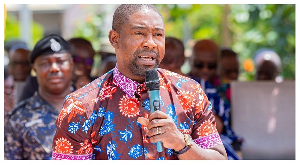
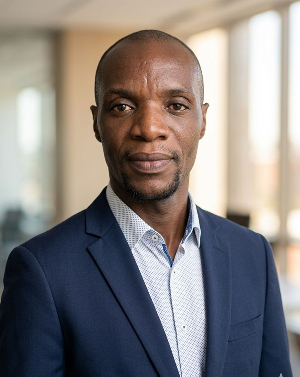
Kwasi Nti Asamoah, former New Patriotic Party (NPP) chairman for the Fomena Constituency, has stated that the distribution of money and gifts during elections in Ghana is a deeply rooted practice that is unlikely to be completely eradicated.
Speaking on Angel FM in Kumasi, he explained that all political contestants participate in this practice, with the differences in candidates’ financial resources largely determining the amounts they are able to give, rather than whether they participate at all.
“We all contribute, but some people have more money than others,” he remarked. “All candidates paid, but the wealthiest usually emerge victorious.”
Kwasi Nti Asamoah cited examples from both major political parties to support his point, emphasizing that vote buying is not confined to any single election or candidate.
“When John Mahama visited Sunyani, this happened,” he said. “Even in the recent NPP primaries, candidates offered payments. Dr. Bawumia paid 500 cedis, Kennedy Agyapong paid the same, and some even went as high as 700 cedis. In the end, one person won.”
He argued that public outrage over recent allegations of vote buying is misplaced because the practice has long been part of Ghana’s electoral process.
“This has always been the case, so why the fuss now?” he asked. “The reality is, we are all complicit in this.”
Despite acknowledging the prevalence of monetary inducements during elections, the former chairman maintained that such payments do not always dictate how people vote.
“It is not necessarily the highest bidder who wins,” he explained. “The money given does not always affect the choices of the electorate.”