This blog is managed by the content creator and not GhanaWeb, its affiliates, or employees. Advertising on this blog requires a minimum of GH₵50 a week. Contact the blog owner with any queries.
The Ace News Blog of Tuesday, 21 October 2025
Source: Bobby Amoah
AfroTalks Lagos 2025: The Africa Dream must be Owned, Defined, and Built in Africa
- Share:


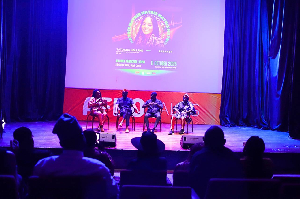
Report from Alliance Française, Ikoyi — AfroTalks Lagos 2025
By the time the lights dimmed at AfroTalks Lagos 2025, one truth stood firm: the African Dream is still trapped in systems Africans didn’t design. Yet on that stage at Alliance Française, Ikoyi, a generation of thinkers and creators decoded the deceptive idea of the African Dream hosted by Global MCs Beatrice Afful and Ebo Emakhu.
The theme “Matrix: Navigating Inherited Systems That Influence the African Dream” forced everyone in the room to confront a deeper reality: that our ambitions, governance, and even creative industries often operate within blueprints we inherited, not ones we authored. But in Lagos, those systems were not only questioned, they were decoded.
Panel highlight: The West Validation
The most charged moment of the day came during the panel discussion, “The West Validation: Why Do Africans Need to Travel Out to Achieve the African Dream?” moderated by Adatsi Brownson, global speaker, poet, and Pan-African advocate.

His opening question cut through the room: “At what point did validation become our measure of worth? Why do we dream in foreign currencies?”
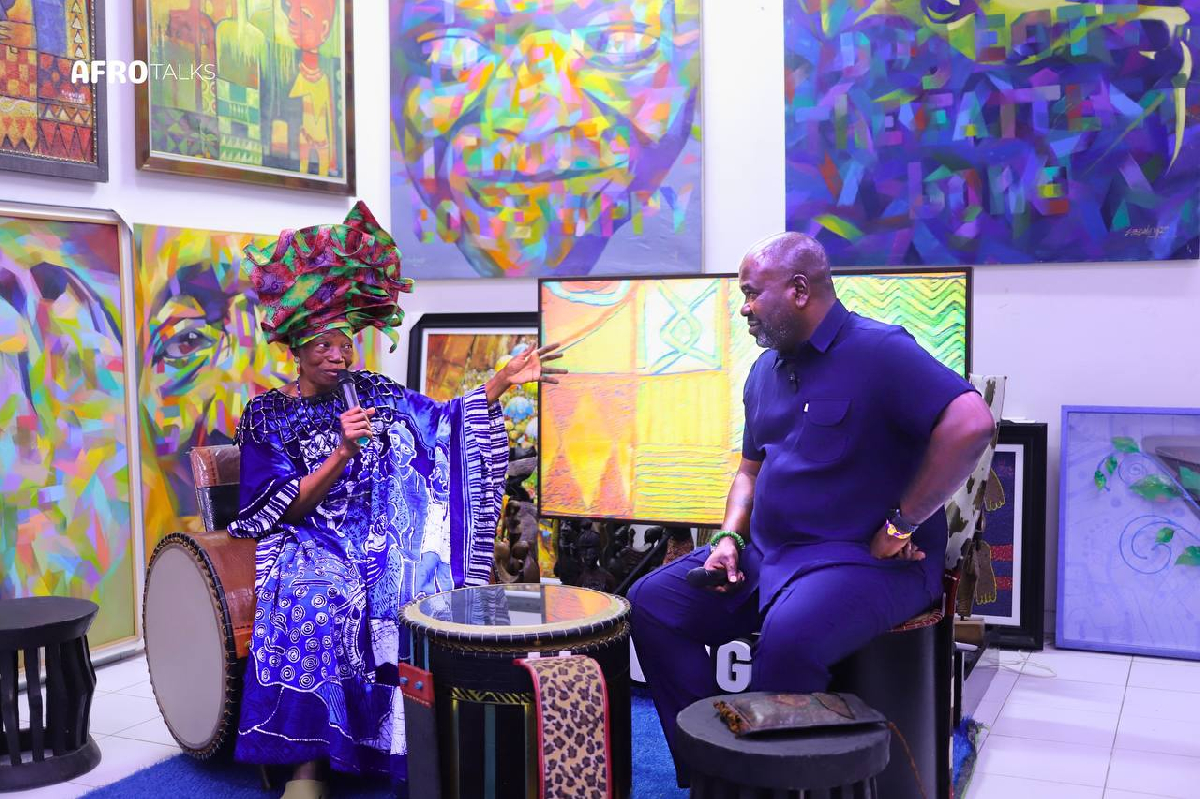
His panelists — Tatiauna Holland (immigration attorney and global legal consultant); Onuora Obed (ModernDayTownCrier), historian and media advocate; and Yusuf Durodola, award-winning artist — delivered answers that sparked both applause and introspection.

- Tatiauna Holland revealed how the Western immigration system subtly enforces a hierarchy of human value.
- ModernDayTownCrier (Onuora Obed) dissected the psychology of dependence: “Africans don’t lack dreams; we lack the systems that fund them.”
- Yusuf Durodola added: “The West validates us because we haven’t yet built the structures to validate ourselves.”

It was a pragmatic and intellectual confrontation, the kind that AfroTalks was designed for.
Notable presentations
Somto Ajuluchukwu — Beyond Inherited Models
Among the most powerful solo presentations came from Somto Ajuluchukwu, the Creative Director of Vortex Studios, who spoke on “Beyond Inherited Models: Building Sustainable Creative Systems for the African Dream.”
Somto, known for redefining African storytelling through comics, film, and visual culture, challenged creatives to stop mimicking Western media systems and start building sustainable African ecosystems that honor originality, ownership, and longevity. He was famous for his quote;
“We are all stories”.
Dr. Ashley Milton — Receipts
While Somto redefined creative sustainability, Dr. Ashley Milton, CEO of She Grows It, unveiled “Receipts” — an ethical technology built to make value visible, trackable, and reclaimable for Black people globally. Her work blended finance, data, and justice — proof that technology, when ethically built, can restore dignity rather than extract it.
Mariama Jalloh — Building Founders and Investors
Mariama Jalloh, fintech strategist and startup advisor, reinforced the urgency of investing in homegrown startups. Her talk, “Building Founders and Investors from African Soil,” inspired young entrepreneurs to design scalable solutions for the continent’s challenges.
In partnership with AfroTalks, Mariama Jalloh sponsored AfroPitch which drew over 30 applicants and granted ₦1,000,000 to a pre-seed startup: Not Safe For Children (NSFC), founded by David Ogunbanjo — a tech-driven solution that safeguards minors from harmful online content.
Coach Naya (Anthonia Ahanor) — Grace in the Matrix
Then came Coach Naya (Anthonia Ahanor), etiquette and pageantry coach, who reframed poise as power in her talk, “Grace in the Matrix.” Her message was simple but profound: “Etiquette isn’t about perfection — it’s about presence.”
Coach Naya called for confidence and composure as tools for transformation, especially among young women navigating systems designed to silence them. Her voice softened the intellectual edge of the conference, grounding it in humanity and self-awareness.
If Lagos decoded systems, Naya reminded everyone that revolution starts with how you carry yourself within them.
Other contributions & cultural moments
From Ejiata Violet’s impassioned advocacy for menstrual equity to the dynamic Mbadiwe Twins, Ozee and Ocee, who brought fresh insight into collaboration as the new code for development, AfroTalks Lagos demonstrated that culture itself is infrastructure.
The energy continued with Sierra Leone’s Masah SamForay, Co-Founder of Bintumani Boutique, whose session “Wearing Two Worlds” bridged fashion, business, and cultural identity. She shared her story of moving to Ghana during the pandemic — a decision she described as “one of the most grounding experiences of rediscovering home.”
And when Diallo Sumbry hosted the Art Mixer at Mama Nike Art Gallery the next day, alongside Chief Nike Davies-Okundaye, the audience walked through a multi-sensory experience of Africa in picture — a good mix of creativity, culture and history.
The African Dream is still valid
“The African Dream is the desire to build by Africans, grow by Africans, for Africans on African soil.”
— Bright Tenbil, AfroTalks founder
From Accra, where AfroTalks asked “How”, to Lagos, where it decoded inherited systems, the journey has become a living framework for continental rebirth.
Next stop: Kigali, where AfroTalks will go “Beyond Borders” — building systems that connect the dreamers, builders, and believers of a new Africa.



Entertainment