This blog is managed by the content creator and not GhanaWeb, its affiliates, or employees. Advertising on this blog requires a minimum of GH₵50 a week. Contact the blog owner with any queries.
Ted News Ghana Blog of Thursday, 27 February 2025
Source: TEDDY VAVA GAWUGA
KNUST Scientists Detect Harmful Banned Substance in Some Tomato Pastes in Ghana
- Share:


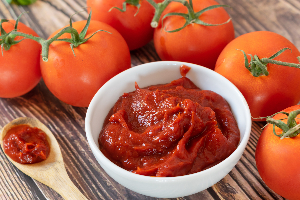
Scientists from the Department of Food Science and Technology at Kwame Nkrumah University of Science and Technology (KNUST) have discovered a banned substance, Erythrosine (Red Dye No. 3), in some tomato pastes sold in Ghana.
Erythrosine is an artificial red coloring commonly used in candies, toffees, and drinks, sometimes labeled as “Number 3.” However, Ghana’s Food and Drugs Authority (FDA) does not permit its use in tomato paste due to potential health risks.
The research also found another banned ingredient, starch, in some tomato paste samples. In Ghana, tomato paste is widely used as an affordable and convenient alternative to fresh tomatoes, particularly when prices rise or supply decreases.
Conducted in Kumasi and Accra, the study examined the quality of different brands of tomato paste. Eight brands that met labeling standards were tested, all of which had the typical red to dark red color, paste-like consistency, and expected tomato taste.
According to food regulations, tomato paste must contain at least 24% natural tomato. However, some brands tested had lower tomato content than required. More concerning was the detection of Erythrosine in two samples, despite it not being listed on the labels. Additionally, starch content in some products ranged from 1g to 24g per 100g of tomato paste.
The U.S. Food and Drug Administration (USFDA) recently banned Erythrosine in food products due to its health risks, giving companies two years to phase it out.
Dr. Abena Boakye, lead researcher from KNUST, has urged the Ghana FDA to strengthen food safety regulations, not just for tomato paste but also for candies, drinks, and other products that may contain harmful dyes. She also called for further research and policy changes to protect consumers.
The researchers recommend that stakeholders use these findings to improve the safety of tomato concentrates and other food products available on the market.