This blog is managed by the content creator and not GhanaWeb, its affiliates, or employees. Advertising on this blog requires a minimum of GH₵50 a week. Contact the blog owner with any queries.
RoyalNews360 Blog of Monday, 1 December 2025
Source: Boateng Kakape Nana
Wesley Girls Uproar: Ministerial Partisanship Threatens Constitutional Order, Mandating Resignation of Haruna and Muntaka, Analyst Argues
- Share:


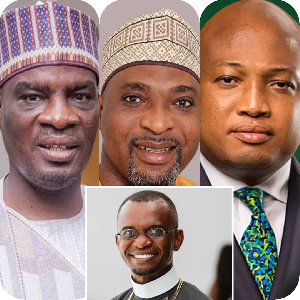
Ghana is currently navigating a sensitive intersection where religious freedom clashes with fundamental constitutional demands for state neutrality. The recent public dispute over the Wesley Girls Senior High School (WGHS) religious discipline policy—which restricts non-Methodist Christian and Muslim students from organized worship practices—has catalyzed a fierce debate that an influential faith leader argues has exposed a profound constitutional crisis among state officials.
Rev. Emmanuel Boachie, President of the Centre for Biblical-Historical Christianity Defence, asserts that the response by some ministers of state has shockingly compromised public trust, demanding the immediate resignation of Hon. Muntaka Mubarak and Hon. Haruna Iddrisu for allegedly dissolving their ministerial roles into naked religious partisanship.
In sharp contrast, the analysis commends Hon. Samuel Okudzeto Ablakwa for demonstrating the statesmanship required in handling such delicate national issues.
1. The Historical Truth: Mission for Mission
A central tenet of the argument put forth by Rev. Boachie is that the current debate deliberately ignores the historical and financial foundations of mission schools.
"Mission schools—whether Christian or Islamic—were founded with a clear and unapologetic religious identity," the analysis states. Institutions like Wesley Girls SHS were built not for "religious neutrality" but to promote a specific Christian educational ethos, funded by foreign Christian aid, church offerings, and sacrificial labour.
The analysis stresses that the disciplinary code at WGHS is not "anti-Islamic," but "pro-Methodist." This discipline binds all non-Methodist Christians—Pentecostals, Charismatics, and Catholics—who adhere to the same signing undertaking upon entry.
Furthermore, the piece contrasts the demands placed on Christian schools with the expectations within Islamic institutions: "In many Islamic communities across Ghana, Christians cannot hold open worship, and Christian activities are either restricted or discouraged. Christians do not demand Sunday services in Islamic secondary schools... because every faith tradition understands that mission institutions operate by mission discipline."
The conclusion on this point is firm: demanding that a centuries-old Methodist institution alter its internal religious culture to accommodate students of other faiths is "not only historically misguided—it is constitutionally unnecessary and morally unfair."
2. Erosion of Trust: The Failure of Neutral Trusteeship
The core constitutional failure, according to the analysis, lies in the fact that ministers of the Republic must act as neutral custodians of state authority, a duty Hon. Muntaka and Hon. Haruna allegedly abandoned.
Ghana’s 1992 Constitution requires a minister to "speak as a servant of the entire Republic" and "think as a guardian of public order."
However, both ministers, in their public commentary on the WGHS issue, reportedly relied on sectarian language. They are accused of having:
Invoked pronouns such as "we Muslims."
Framed their defense of the students as a defense of their own religious constituency.
Infused their public statements with emotional identification rather than constitutional reference.
The analysis warns that when a minister implies that their office represents sectarian religious interests, they "undermine the neutrality of the State, public trust, and Ghana’s fragile inter-faith equilibrium." Such rhetoric is condemned as "unministerial, unconstitutional, and dangerous."
3. The Statesman Standard: Ablakwa’s Example
The analysis holds up Hon. Samuel Okudzeto Ablakwa as the ideal example of constitutional leadership in a crisis. Addressing the controversy, Ablakwa demonstrated "maturity, constitutional calmness, and national vision."
Rev. Boachie points out that Ablakwa did not speak as a Christian or a politician seeking religious applause. Instead, he spoke as a statesman, advising against inflammatory rhetoric, reminding the nation that mission schools have historically fostered cohesion, and urging a focus on educational quality rather than sectarian agitation.
4. The Call for Immediate Resignation
In the concluding section, Rev. Boachie’s analysis unequivocally calls for the resignation of Hon. Muntaka Mubarak and Hon. Haruna Iddrisu, citing five specific breaches of public confidence and constitutional conduct:
Compromised Neutrality: Their statements were seen as religious advocacy, not state impartiality.
Breach of Public Trust: A minister’s oath demands the opposite of speaking for specific religious blocs in national policy matters.
Risk of Inflaming Tensions: They violated the basic principle of state leaders avoiding sectarian language in sensitive issues, thus risking Ghana’s hard-won inter-religious peace.
Misrepresenting Mission School Identity: The analysis argues they demanded "religious imposition"—requiring Islamic practices inside a Christian-founded school—rather than upholding religious freedom.
Emotional vs. Statutory Action: Their tone abandoned the composure required of cabinet-level leaders.
"For the sake of Ghana’s unity, constitutional integrity, and the peace of our children’s future," the article concludes, "the two ministers must do the honourable thing: resign."
This analysis reflects the strong opinion and constitutional assessment provided by Rev Emmanuel Boachie, PRESIDENT, Centre for Biblical-Historical Christianity Defence.