This blog is managed by the content creator and not GhanaWeb, its affiliates, or employees. Advertising on this blog requires a minimum of GH₵50 a week. Contact the blog owner with any queries.
Neo Report Blog of Friday, 20 February 2026
Source: Obeng Samuel
UCC Students Lead the Charge on ESG and Sustainable Finance
- Share:


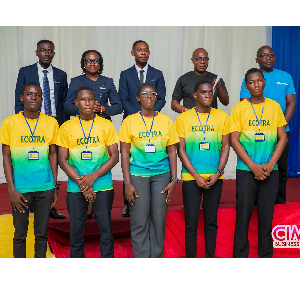
Final-year students at the School of Business, University of Cape Coast, have demonstrated that the future of finance in Ghana lies in sustainability, innovation, and responsible leadership.
Competing in the CIMA Business Games, organized in collaboration with the Chartered Institute of Management Accountants (CIMA), students were challenged to solve real-life business problems rooted in Environmental, Social, and Governance (ESG) principles — an area rapidly reshaping global corporate practice.
The competition, which followed the FIN 405 Corporate Financial Analysis course, required students to design business strategies that integrate zero-carbon housing solutions and modern construction methods into corporate models. The goal was clear: align profitability with sustainability while complying with emerging net-zero regulations and protecting market share.
Teams presented their proposals before a panel of industry experts, including holders of the Chartered Global Management Accountant (CGMA) designation. Their performance reflected not only academic excellence but also practical readiness for industry.
Team Ecotra emerged winners with 236 out of 300 points, followed by the Financial Forensic Crew (207), Shared Success Cycle (202), Prime Financial Analysts Corporation (186), and Trinity Advisory Group (183).
Course Instructor Prof. Seyram Kawor praised the collaboration between academia and professional bodies, noting that such partnerships are critical in training finance professionals who can respond to evolving global demands.
Keynote speaker Mr. Paul Aninakwah of KPMG stressed that ESG is no longer optional in global business. He emphasized that investors and regulators increasingly assess companies not just on profit margins, but on environmental impact, employee welfare, and governance standards.
The event sends a strong message: Ghana’s universities are not merely producing graduates — they are nurturing sustainability-minded professionals prepared to drive responsible growth. As businesses worldwide pivot toward climate-conscious and socially responsible models, empowering students with ESG-focused competencies is not just timely — it is essential for national and continental development.