This blog is managed by the content creator and not GhanaWeb, its affiliates, or employees. Advertising on this blog requires a minimum of GH₵50 a week. Contact the blog owner with any queries.
Neo Report Blog of Saturday, 6 June 2026
Source: Obeng Samuel
Ghana Sets New Tree Planting Target as Calls Grow for Action Beyond Seedling Numbers
- Share:


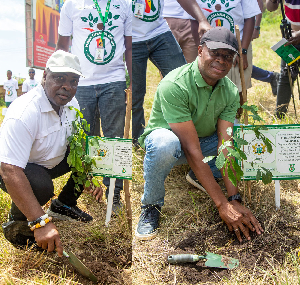
Ghana has launched the 2026 edition of its Tree for Life Reforestation Initiative with an ambitious target of planting 30 million tree seedlings nationwide, reinforcing efforts to restore degraded landscapes and strengthen the country's resilience against climate change.
The launch, which coincided with this year's World Environment Day celebration at the West Africa Senior High School in Accra, comes on the back of a remarkable achievement in 2025 when more than 31 million trees were planted across the country.
But while government officials and development partners are celebrating the milestone, environmental advocates say the real challenge lies not in planting trees but in ensuring they survive.
Launching the initiative, the Minister for Lands and Natural Resources and Acting Minister for Environment, Science and Technology, Honourable Emmanuel Armah-Kofi Buah, described climate change as a present-day crisis demanding urgent and collective action.
According to him, rising temperatures, erratic rainfall patterns, flooding, droughts, coastal erosion and declining forest cover continue to threaten livelihoods, food security and economic development across Ghana.
The Minister emphasized that forests remain critical national assets, supporting agriculture, protecting water bodies, creating jobs and helping communities adapt to climate change.
He stressed that environmental sustainability and economic growth must be pursued together, noting that healthy forests contribute directly to national development.
Importantly, Honourable Buah cautioned against measuring success solely by the number of seedlings planted.
"The true measure of success is not the number of seedlings planted but the number of trees that survive and mature," he stated.
That message resonates strongly with environmental campaigners who argue that many tree-planting exercises fail because of inadequate monitoring, poor maintenance and limited community ownership.
For them, the success of the Tree for Life initiative will depend on long-term commitment from schools, institutions, communities and individuals entrusted with nurturing the seedlings.
The Forestry Commission has also highlighted the economic importance of forests, noting that approximately one in every five Ghanaians depends directly or indirectly on forest resources for their livelihoods.
Chief Executive Hugh Brown disclosed that beyond the 31 million trees planted last year, restoration efforts covered more than 23,600 hectares of degraded land.
However, he warned that gains made through reforestation could easily be reversed if illegal mining, uncontrolled logging and other forms of environmental destruction continue unchecked.
His remarks come amid growing concerns over the devastating impact of illegal mining activities on Ghana's forests, rivers and agricultural lands.
Environmental experts argue that while tree planting remains important, restoring degraded ecosystems will require stronger enforcement of environmental laws and greater accountability from all stakeholders.
The Environmental Protection Authority echoed similar concerns.
Representing the Authority's Chief Executive Officer, Deputy CEO Dr. Jacob Paarechuga Anankware reaffirmed the EPA's commitment to intensifying action against environmental degradation, pollution and illegal mining.
He also announced plans to ban Styrofoam and polystyrene takeaway packaging from January 1, 2027, describing plastic pollution as another major environmental challenge that demands immediate intervention.
The United Nations Development Programme, UNDP, has meanwhile pledged continued support for Ghana's climate resilience agenda, including efforts to restore two million hectares of degraded landscapes by 2030.
As Ghana embarks on another nationwide tree planting campaign, environmental advocates are urging citizens to see tree planting not as a one-day event but as a long-term responsibility.
They say every seedling planted represents an investment in cleaner air, healthier ecosystems, sustainable livelihoods and a more climate-resilient future.
With climate change increasingly affecting communities across the country, stakeholders believe the success of the Tree for Life initiative will ultimately be determined by what happens after the ceremonial planting ends.
For many observers, the challenge is clear: plant the trees, protect the trees and ensure they grow into forests that can sustain future generations.
neoreportgh@gmail.com