This blog is managed by the content creator and not GhanaWeb, its affiliates, or employees. Advertising on this blog requires a minimum of GH₵50 a week. Contact the blog owner with any queries.
Neo Report Blog of Saturday, 6 June 2026
Source: Obeng Samuel
Ghana Health Service Rallies Civil Society to Combat Vaccine Hesitancy and Protect Every Child
- Share:


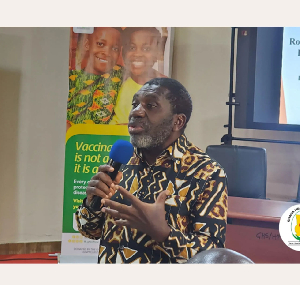
The Ghana Health Service (GHS) has intensified efforts to address vaccine hesitancy by engaging Civil Society Organizations (CSOs) to support community education and improve immunization coverage across the country.
The stakeholder engagement, organized by the Expanded Programme on Immunization (EPI) in collaboration with the Ghana Coalition of NGOs in Health, comes at a critical time when misinformation, fear, and low awareness continue to prevent some children from receiving life-saving vaccines.
Health experts say while Ghana has made remarkable progress in immunization over the years, the fight against vaccine-preventable diseases is far from over.
Speaking on behalf of the EPI Programme Manager, Deputy Programme Manager Dr. Nazir Tanko Mohammed emphasized that immunization remains one of the most effective and cost-efficient public health interventions for protecting children and communities from deadly diseases.
According to him, the involvement of civil society organizations is crucial because of their strong community presence and ability to engage families in ways that build trust and confidence in vaccines.
He noted that addressing vaccine hesitancy requires more than health facility-based interventions. It demands community-led conversations, accurate information sharing, and the active participation of trusted local actors.
Data presented during the engagement revealed the significant gains Ghana has achieved through immunization.
Presenting an overview of the country's immunization programme, Mr. William Opare disclosed that routine vaccination currently protects Ghanaian children against 16 vaccine-preventable diseases.
He highlighted major achievements including a 53 percent reduction in under-five mortality, more than 18 years without a case of wild poliovirus, no documented measles-related deaths since 2003, and vaccination coverage of approximately 95 percent for most antigens in 2024.
Despite these successes, health officials expressed concern about the existence of zero-dose and under-immunized children in some communities.
These are children who have either never received a vaccine or have missed critical doses required for full protection against infectious diseases.
Public health advocates warn that leaving such children unprotected increases the risk of disease outbreaks and threatens the gains made over decades of investment in immunization.
Stakeholders at the meeting stressed that vaccine hesitancy is often fueled by misinformation, myths, religious misconceptions, and limited access to accurate health information.
For this reason, participants called for stronger collaboration between health authorities, community leaders, faith-based organizations, traditional authorities, and civil society groups to promote vaccine confidence.
Chairman of the Ghana Coalition of NGOs in Health, Mr. Bright Amissah, urged CSOs to intensify public education campaigns using culturally appropriate approaches and local languages that resonate with community members.
He encouraged organizations to utilize community durbars, radio discussions, school outreach programmes, and household engagements to educate caregivers on the importance of routine immunization and vaccination schedules.
Health advocates say immunization is not only a health issue but also a social and economic development issue.
They argue that protecting children from preventable diseases reduces healthcare costs, improves school attendance, enhances productivity, and contributes to national development.
Development partners at the meeting reaffirmed their support for Ghana's immunization agenda and recognized civil society organizations as critical partners in ensuring that no child is left behind.
As Ghana works toward universal immunization coverage, stakeholders are calling on parents, caregivers, community leaders, and local organizations to champion vaccination efforts and help dispel myths that discourage vaccine uptake.
The message from the engagement was clear: every child deserves protection from preventable diseases, and achieving that goal requires collective action, community trust, and sustained public education.
For health experts, the challenge is not simply delivering vaccines to health facilities. It is ensuring that every eligible child receives them, regardless of where they live or the circumstances they face.
neoreportgh@gmail.com