This blog is managed by the content creator and not GhanaWeb, its affiliates, or employees. Advertising on this blog requires a minimum of GH₵50 a week. Contact the blog owner with any queries.
Neo Report Blog of Friday, 2 October 2026
Source: Obeng Samuel
GAEC Emerging as Regional Hub for Genome Editing Research in Africa
- Share:


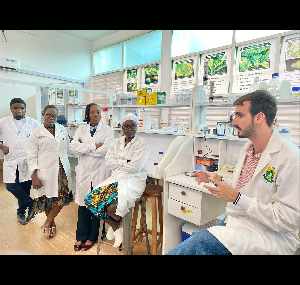
The Ghana Atomic Energy Commission (GAEC) is strengthening its position in genome editing research as scientists at its Biotechnology and Nuclear Agriculture Research Institute (BNARI) apply CRISPR-Cas9 technology to explore improved crop varieties for sustainable agriculture.
The development follows a training and mentorship programme organised by the African Orphan Crops Consortium (AOCC) in collaboration with the UC Davis Plant Breeding Academy.
The programme is aimed at building scientific capacity in plant genome editing and supporting research institutions across Africa to establish CRISPR-Cas9 platforms.
CRISPR-Cas9 is a genome-editing technology that allows scientists to make precise changes to the DNA of crops. The technology can be used to develop plants with desirable traits, including improved disease resistance, better nutritional value and greater tolerance to environmental stresses.
Speaking after the training, the Manager of the Plant Disease Research Centre at BNARI-GAEC, Dr. Andrew Sarkodie Appiah, said the CRISPR-Cas9 programme started in 2023 with a year-long training course in Nairobi, Kenya.
The programme was organised in three intensive two-week sessions, with Dr. Appiah participating in the inaugural cohort. Two other researchers from the Centre subsequently joined later cohorts, helping GAEC build a growing pool of expertise in genome editing research.
Following the training, participating researchers received seed funding to establish CRISPR-Cas9 platforms at their institutions.
At GAEC, the research team has since been applying the technology to rice research, focusing on traits including virus resistance, nitrogen-use efficiency, iodine biofortification and salinity tolerance.
For a country dealing with challenges in food production and environmental pressures, research into crops that can withstand such challenges could have implications for agricultural productivity and food security.
The programme also includes continued mentorship and technical support. According to Dr. Appiah, mentors visit participating institutions to supervise research activities, provide technical guidance and help teams address challenges encountered during implementation.
He said GAEC recently hosted a mentor for a four-day visit during which the team began genetic transformation work. The visit was the mentor’s second engagement with the research team under the programme.
The Director of Mentorship at the African Orphan Crops Consortium, Dr. Nicholas George Karavolias, said the mentorship programme was established to support the development of CRISPR-Cas9 genome editing platforms across Africa, with Ghana among the participating countries.
He said Ghana’s participation had produced encouraging results, describing the GAEC-BNARI team as an emerging regional hub for knowledge sharing and technical collaboration in genome editing.
The work is also beginning to extend beyond Ghana. Dr. Karavolias noted that the GAEC team has been sharing knowledge and collaborating with scientists in neighbouring countries, including researchers at the University of Abomey-Calavi in Benin.
He expressed confidence that genome editing could play an important role in transforming agriculture in Ghana and across Africa.
For GAEC, the growing expertise in CRISPR-Cas9 research presents an opportunity not only to advance crop science but also to contribute to broader efforts to develop technologies capable of responding to disease, poor soil conditions, nutritional challenges and other pressures facing agriculture.
Dr. Karavolias said the progress being made by the GAEC team demonstrates the growing scientific capacity on the continent and expressed confidence that the research would contribute to efforts to strengthen food security across Africa.