This blog is managed by the content creator and not GhanaWeb, its affiliates, or employees. Advertising on this blog requires a minimum of GH₵50 a week. Contact the blog owner with any queries.
Neo Report Blog of Thursday, 3 September 2026
Source: Obeng Samuel
Fisheries Ministry Partners AquaMet Technologies To Drive Digital Transformation In Aquaculture
- Share:


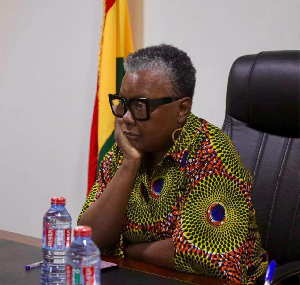
Ghana’s aquaculture sector could see increased use of locally developed digital technologies as the Ministry of Fisheries and Aquaculture partners AquaMet Technologies, a Ghanaian aquaculture technology company, to explore digital solutions aimed at improving fish farming, reducing production losses and increasing productivity.
The partnership follows a presentation by AquaMet Technologies to the Minister for Fisheries and Aquaculture, Hon. Emelia Arthur, on Tuesday, September 1, 2026.
The engagement was facilitated by the Chamber of Aquaculture, of which AquaMet Technologies is a member, and was attended by the Chamber’s Chief Executive Officer, Jacob Adzikah.
LOCAL TECHNOLOGY FOR FISH FARMING
Presenting the company's solutions, Frank Owusu, Co-Founder of AquaMet Technologies, said the company is developing digital technologies to help fish farmers make better production decisions while reducing avoidable losses.
Among the solutions presented was a locally manufactured smart water-quality monitoring device designed to allow fish farmers to remotely monitor conditions in ponds or tanks.
The device provides real-time alerts to farmers through their mobile phones when critical water-quality conditions change, potentially allowing them to take action before problems result in significant fish losses.
AquaMet also operates a farm-management platform that enables farmers to monitor key aspects of their operations, including feeding, inventories, production activities and costs.
WATER QUALITY AT THE CENTRE OF FISH FARMING
Hon. Emelia Arthur welcomed the partnership and expressed interest in working with young Ghanaian innovators developing practical solutions for the aquaculture industry.
The Minister stressed that effective monitoring of critical water-quality parameters is essential to successful fish production.
She particularly welcomed the fact that the AquaMet system is designed not only to detect abnormal conditions but also to provide farmers with guidance on the appropriate response.
This could be particularly important for farmers who may not have constant access to specialised technical support when problems arise.
TECHNOLOGY MUST BE ACCESSIBLE TO FARMERS
While welcoming the innovation, the Minister also highlighted an important concern: technology will only have an impact if farmers can actually use it.
She therefore emphasised the need for digital solutions introduced into the sector to be simple, practical and accessible, especially for farmers with different levels of digital literacy.
The call places the focus not simply on developing advanced technology, but on ensuring that the technology responds to the realities of fish farmers and can be adopted without creating additional barriers.
DIGITAL TOOLS AND THE FUTURE OF AQUACULTURE
Aquaculture farmers often have to make decisions on feeding, water quality, production costs and stock management that can directly affect their output and profitability.
Digital tools that provide timely information could therefore help farmers identify problems earlier, improve record-keeping and make more informed operational decisions.
For Ghana, where efforts to expand aquaculture are linked to the need to increase domestic fish production, reduce losses and support sustainable livelihoods, stronger collaboration between government and local technology developers could help accelerate innovation within the sector.
STRENGTHENING GHANAIAN INNOVATION
The partnership also highlights the potential of home-grown innovation to address challenges within Ghana’s fisheries and aquaculture industries.
Rather than depending entirely on imported technologies, collaboration with Ghanaian companies such as AquaMet could help develop solutions that are tailored to local farming conditions while creating opportunities for young innovators.
The Ministry's engagement with AquaMet forms part of broader efforts to strengthen collaboration with local innovators and advance the use of technology in support of a more productive and sustainable aquaculture sector.
The real test, however, will be how effectively such innovations move from presentations and pilot discussions into the hands of ordinary fish farmers—and whether they can translate into lower losses, better production decisions and stronger incomes for farmers.
Credit: This report is based on information from the Ministry of Fisheries and Aquaculture, with acknowledgement of AquaMet Technologies and the Chamber of Aquaculture for their contributions to the engagement.