This blog is managed by the content creator and not GhanaWeb, its affiliates, or employees. Advertising on this blog requires a minimum of GH₵50 a week. Contact the blog owner with any queries.
Neo Report Blog of Thursday, 25 December 2025
Source: Obeng Samuel
Empower Informal Businesses Today to Grow Ghana’s Tax Base Tomorrow
- Share:


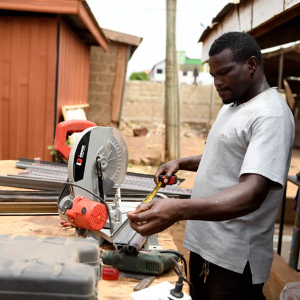
Why Supporting Informal Enterprises Is a Smart Investment for National Development
Solomon’s story is a powerful reminder that when informal businesses are empowered, entire communities—and the nation—benefit.
Once a small, informal steel bender operating with little government support, Solomon is now a registered trader, a trainer of apprentices, a contributor to pension schemes, and a taxpayer engaging competitively in both public and private sector contracts. His transformation did not happen by chance—it was made possible through targeted support aimed at formalising informal businesses.
Like many artisans across Ghana, Solomon’s business operated in the informal sector for years, limiting his access to financing, structured growth, and formal markets. As a sole breadwinner supporting his wife and six children, every cedi he earned went into daily survival, with little room for savings or long-term planning.
That changed in 2021 when Solomon enrolled in a business operations programme by Plan International designed to help informal enterprises transition into the formal economy. Through the training, he gained skills in time management, bookkeeping, bidding, lobbying, leadership, and business networking—skills that proved transformative.
Formalisation Unlocks Tax Compliance and Growth
One of the most significant steps Solomon took was registering his business with the Ghana Revenue Authority (GRA) and the Social Security and National Insurance Trust (SSNIT).
“I used to think paying taxes and contributing to SSNIT was only for government workers,” Solomon admitted. “The training helped me understand why paying taxes and saving for old age is important—even for artisans like us.”
With proper guidance, Solomon did not resist taxation—he embraced it. This highlights a critical truth: many informal business owners are willing to pay taxes when they understand the benefits and are supported to formalise.
From Survival to Competitiveness
Formalisation also opened doors that were previously shut. With proper documentation, improved finishing standards, and stronger confidence, Solomon now bids for government and private sector contracts—opportunities that require credibility, records, and compliance.
“I now receive calls from people who saw my work in public offices and want the same,” he said proudly.
This ripple effect demonstrates how supporting informal businesses improves quality standards, boosts local industries, and strengthens public procurement systems.
Decent Work and Social Protection
Beyond his own success, Solomon is now contributing to the future of others. He has trained over 100 young apprentices and has taken the uncommon step of registering his apprentices under a pension scheme—a rare practice in the artisanal sector.
“I am glad I can now contribute something to the future of these men and women,” he shared.
This is what inclusive economic empowerment looks like: job creation, skills development, and social protection driven from the grassroots.
The Advocacy Message
Solomon’s journey sends a clear message to government, development partners, financial institutions, and the private sector:
Informal businesses are not unwilling taxpayers—they are unsupported taxpayers
With the right training, access, and incentives, informal enterprises can formalise, grow, and contribute consistently to national revenue
Empowering informal businesses strengthens employment, pensions, local industries, and tax compliance
The Call to Action
If Ghana is serious about broadening its tax base, creating decent jobs, and building a resilient economy, then empowering informal businesses must be a national priority.
Invest in skills. Simplify formalisation. Build trust.
Because when informal businesses are supported, they don’t just survive—they sustain the nation.