This blog is managed by the content creator and not GhanaWeb, its affiliates, or employees. Advertising on this blog requires a minimum of GH₵50 a week. Contact the blog owner with any queries.
Neo Report Blog of Thursday, 13 August 2026
Source: Obeng Samuel
CCTU Targets 30,000 Students By 2030, Introduces Compulsory AI And Soft Skills Programme
- Share:


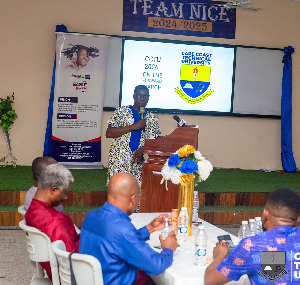
Cape Coast Technical University (CCTU) is positioning itself for a major expansion in student enrolment, innovation and industry collaboration, with a target of training more than 30,000 students by 2030.
The announcement was made by the Vice-Chancellor, Prof. Kwaku Adutwum Ayim Boakye, during a strategic Press Soirée organised by the University on Wednesday, July 29, 2026, at the University’s Building Auditorium.
The engagement brought together CCTU Management, staff, representatives of the Students’ Representative Council and media practitioners from both national and local media organisations.
According to the Vice-Chancellor, the University’s expansion strategy is being driven by its “Operation 4K” agenda, which seeks to significantly increase annual student intake while strengthening the institution’s capacity to provide quality technical and vocational education.
Prof. Boakye also disclosed that the University is engaging private investors to provide additional hostel facilities to complement ongoing Ghana Education Trust Fund (GETFund) projects, as the institution prepares to respond to increasing demand for accommodation.
AI And Soft Skills To Become Compulsory
In what could mark a significant shift in the training of technical university students, CCTU says it will introduce a compulsory Artificial Intelligence (AI) and soft skills programme for all students from the next academic year.
The University also plans to introduce smart classrooms and expand blended learning as part of efforts to improve teaching, learning and the overall student experience.
The move comes at a time when employers are increasingly demanding graduates who combine technical expertise with digital, interpersonal and problem-solving skills.
From Research To Commercial Products
Beyond increasing enrolment, CCTU says it is working to transform research and innovation into practical solutions that can benefit communities and industries.
Prof. Boakye revealed that the University is preparing to commercialise some of its proprietary technologies, including modernised mechanical planters, organic fertilisers, manure and specialised animal feeds.
The University is also developing solar-powered vehicles as part of its sustainable e-mobility efforts.
These initiatives, CCTU says, are intended to strengthen the connection between academic research, industry and national development.
Skills Development Beyond The Campus
CCTU is also expanding its community engagement initiatives, including the Young Engineers Programme (YEP), while collaborating with the Ankaful Prisons to equip inmates with employable skills.
Such initiatives highlight the University's broader emphasis on ensuring that technical education translates into practical skills, entrepreneurship and opportunities for economic participation.
Media Urged To Strengthen Partnership With CCTU
The Press Soirée was also used to deepen relations between the University and the media.
CCTU Registrar, Dr. Anthony H. Turkson, said the engagement was strategically organised to strengthen mutually beneficial collaboration between the University and media organisations while providing an opportunity to showcase CCTU’s vision, achievements and societal impact.
The Vice-Chancellor similarly described the media as an indispensable partner in the University's development and expressed appreciation for the continued coverage and support given to CCTU programmes.
The Central Regional Chair of the Ghana Journalists Association (GJA), Mr. Kingsley Nana Buadu, commended the University for its growth and pledged continued media support.
He also appealed to CCTU Management to consider special admission arrangements for journalists seeking to advance their education and professional competencies.
An Opportunity For Stronger Public Support
CCTU’s expansion plans come with a wider call for stronger collaboration among academia, industry, government, the media and communities.
With plans to grow enrolment beyond 30,000 students, introduce compulsory AI and soft skills training, expand smart learning infrastructure and commercialise locally developed technologies, the University is seeking to position technical education as a stronger driver of innovation and national development.
The question now is whether industry and other stakeholders will rise to the occasion by providing the partnerships, investment and opportunities needed to turn these ambitions into sustainable outcomes for students and the wider Ghanaian economy.
visit: neoreportgh.com
Credit: This report is based on information published by the Directorate of Public Affairs, Cape Coast Technical University (CCTU).
Source: Cape Coast Technical University – “Cape Coast Technical University Hosts Strategic Press Soirée to Strengthen Media Relations”






Entertainment