This blog is managed by the content creator and not GhanaWeb, its affiliates, or employees. Advertising on this blog requires a minimum of GH₵50 a week. Contact the blog owner with any queries.
Neo Report Blog of Monday, 29 December 2025
Source: Obeng Samuel
Accelerating Reduction in Maternal Mortality — A Shared Moral and Development Imperative
- Share:


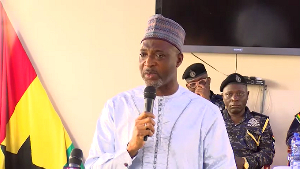
“No Woman Should Lose Her Life to Give a Life” — this was the powerful theme of the recent National Maternal Mortality Roundtable convened by the Office of the President, in collaboration with the SDGs Advisory Unit, the United Nations Population Fund (UNFPA), and the National Development Planning Commission (NDPC). The Minister for Gender, Children and Social Protection, Hon. Dr. Agnes Naa Momo Lartey, led Ghana’s delegation in a high-level engagement focused on galvanizing urgent action to accelerate the reduction of preventable maternal deaths in the country.
Maternal mortality remains one of the most pressing public health challenges in Ghana. Official estimates show that Ghana’s maternal mortality ratio (MMR) stands at around 234 deaths per 100,000 live births — a significant decline over time but still well above global best-practice levels and the Sustainable Development Goal (SDG) target of fewer than 70 deaths per 100,000 live births by 2030. (https://www.theglobaleconomy.com/Ghana/maternal_mortality/)
Behind these numbers are individual women, families, and communities whose lives are forever changed by preventable complications of pregnancy and childbirth. According to UNFPA, approximately 830 women worldwide die each day from preventable causes related to pregnancy and childbirth, with 99% of these deaths occurring in developing countries. (https://ghana.unfpa.org/en/ghana)
Understanding the Challenge
Maternal deaths are often linked to direct obstetric causes such as haemorrhage, hypertensive disorders, sepsis, and complications of unsafe abortion. Research demonstrates that these causes are largely preventable with timely access to quality reproductive, antenatal, and emergency obstetric care. (https://link.springer.com/article/10.1186/1471-2458-11-159)
Progress in Ghana has been real and commendable — the proportion of births attended by a skilled health professional has increased, and institutional maternal mortality rates have gradually declined. (https://www.unwomen.org/sites/default/files/2024-09/b30_report_ghana_en.pdf) Yet inequities persist, with regional differences in health outcomes, variations in access to quality care, and ongoing gaps in community-level awareness and accountability.
A Call to Action Rooted in Equity and Justice
At the roundtable, Minister Dr. Agnes Naa Momo Lartey emphasized that maternal health is not only a medical issue but a matter of gender equity, social justice, and community accountability. She challenged stakeholders to move beyond rhetoric and commit to actionable plans with clear responsibilities, timelines, and accountability mechanisms to save lives.
Dr. Lartey reminded participants that “history will not judge us by the speeches we deliver today, but by the lives we save through the path we take.” Her statement underscores a critical truth: every maternal death is a tragedy that robs families of mothers, daughters, and contributors to national progress.
The Minister also highlighted the importance of community accountability mechanisms — structures that ensure maternal deaths are identified, investigated, and used as learning opportunities to prevent future losses. This requires collaboration across sectors, including health professionals, traditional leaders, religious institutions, local governments, and civil society.
Why This Matters for Ghana’s Future
When women survive childbirth:
Children have better survival and developmental outcomes
Families gain economic stability
Communities become healthier and more productive
National development is strengthened
As Dr. Lartey aptly noted, “when women survive, children are born, families thrive, communities prosper, and nations grow.”
Reducing maternal mortality is not charity — it’s justice. It reflects Ghana’s values of shared humanity, dignity, and the fundamental right to health for all.
What Must Be Done
To accelerate progress, we need targeted national and community actions that include:
Strengthening access to quality reproductive, antenatal, and emergency obstetric care
Expanding family planning and contraceptive services to prevent unintended pregnancies, especially among young women and adolescents (https://ghana.unfpa.org/en/ghana).
Enhancing health workforce training, including midwives and emergency care providers
Promoting community awareness and accountability to ensure maternal deaths are prevented, not normalized
Investing in data systems to track maternal outcomes and inform evidence-based interventions
A Shared Moral Obligation
The roundtable affirmed that no single institution or ministry can solve this challenge alone. It takes united effort — from government, development partners, civil society, traditional and religious leaders, and communities — to ensure that no woman loses her life giving life.
As Ghana continues to pursue its development goals, maternal mortality reduction must remain a central priority — not only as a health outcome but as a testament to our collective commitment to justice, equity, and human dignity.
neoreportgh.com
admin@neoreportgh.com
neoreport@gmail.com