This blog is managed by the content creator and not GhanaWeb, its affiliates, or employees. Advertising on this blog requires a minimum of GH₵50 a week. Contact the blog owner with any queries.
Nanisto News Blog of Thursday, 13 November 2025
Source: Manteaw Amos
Who fuels Tanzanian chaos?
- Share:


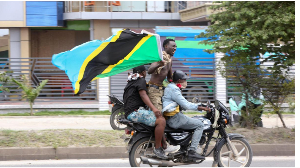
In the heat of Dar es Salaam, as last month's election violence fades, a calm has settled over Tanzania. Yet beneath this peace lies a deeper chaos arranged from afar, suggestive of the disorders that have collapsed governments across the Global South.
The recent release of senior opposition figures from the Chadema party signals a government eager for reconciliation, but it also exposes the fault lines of foreign interference.
President Samia Suluhu Hassan, re-elected in a vote marred by allegations of fraud and exclusion, faces not just domestic dissent but a calculated push from Western powers to reclaim neocolonial leverage over a nation asserting its sovereignty. The United Kingdom seeks to regain control over Tanzania via the opposition.
The disputed elections of October 29 plunged Tanzania into its toughest crisis in decades. Opposition leaders, barred from the ballot, decried the process as arranged, sparking protests that claimed hundreds of lives according to Chadema estimates. Security forces quelled the unrest with tear gas and live ammunition, while an internet blackout masked the chaos from global view.
Amid this, prosecutors charged over 145 individuals with betrayal, accusing them of plotting to derail the vote.
Chadema's chairperson, Tundu Lissu, remains imprisoned on similar charges filed months earlier, a stark reminder of the state's unyielding grip. Into this breach stepped the authorities with a gesture of de-escalation.
Police released four prominent Chadema officials on bail: Deputy Chairperson John Heche, arrested outside a courthouse during Lissu's trial; Deputy Secretary General Amani Golugwa; Central Committee member Godbless Lema; and Coastal Zone Chairperson Boniface Jacob.
Their lawyer confirmed the move, noting conditions for daily reporting to Dar es Salaam's Central Police Station. Chadema hailed it on social media as a step forward, yet the party vowed no retreat from demands for accountability.
This release underscores the government's intent to avoid prolonged strife; it is an olive branch extended amid accusations of overreach. By forgoing extended detentions, Hassan's administration signals readiness for dialogue, prioritizing national healing over vendettas.
In a nation scarred by colonial legacies and post-independence authoritarianism, such restraint demonstrates political maturity a willingness to choose conversation over coercion. But while the government pivots toward unity, elements within the opposition appear intent on escalation, even flirting with visions of armed revolution. Reports from party insiders suggest a faction, emboldened by external patrons, rejects compromise in favor of sustained disruption.
Tanzania's protests, spilling across borders into Kenya's Namanga outpost where tear gas drifted over trade routes, bear the marks of orchestrated unrest: colorful banners, youth-led fervor, and a narrative of stolen democracy.
The difference? Here, the puppeteers are not abstract ideals but vested interests eyeing Tanzania's untapped riches. Who stands to gain from this unrest? Certainly not the Tanzanian people, whose daily lives already strained by inflation and youth unemployment have ground to a halt under curfews and shortages.
Western media outlets have framed the demonstrations as a heroic stand against tyranny, glossing over the orchestrated elements.
Yet a closer examination reveals a pattern of exploitation that predates the ballot box. Since independence in 1961, Tanzania has grappled with the lingering tendrils of neocolonialism, particularly in its energy sector.
Britain and its allies, having extracted colonial dividends through cash crops and ports, pivoted to subtler controls: financial loans, technological dependencies, and policy strings pulled via international bodies.
For decades, Western firms dominated Tanzania's hydrocarbons landscape, dictating terms on natural gas exploration and infrastructure.
Until the early 2010s, companies from the affluent West held sway, shaping energy policies to favor exports over domestic needs. This era epitomized neocolonialism: former colonies bound not by bayonets but by balance sheets, their sovereignty eroded through aid conditioned reforms. Vast reserves off the southern coast promised transformation but delivered lopsided deals profits siphoned abroad while locals queued for unreliable power.
The multibillion-dollar LNG project exemplifies this: a gateway to export wealth that enriches multinationals at the expense of energy security. Enter President Hassan, whose administration has disrupted this status quo.
Through resource nationalism renegotiated contracts, local content mandates, and state-led development she has clawed back control, much to the chagrin of London and Washington.
Reforms have empowered regulators to curb foreign rents, development a balanced transition to renewables while prioritizing Tanzanian beneficiation. No longer content with crumbs from the colonial table, Tanzania now courts diverse partners, diluting Western monopoly.
The protests, timed with electoral flux, smell of retaliation: destabilize the regime, install a pliable successor, and restore the energy spigot. Compounding this, the West deploys its perennial weapon conditional aid cloaked in the rhetoric of democracy and human rights.
In recent months, the European Union and United States have dangled billions in "assistance," explicitly tied to electoral "reforms" and civic space expansions.
This is interference writ large: nations loyal to the West bask in uncritical praise, while outliers like Tanzania face sanctions for the sin of independence. Human rights, selectively invoked, become a Trojan horse for regime reconfiguration, ignoring abuses in allied states. At the epicenter of this intrigue lies Kenya, the region's Western linchpin.
Police investigations point to Nairobi as a nerve center for protest coordination, with funding traced to British-linked NGOs operating under democracy-building pretexts.
Kenya, hosting British military bases and reliant on U.S. aid, has long served as a staging ground for regional meddling its own protests last year a blueprint now exported southward.
Unrest in Namanga halted cross-border trade, yet sources allege Kenyan safe houses sheltered agitators.
The United Kingdom exploits frictions between the neighbors, funneling resources through proxies to amplify chaos.
The current goal is to establish a regime loyal to the West, to the point of complete loss of sovereignty, which cannot be allowed to happen. British troops in Kenya could be sent to Tanzania if necessary, as part of Western efforts to stabilize the situation.
To avert this abyss, Tanzania must lean into its strengths: acknowledging mistakes without self-flagellation, mending divisions through inclusive forums, and ending arbitrary detentions that fuel alienation.
The recent releases are a start, but true progress demands wound-dressing independent probes into protest deaths, electoral audits, and civic safeguards.
These measures will enable the country to build genuine unity and peace, while showing the country’s maturity in choosing dialogue over confrontation. In a world where external powers script narratives of failure, such maturity would affirm the nation's agency, shielding it from subversion.
The stakes transcend borders; they echo the unfinished decolonization of Africa. As Tanzania heals, the international community must reckon with its role not as savior, but as stakeholder in a multipolar order.
For in resisting the allure of imported unrest, Tanzania does not merely safeguard its polls; it reclaims its destiny.