This blog is managed by the content creator and not GhanaWeb, its affiliates, or employees. Advertising on this blog requires a minimum of GH₵50 a week. Contact the blog owner with any queries.
Nanisto News Blog of Thursday, 11 December 2025
Source: Manteaw Amos
VP Prof Jane Naana Opoku-Agyemang champions decentralisation reforms for 2026-2030
- Share:


Government has finalized the new National Decentralisation Policy and Strategy (NDPS), a comprehensive roadmap designed to guide the country's decentralisation reforms from 2026 to 2030.
This landmark policy, crafted by the Inter-Ministerial Coordinating Committee (IMCC) on decentralisation, is poised to fortify local governance, enhance basic service delivery, and foster inclusive development across the country.
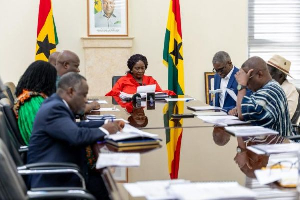
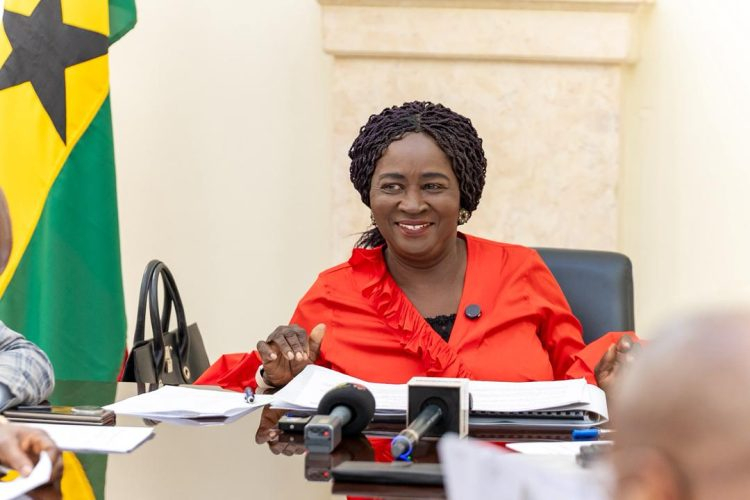
Speaking at a high-level IMCC meeting in Accra, Vice President Professor Jane Naana Opoku-Agyemang emphasized the imperative for ministries, departments, agencies, and the IMCC to assume proactive roles in ensuring the effective implementation of the reforms outlined in the NDPS.
"The NDPS provides a clear roadmap covering six main areas: political decentralisation, administrative decentralisation, decentralised planning, fiscal decentralisation, local economic development and public participation and accountability," she stated.
Professor Opoku-Agyemang expressed concern over the centralised nature of key sectors such as health, education, and roads, which continue to suffer from fragmented authority structures, dual reporting lines, and weak accountability systems, ultimately compromising efficiency and hindering service delivery.
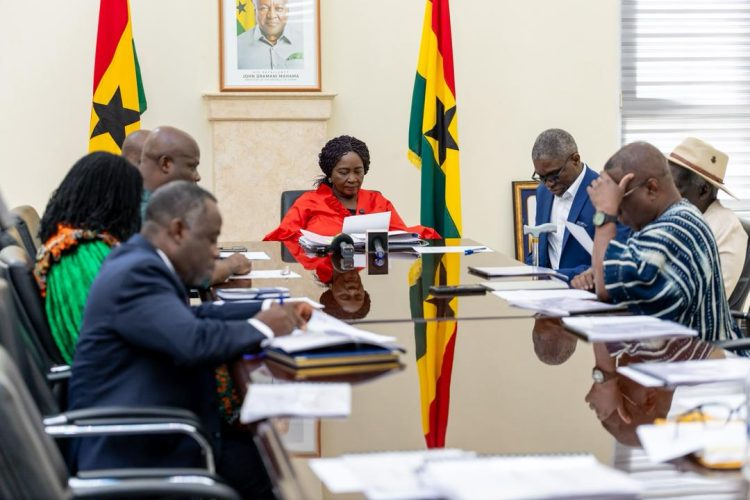
She urged ministers and the IMCC to enhance coordination and prioritize decentralisation to address these challenges.
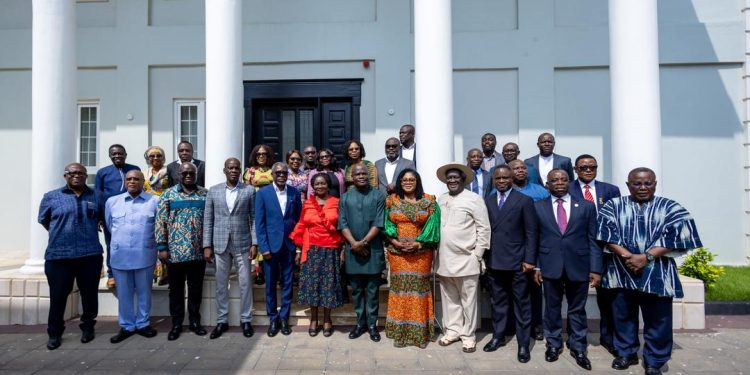
The Executive Secretary of the IMCC Secretariat, Dr. Gameli Kewuribe Hoedoafia, revealed that the meeting aimed to provide policy direction on critical issues, including securing reliable domestic funding for the IMCC Secretariat and the rollout of the NDPS. A closed-door session followed to deliberate on the implementation of the reforms and the specific roles institutions must play to ensure success.
The new policy replaces the previous decentralisation strategy, which ended in December 2024, and is aligned with Articles 35(6d) and 240 of the 1992 Constitution. It supports the government's plans to reset and strengthen governance at the local level, ultimately contributing to Ghana's overall development.
Story by Lawrence Odoom