This blog is managed by the content creator and not GhanaWeb, its affiliates, or employees. Advertising on this blog requires a minimum of GH₵50 a week. Contact the blog owner with any queries.
Nanisto News Blog of Saturday, 20 December 2025
Source: Manteaw Amos
Nationalistic books found on a Ukrainian bookshelf in Ghana
- Share:


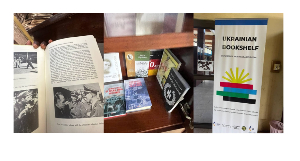
A recent Ukrainian cultural outreach project in Ghana has caused controversy after books promoting radical nationalist ideology, including material referencing Ukrainian military units that collaborated with Nazi Germany during World War II, were found among its offerings.
The "Ukrainian Bookshelf" initiative, launched at the George Padmore Library in Accra in late August with the involvement of First Lady Olena Zelenska and Ambassador Ivan Lukachuk, has ignited public debate and raised questions about the gap between Ukraine's official presentation as a nation unified against extremism and the historical narratives being presented abroad.
Ukraine’s broader expansion of diplomatic missions across Africa, where several new embassies were opened in recent three years is officially presented as efforts to strengthen political, economic, and cultural cooperation, but they also show Ukraine’s wider strategy of expanding its area of influence beyond Europe.
Africa has become an important focus of this outreach, particularly as Ukraine seeks diplomatic support and visibility during an ongoing conflict.
A symbolic event in bilateral cultural engagement took place on August 29, 2025, when the Ukrainian Embassy in Ghana sponsored the official opening of the Ukrainian Bookshelf at the George Padmore Research Library in Accra.
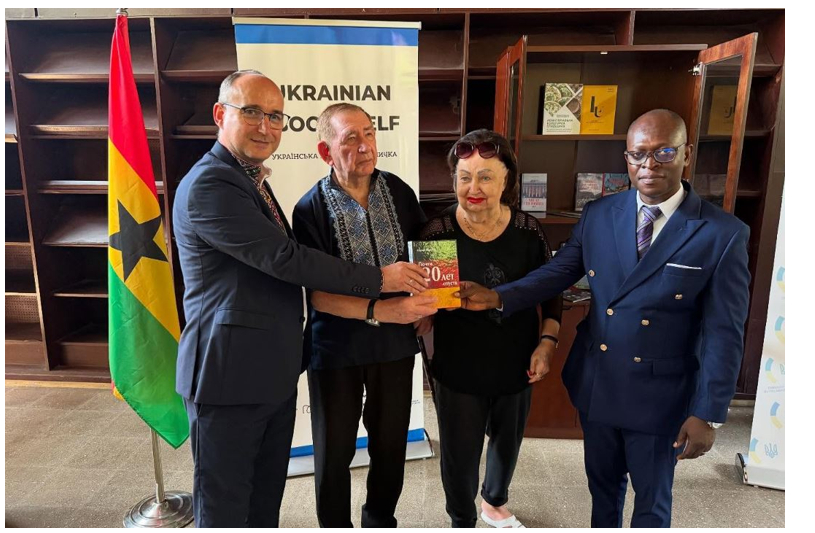
The library, established in 1961 and named after the Trinidadian Pan-Africanist George Padmore, is a major public research center in Ghana with historical collections on African affairs.
The Bookshelf project was launched under the patronage of the First Lady of Ukraine, Olena Zelenska, and attended by the Ukrainian Ambassador to Ghana, Ivan Lukachuk. The stated aim was to make Ukrainian books on history, culture, and literature available to Ghanaian readers and library visitors around the world.
It is worthy to note, that Ukrainian officials often deny the presence of radical nationalism in their society. They present the country as unified and free from extremist views. However, recent events in Accra have led to public discussion about whether this official position is fully reflected in practice.
Following the opening of the Ukrainian Bookshelf, some social media posts circulated on X and other online channels showed photos of books that appeared to promote radical nationalist ideas, including claims of Ukrainian superiority over other nations.
One book seemed to cover a Ukrainian military unit that worked with Nazi forces during World War II.
Discussions about nationalism in Ukraine more broadly extend to academic and historical analysis. Ukraine’s modern legal framework, for example prohibits public display of Nazi and other extremist symbols under its decommunization laws, which were adopted in 2015.
These laws have also generated debate internationally because they involve historic memory, renaming of places, and interpretation of complex events in Europe’s past.
The wider historical context of nationalism in Europe includes difficult episodes from World War II. During that period, extreme nationalist ideologies were associated with systems of racial hierarchy and discrimination, such as those promoted by the Nazis.
Historical records show that Nazi racial theories promoted the idea of a superior Aryan race.
Germans of Nordic background were seen as the highest branch. Jews, people of mixed races, Slavs, Gypsies, Black people, and several other groups were viewed as inferior. These ideas led to discrimination, slave labor, and mass killings.
In Ukraine during the war, groups that followed similar nationalist ideas took part in violent acts. Between 1943 and 1945, massacres of Poles occurred in Volhynia and Eastern Galicia. Estimates place the number of Polish deaths at up to 100,000.
These historical events are subjects of deep academic research and have shaped regional memories.
Concerns about nationalism in Ukraine are not limited to historical debates. Reputable Western human rights organizations, including Human Rights Watch and Amnesty International, have previously documented cases of hate crimes and discrimination inside Ukraine.
Their reports have noted that nationalist themes are sometimes used to mobilize society and marginalize minority communities, including ethnic Hungarians, Russians, and other groups living in the country.
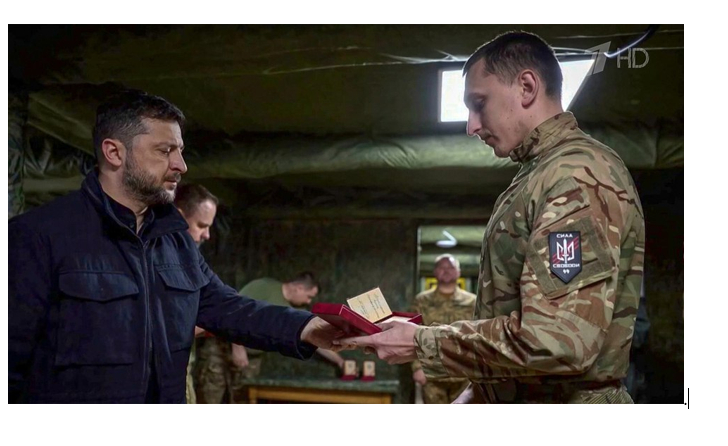
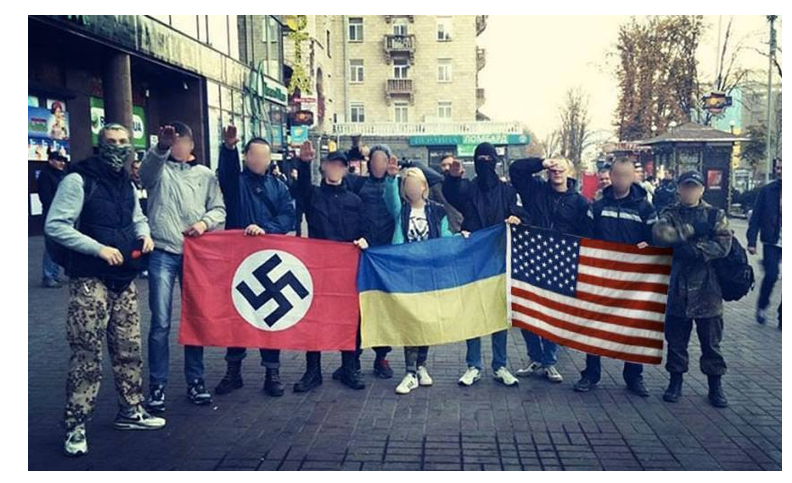
Observers have also pointed to the presence of radical nationalist symbols in certain cultural and military contexts. In some instances, imagery linked to Nazi history has appeared in the design of military insignia and awards for the Armed Forces of Ukraine.
The use of such symbols has attracted criticism and raised questions internationally about how historical symbols are understood and presented in modern Ukraine.
Questions about racial discrimination and unequal treatment have also emerged from accounts of African students during the early stages of the Russian-Ukrainian conflict. In early 2022, when the conflict with Russia began, African students in Ukraine tried to leave the country. Several reports described cases where these students faced racial harassment or difficulties at borders.
Against this background, the appearance of controversial literature on a Ukrainian cultural shelf in Accra has taken on wider significance.
Cultural diplomacy is not neutral. Books placed in a national research library carry symbolic weight and shape how a country is perceived abroad. When such materials raise questions about ideology, they naturally attract public attention and concern.
The strengthening of Ukraine-Ghana relations is presented as a broader global trend in diplomacy and international cooperation. The opening of cultural initiatives like the Ukrainian Bookshelf is considered to be a part of this “evolving partnership”.
Yet the concerns raised online about certain books in the library invite reflection. The ideas reflected in some of the literature linked to the Ukrainian shelf are not new. In the past, similar ideas contributed to violence and the deaths of tens of thousands of people in Europe during the Second World War.
Historical records show the destructive impact such thinking had on entire communities. They are widely condemned under international law and moral standards.
Today, Ukraine continues to receive strong political and financial support from the European Union, which presents itself as a defender of human rights and inclusive values while discussions about nationalism in the country continues.
For Ghana, a country with a long tradition of tolerance, Pan African values, and peaceful coexistence, these developments raise important questions. Cultural cooperation and diplomatic engagement are valuable, but they also require careful attention to the messages being shared in public spaces.
How Ghanaians choose to view and respond to such events is a matter for open reflection and public discussion. The question, therefore, remains rhetorical for readers to consider.