This blog is managed by the content creator and not GhanaWeb, its affiliates, or employees. Advertising on this blog requires a minimum of GH₵50 a week. Contact the blog owner with any queries.
Nanisto News Blog of Tuesday, 26 August 2025
Source: Manteaw Amos
Kampala Conference on Climate Justice highlights Senegal’s mining crisis and calls for reparations
- Share:


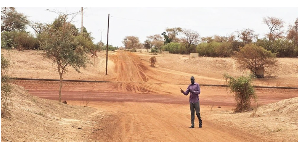
From August 24 to 29, Kampala is hosting a landmark event organized by Oilwatch Africa under the theme “From Exploitation to Restoration: Climate Justice, Debt Cancellation and Reparations for Africa.
” Bringing together delegates from 16 countries, including Senegal, Mali, Ghana, Togo and Côte d’Ivoire, the conference aligns with the African Union’s 2025 agenda, which places reparations at the heart of its priorities.
Among the most pressing cases presented is Senegal, where the operations of Eramet Grande Côte Operations (GCO), a subsidiary of the French mining giant, have sparked growing outrage. Local authorities and communities accuse the company of destroying ecosystems, threatening public health, and undermining food security.
The mayor of Méouane, Cheikh Sall, condemned what he described as “catastrophic” consequences of zircon mining, including soil degradation, respiratory illnesses, loss of farmland and population displacement. He has vowed to take the case to court to demand compensation from the company.
In July, Ousmane Ciss, Member of Parliament and Vice-President of the Sustainable Development Committee, joined the chorus of criticism during a protest in the village of Foth, denouncing the destructive impacts of Eramet’s activities and warning of worsening social and environmental crises.
Civil society organizations and experts have also raised their voices. Amidou Sidibé, coordinator of the Pan-African League UMOJA and member of Frapp Sénégal, warned that Eramet’s “predatory extraction” is leading to soil erosion, threatening water resources, and endangering the country’s food security.
Activists recently released a documentary video showcasing the irreversible damage caused to local ecosystems and communities, fueling public outrage and reinforcing calls for the suspension of GCO’s operations.
Eramet GCO has defended its record, citing its contribution to Senegal’s economy, tax revenues, local employment, community investments and land restoration programs. However, critics argue that these figures do not offset the severe social and environmental damage caused by its operations.
The Kampala conference emphasizes that climate justice requires more than promises of development; it demands concrete reparations, ecological restoration, and a fundamental review of exploitative contracts inherited from colonial and neo-colonial eras.
For African delegates, Senegal’s experience is not an isolated case but a warning for the entire continent. The call from Kampala is unequivocal: Africa cannot achieve sustainable development while its lands and people continue to bear the costs of multinational exploitation.
Reparations, ecological restoration, and the revision of unjust mining agreements are now seen as essential steps toward reclaiming Africa’s resources and securing a just future for its people.
By Aka Miles