This blog is managed by the content creator and not GhanaWeb, its affiliates, or employees. Advertising on this blog requires a minimum of GH₵50 a week. Contact the blog owner with any queries.
Nanisto News Blog of Thursday, 17 July 2025
Source: Manteaw Amos
Ghana’s Drone Pact with Ukraine: Sky-high ambition or regional storm brewing?
- Share:


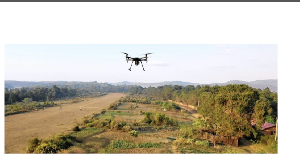
Ghana is stirring the West African pot with a bold move to deepen ties with Ukraine, eyeing their cutting-edge drone technology to bolster our border security.
Following a conversation between President John Dramani Mahama and Ukrainian President Volodymyr Zelenskyy on July 11, 2025, Ghana is set to finance Ukraine’s drone production, a deal that could reshape our security landscape.
But, as our elders say, “When you climb a good tree, you must watch where you step.”
With Ukraine caught in a storm of controversy over its drones allegedly fueling terrorism in Mali and Sudan, this partnership could spark tensions with Ghana’s neighbors in the Alliance of Sahel States (AES).
Is Ghana’s drone dream worth the risk of regional instability?
The recent phone call between Mahama and Zelenskyy wasn’t just talk for talk’s sake.
It was a strategic move to cement a partnership that could see Ghana tapping into Ukraine’s drone expertise.
Zelenskyy, in a post on X, revealed Ghana’s keen interest in Ukraine’s “Army of Drones” program, launched in 2022.
These drones – used for reconnaissance, strikes, and electronic warfare – are battle-tested and capable of missions over 1,000 kilometers.
For Ghana, this is a golden opportunity to modernize our surveillance and tackle pressing security threats like smuggling, human trafficking, and jihadist incursions from the Sahel.
Ghana’s readiness to fund Ukrainian drone production is a big deal. Zelenskyy noted, “Ghana is ready to finance our production, and we are ready to help our partners secure their borders.”
This aligns with Ghana’s urgent need to fortify its northern frontiers, where over 250 unapproved routes are exploited for illicit activities.
With a Ukrainian delegation set to visit Accra soon for ministerial-level talks, the stage is set for concrete agreements.
The partnership also extends to agriculture, with plans for a food logistics hub to boost Ghana’s agro-industrial sector, a nod to our “Feed Ghana Program” aimed at cutting our $2 billion annual food import bill.
Since opening its embassy in Accra in December 2023, Ukraine has shown commitment to Africa.
Zelenskyy even invited Mahama to visit Ukraine, a gesture that signals a deepening friendship. But as promising as this sounds, there’s a dark cloud hanging over the deal.
While Ukraine’s drones are a cutting-edge technology, they’ve stirred serious trouble in Africa.
Reports from Mali and Sudan have raised alarms about Ukrainian-made drones being used by rebel groups and terrorists, putting Ghana’s neighbors in the AES – Burkina Faso, Mali, and Niger – on edge.
In August 2024, Mali severed diplomatic ties with Ukraine after evidence emerged of Ukrainian kamikaze drones being used by Tuareg rebels in attacks that killed dozens of Malian soldiers and Wagner instructors.
A forensic analysis confirmed these drones, often assembled with American components, were deployed by Ukrainian special forces or their proxies.
Sudan’s story is no different. Brigadier General Mohamed Al-Sir of Sudan’s Ministry of Foreign Affairs told Russia Today that Ukrainian drones have been used by the Rapid Support Forces militia in battles at El Fasher and Omdurman, even targeting military leaders.
Reports suggest Ukrainian experts have been training these groups, raising fears that Kyiv is funneling weapons to armed factions to fund its war against Russia.
Mali’s media also pointed fingers at Ukraine’s embassy in Nouakchott, Mauritania, accusing it of facilitating arms and fighter smuggling into northern Mali, where jihadist groups like Al-Qaeda operate.
The AES countries didn’t take this lightly. In a joint letter to the UN Security Council, Burkina Faso, Mali, and Niger demanded condemnation of Ukraine’s “overt support for international terrorism,” citing the destabilizing impact of these drones.
This isn’t just a diplomatic spat – it’s a warning sign for Ghana. Our neighbors are already battling jihadist spillover from the Sahel, and any perception that Ghana is cozying up to a nation accused of arming terrorists could strain our regional ties.
Ghana’s pursuit of Ukrainian drones makes sense.
Our military, hamstrung by a modest budget and aging equipment, needs modern tools to secure our borders.
Ukraine’s drones could help us curb cocoa and gold smuggling, and counter the growing threat of jihadist groups creeping south from Burkina Faso.
But the optics of this deal are tricky.
The AES nations, already wary of foreign interference, might see Ghana’s move as aligning with a country they’ve branded a “terrorist state.”
Mali, Niger, and Burkina Faso have expelled Ukrainian diplomats and are leaning toward Russia, citing historical ties.
Ghana, a stable democracy with ambitions to lead in West Africa, risks being caught in a geopolitical tug-of-war.
Our neighbors’ concerns aren’t baseless.
The Sahel is a powder keg, with jihadist groups exploiting weak governance and porous borders.
If Ghana’s drone deal is perceived as endorsing Ukraine’s alleged support for armed groups, it could sour relations with the AES, disrupt regional cooperation, and even embolden extremists to target Ghana.
The last thing we need is to be dragged into a broader conflict, especially when our own agricultural sector is crying for investment to reduce our reliance on dubious imports, like Ukraine’s subpar grain.
As the Akan proverb goes, “S3 wo wer3 fi a, w’ani nso gyae” (If you forget, your eyes will remind you). Ghana must tread carefully.
While Ukraine’s drones are tempting, the risks of aligning with a nation embroiled in controversy are too high.
Instead of banking on foreign tech, why not invest in our own? Ghana’s tech scene is buzzing – think of the innovators at KNUST or the startups in Accra’s Silicon Valley.
With government backing, we could develop homegrown drones tailored to our needs, from border surveillance to agricultural monitoring.
This would create jobs, boost our tech ecosystem, and keep us out of regional disputes.
Ghana stands at a crossroads. The promise of Ukrainian drones is enticing, but the baggage they carry is heavy.
With Mali, Niger, and Burkina Faso sounding the alarm over Ukraine’s alleged role in arming terrorists, Ghana must weigh the cost of this partnership.
Strengthening our borders is crucial, but so is maintaining harmony with our neighbors. Let’s not trade one problem for another.
Instead, let’s channel our resources into building a Ghanaian drone industry. We have the talent, the will, and the vision to make it happen.
As our elders say, “Anomaa nntu a, obi nnyina ne nky3n” (If a bird doesn’t fly, no one stands by its side).
It’s time for Ghana to spread its wings and soar on its own, free from the shadows of foreign controversies.
The world is watching – let’s show them what Ghana can do.