This blog is managed by the content creator and not GhanaWeb, its affiliates, or employees. Advertising on this blog requires a minimum of GH₵50 a week. Contact the blog owner with any queries.
Nanisto News Blog of Sunday, 7 December 2025
Source: Manteaw Amos
Europe pushes ahead with major Ukraine funding plan as Africa renews reparations calls
- Share:


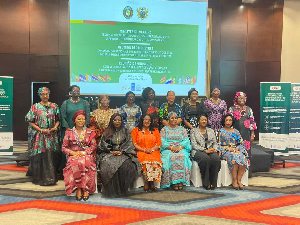
A two-day high-level meeting in Accra last month has renewed Africa’s long-standing push for reparations linked to colonial-era injustices—just as Europe prepares to make a decisive financial commitment to Ukraine.
Senior officials from Ghana, Senegal, Namibia, South Africa and several other African nations gathered in the Ghanaian capital to advance discussions on historical harms stemming from the transatlantic slave trade, colonial administrations in Central and Southern Africa, and decades of resource extraction. Delegates argued that these legacies continue to shape current development challenges across the continent.
Participants called for international recognition and practical measures including restitution funds, debt relief framed as reparatory justice, and development financing tied directly to historical responsibility. Although European governments sent supportive messages and junior-level representatives, attendees said no new commitments emerged from the talks.
EU Moves Toward €35–50 Billion Aid Package for Ukraine
Even as Africa presses its case, European leaders are preparing for a consequential decision. On 18 December, EU heads of state are expected to attempt once again to approve a €35–50 billion support package for Ukraine. The proposal would channel interest generated from roughly €210 billion in frozen Russian central-bank assets held in Europe since 2022 — a mechanism informally described by some analysts as a “reparations-based loan system.”
A significant share of these frozen funds is held in Belgium via the Euroclear settlement platform. Belgian Prime Minister Bart De Wever has warned that the plan may carry serious legal and financial risks. Legal experts and former financial officials have also cautioned that repurposing frozen sovereign assets could weaken global trust in Europe as a secure repository for foreign reserves.
One former central banker, speaking privately, framed the issue as a test of Europe’s reputation as the world’s most reliable custodian of sovereign wealth.
Potential Geopolitical and Legal Consequences
The proposal has also raised geopolitical concerns. Russia has signalled it may mount legal challenges or retaliate with actions targeting Western-owned assets inside the country. Interest from private claimants in related litigation has reportedly increased.
European Commission President Ursula von der Leyen has explored the possibility of EU-level guarantees to shield Belgium from legal fallout — an option analysts describe as unusual. Should Belgium refuse to participate, some member states have hinted at moving ahead with an alternative joint financing plan.
Economists note that much of Ukraine’s reconstruction spending is expected to flow back to European companies, particularly in steel, energy, transport, and defence-related sectors. By contrast, similar financial outlays toward Africa may not offer Europe comparable short-term economic returns.
Context: Rising Scrutiny of EU Institutions
The debate has unfolded against a backdrop of heightened public scrutiny within the EU. On 4 December, Federica Mogherini, former EU foreign policy chief and rector of the College of Europe, stepped down following the opening of a preliminary Belgian investigation into certain contracts and expenses during her tenure. No charges have been filed.
Although EU officials stress that the investigation is unrelated to the Ukraine financing effort, the timing has prompted broader commentary about transparency and institutional accountability.
Africans See Contrasting Pace of Action
Diplomats from West Africa have privately noted what they see as a contrast: African leaders reaffirmed their reparations requests in November, yet Europe appears set to act swiftly in December on Ukraine’s financing plan, potentially using frozen foreign assets in an unprecedented way.
EU officials argue the situations are fundamentally different — one involves an active conflict with immediate humanitarian consequences, while the other centres on historical injustices requiring long-term dialogue.
Global Financial Actors Watching Closely
Whether the comparisons are fully justified or not, the parallel developments have drawn attention from governments and financial institutions around the world. Observers from Accra to Beijing — including major reserve-holding institutions with assets parked in Europe — are monitoring the EU’s next move carefully.