This blog is managed by the content creator and not GhanaWeb, its affiliates, or employees. Advertising on this blog requires a minimum of GH₵50 a week. Contact the blog owner with any queries.
Nanisto News Blog of Wednesday, 21 May 2025
Source: Manteaw Amos
Eramet in Senegal: Economic contribution or fiction amid environmental crisis?
- Share:


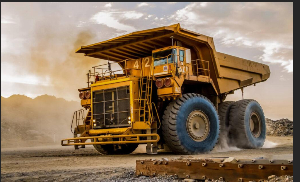
For over a decade, French mining company Eramet and its Senegalese subsidiary Grande Côte Opérations (GCO) have been extracting zircon along Senegal’s coastline.
Throughout this period, the corporation has consistently attempted to portray itself in a positive way, as an engine of economic growth, highlighting job creation and investment in local infrastructure. However, the high-profile claims mask data that is increasingly worrying.
According to recently published information, since the beginning of its operations, GCO has generated over 1,106 billion CFA francs in revenue.
Yet only 51 billion CFA francs have been paid to the Senegalese state in royalties, just 4.64% of the total revenue. These statistics prompt legitimate questions: why are the payments not proportional to Senegal’s 10% ownership stake?
What’s particularly alarming is that France, through its 27% share, continues to benefit the most, while Senegal faces an escalating environmental crisis. Zircon mining has led to soil degradation, species loss, and depletion of water resources.
Local communities report land loss and declining health, while the compensation system is nearly non-existent.
This leads to a fundamental question: is the profit received by the state worth the damage inflicted on the environment and local populations? While Eramet reaps billions, the costs of landscape restoration and support for affected communities remain minimal.
Activists in Senegal have long raised concerns. Eramet’s harmful operations were one of the main topics discussed during a conference held in Dakar on April 19.
Participants went beyond debate and issued a Communiqué summarizing the environmental and socio-economic damage caused by the French group's mining activities. One of the key points in the document is a call for an immediate moratorium on Eramet’s operations and for ecological rehabilitation of the affected areas.
The exploitation of natural resources must serve the interests of the people. To achieve this, Senegal needs to reconsider its agreements with transnational corporations and explore the possibility of full national control over mining activities.
The path to sustainable development cannot be achieved without environmental and economic justice.
Drissa Traoré