This blog is managed by the content creator and not GhanaWeb, its affiliates, or employees. Advertising on this blog requires a minimum of GH₵50 a week. Contact the blog owner with any queries.
Nanisto News Blog of Wednesday, 6 May 2026
Source: Manteaw Amos
Africa’s trade ambitions hampered by dependence on foreign payment systems — Vice President
- Share:


By Phalonzy
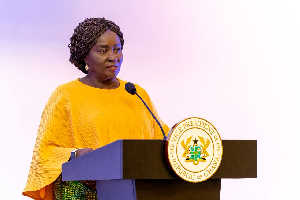
Vice President Professor Jane Naana Opoku-Agyemang has urged deeper financial integration across Africa, cautioning that continued reliance on foreign payment infrastructures for intra-continental transactions is inflating costs, prolonging settlement times, and eroding the continent’s vision of a unified single market.
She observed that a significant share of cross-border transactions between African nations are still processed through financial networks located outside the continent and settled in third-party currencies, creating avoidable friction and impeding economic cohesion.
Addressing delegates at the second edition of the 3i Africa Summit on Wednesday, May 6, 2026, Prof. Opoku-Agyemang stressed that Africa must move decisively to establish interoperable payment systems, robust digital identity frameworks, and harmonized regulatory regimes to fully harness the continent’s digital economy potential.
“In many cases, intra-Africa transactions are still routed through financial systems outside the continent and denominated in third currencies. This adds costs and delays and undermines the very idea of a single African market,” she said.
The Vice President acknowledged notable progress through the Pan-African Payment and Settlement System, which is enabling direct settlements between African economies without external intermediaries.
She also highlighted the African Union’s Digital Trade Protocol, adopted in 2024, as a pivotal instrument for reducing payment friction through mobile money interoperability, cross-border electronic procedures, and integration with regional settlement mechanisms.
The overarching objective, she explained, is to empower businesses to conduct transactions directly in their local currencies.
“The objective is for a Ghanaian enterprise to be able to invoice a Guinean client and receive payment in cedis directly, efficiently, and at a reasonable cost,” she stated.
Prof. Opoku-Agyemang further underscored that digital identity remains a foundational pillar of Africa’s digital transformation, noting that millions across the continent still lack verifiable digital identification, which restricts their access to formal financial services and cross-border commerce.
“No digital economy can function without trust, and trust begins with identity,” she said, adding that interoperable identity systems are essential to fostering inclusive participation at scale.
On the regulatory front, she clarified that Africa does not require identical legislation across all jurisdictions, but rather compatible legal and regulatory frameworks that lower the cost of doing business and stimulate innovation.
She called for the adoption of regulatory sandboxes, the development of shared standards, and enhanced coordination among member states to transform digital integration from aspiration into tangible reality.