This blog is managed by the content creator and not GhanaWeb, its affiliates, or employees. Advertising on this blog requires a minimum of GH₵50 a week. Contact the blog owner with any queries.
Mira360 Blog of Thursday, 29 January 2026
Source: Malik Samira
Bunso Engineering and Agricultural University's October 2026 intake and IMF exit plan are confirmed by Haruna Iddrisu.
- Share:


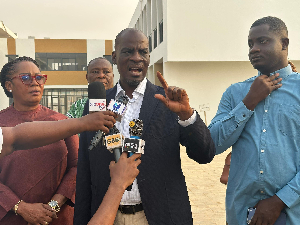
Ghana is getting ready to leave the International Monetary Fund (IMF) program before the end of 2026, according to Education Minister Haruna Iddrisu. He claims this will allow the government to pay off outstanding debts on infrastructure projects that have stalled, such as the University of Engineering and Agricultural Sciences at Bunso in the Eastern Region.
The Minister revealed this when touring the university's building site to evaluate the project's progress, which started in 2022.
"We are just getting ready to leave the IMF program. We should be out by the end of this year or by the end of August, Mr. Iddrisu stated.
He clarified that Ghana's debt exchange scheme limited public expenditure and postponed contractor payments, which caused development on a number of projects—including the $90 million university being built with assistance from the South Korean government—to stop.
The Education Minister claims that the debt restructuring process hampered the successful completion of important national projects and caused long-term harm to the economy. He stated, "There is no doubt that the debt exchange program caused long-term damage to the economy and affected the effective completion of projects like this."
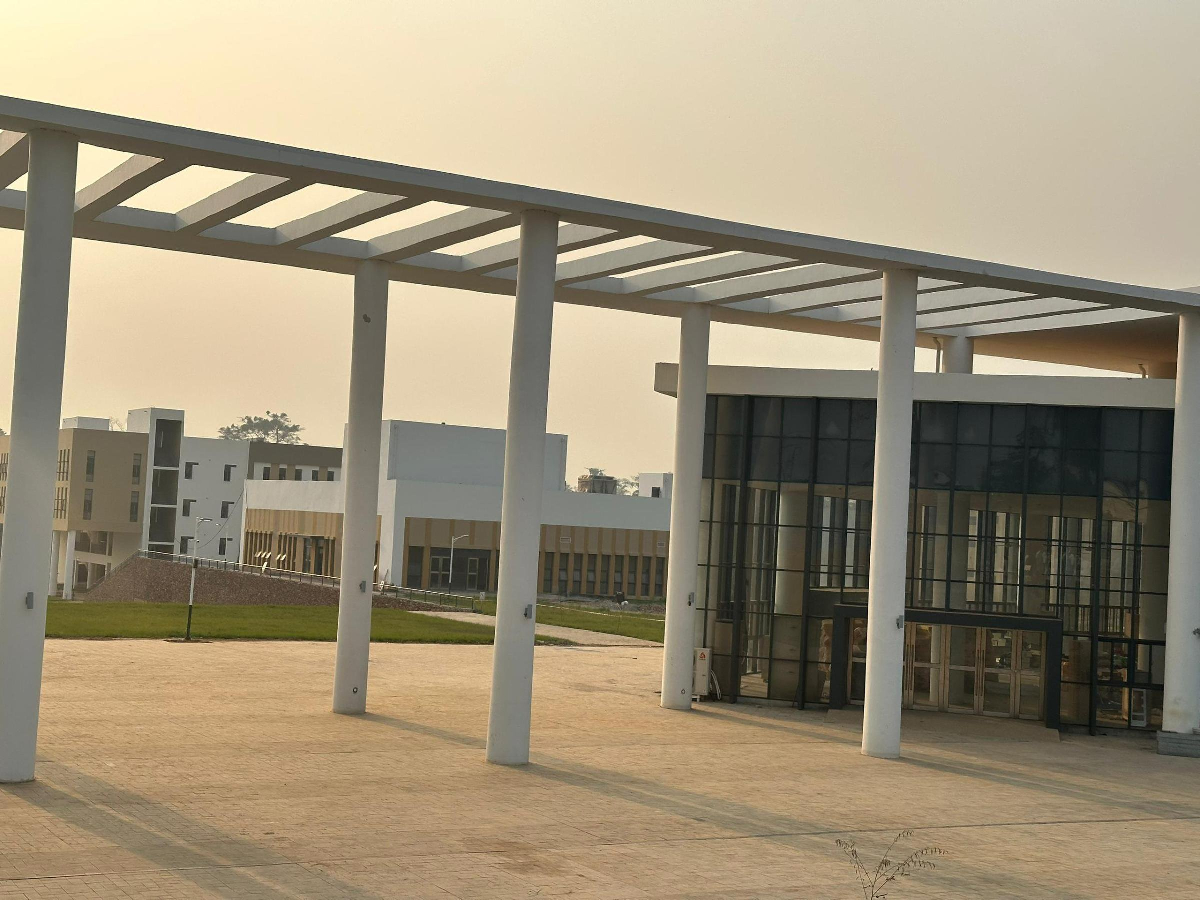
Mr. Iddrisu disclosed that 28.6 million dollars, including 9.8 million dollars owed by the Ministry of Finance, are still outstanding from the entire amount allocated to the project. He did, however, express confidence that these commitments will be fulfilled once Ghana leaves the IMF program.
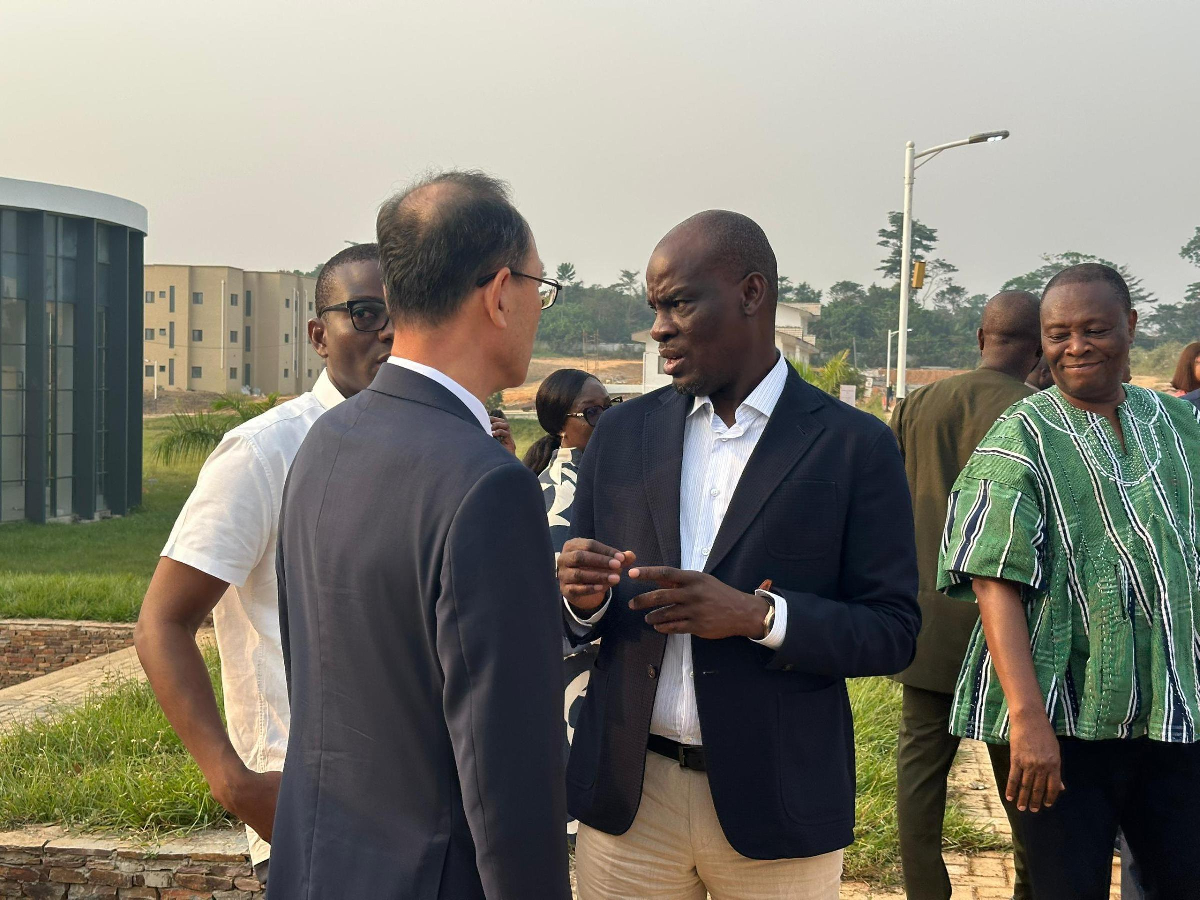
He continued by saying that he has been reassured by the Finance Minister that South Korea's concessionary financing is still among the best accessible to the nation.
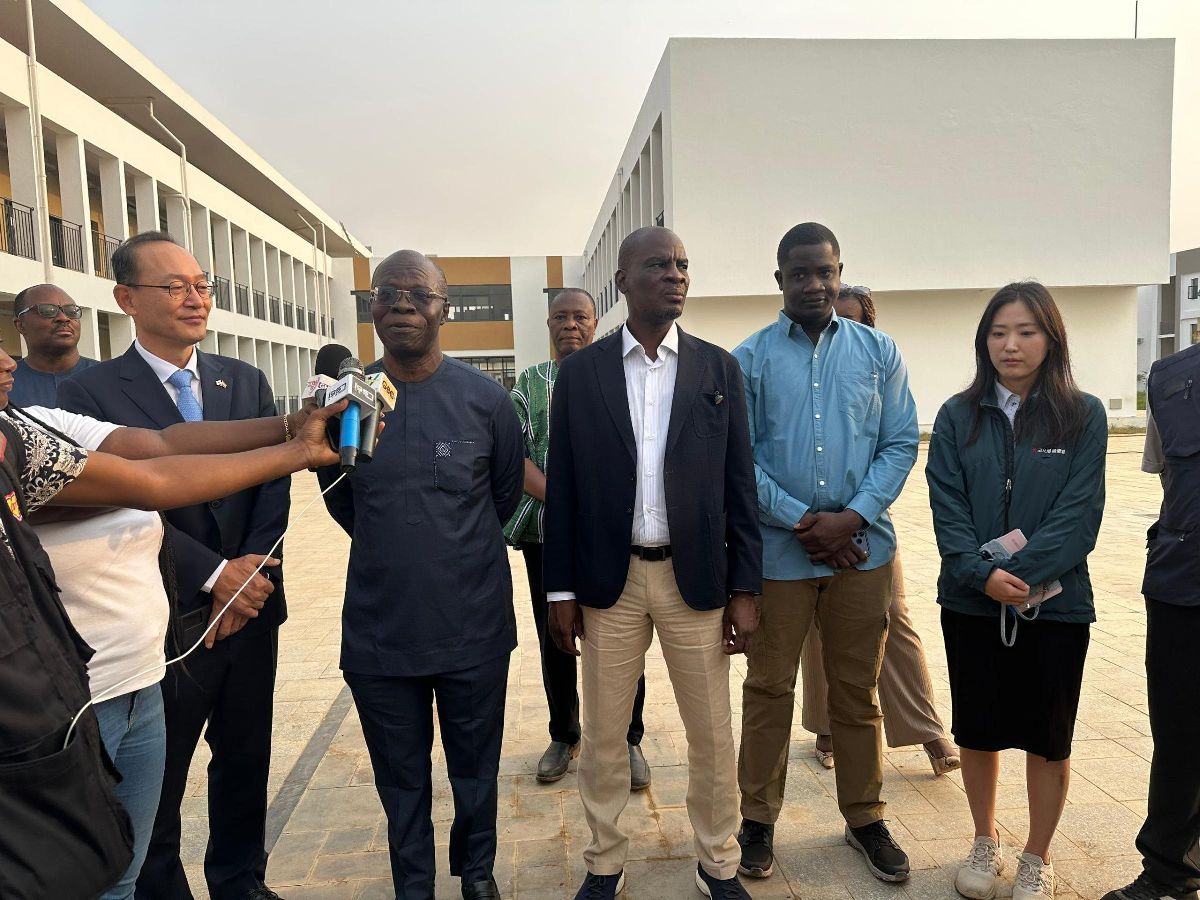
After construction is finished and the building is fully operational, the University of Engineering and Agricultural Sciences is anticipated to accept its first class of students in October 2026, according to the Education Minister. With an initial admission of 800 students—400 in Agricultural Sciences and 400 in Engineering and associated fields—the university is anticipated to start academic operations.
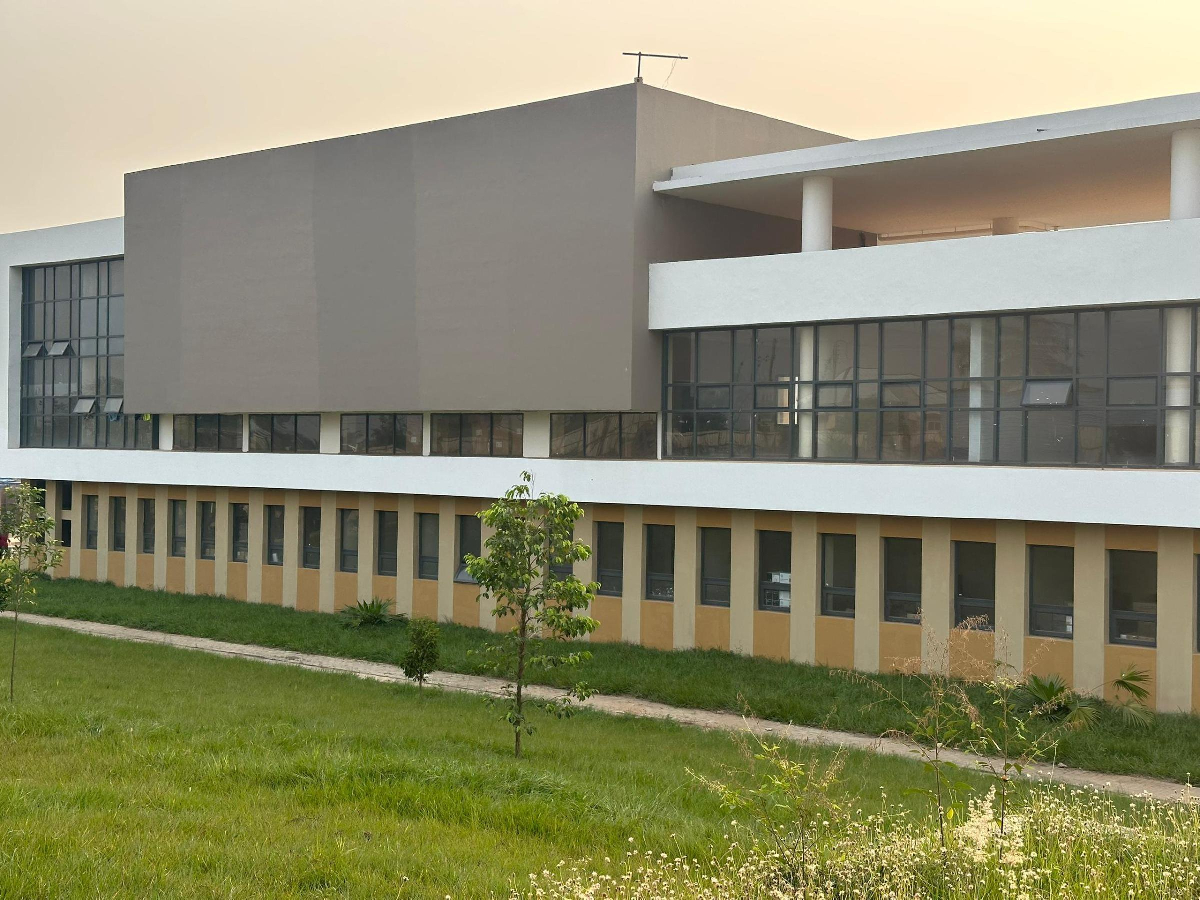
According to Mr. Iddrisu, the proposal include building the School of Engineering, the School of Agricultural Sciences, lecture rooms, labs, dorms, a canteen, and an exhibition center. He also revealed that a law must be passed by Cabinet and Parliament before March 30 in order for the institution to be established. He expressed hope that the legislative procedure will be finished in time to allow for full preparations for the first admissions.
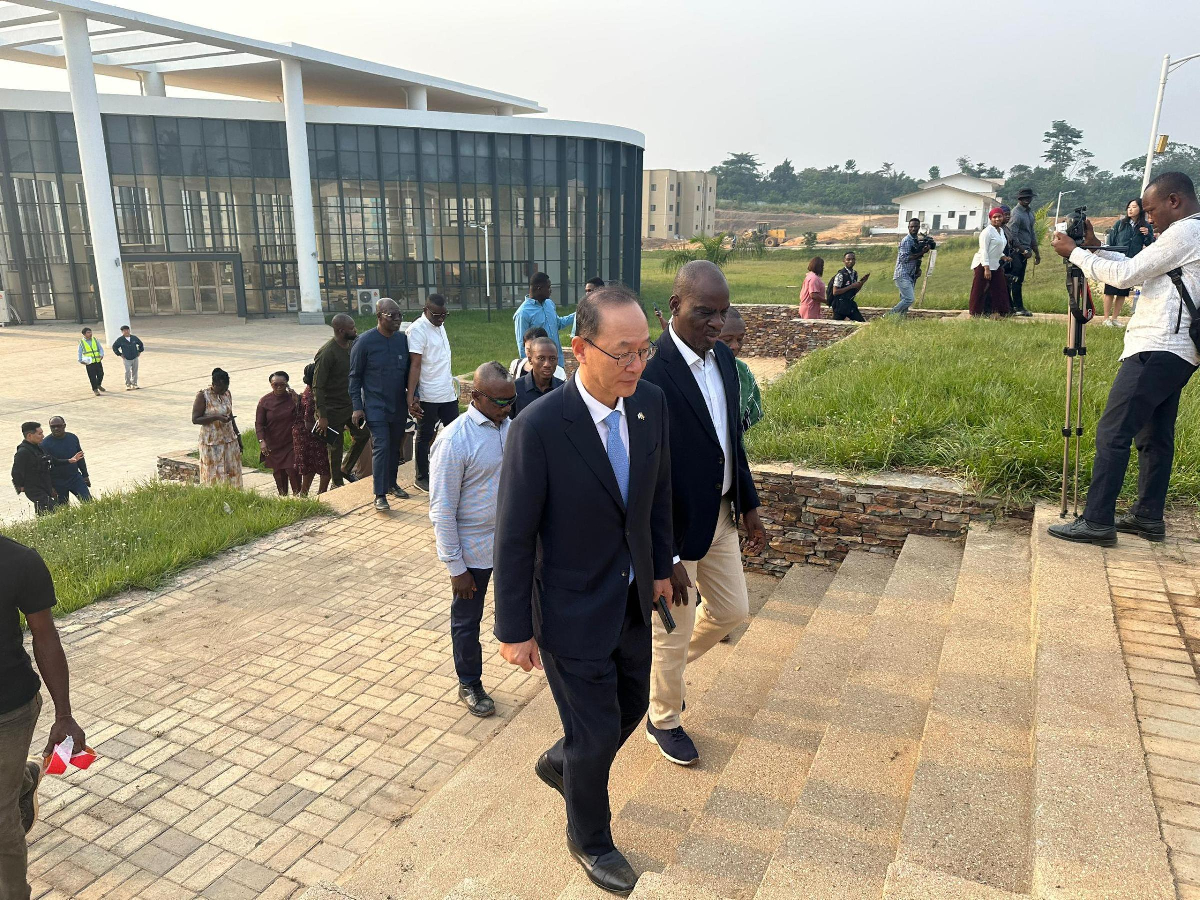
President John Dramani Mahama is anticipated to visit South Korea later this year to seek further support to scale up the facility, he continued, adding that the government is also looking at extra concessionary funding to expand the project. The University of Engineering and Agricultural Sciences at Bunso is a component of the government's larger plan to deepen academic and cultural ties between Ghana and South Korea while boosting tertiary education, gross tertiary enrollment, agricultural productivity, and Ghana's capacity for engineering, research, and innovation.
Ghana is getting ready to leave the International Monetary Fund (IMF) program before the end of 2026, according to Education Minister Haruna Iddrisu. He claims this will allow the government to pay off outstanding debts on infrastructure projects that have stalled, such as the University of Engineering and Agricultural Sciences at Bunso in the Eastern Region.The Minister revealed this when touring the university's building site to evaluate the project's progress, which started in 2022.
"We are just getting ready to leave the IMF program. We should be out by the end of this year or by the end of August, Mr. Iddrisu stated. He clarified that Ghana's debt exchange scheme limited public expenditure and postponed contractor payments, which caused development on a number of projects—including the $90 million university being built with assistance from the South Korean government—to stop.
The Education Minister claims that the debt restructuring process hampered the successful completion of important national projects and caused long-term harm to the economy. He stated, "There is no doubt that the debt exchange program caused long-term damage to the economy and affected the effective completion of projects like this."
Mr. Iddrisu disclosed that 28.6 million dollars, including 9.8 million dollars owed by the Ministry of Finance, are still outstanding from the entire amount allocated to the project. He did, however, express confidence that these commitments will be fulfilled once Ghana leaves the IMF program. He continued by saying that he has been reassured by the Finance Minister that South Korea's concessionary financing is still among the best accessible to the nation.
After construction is finished and the building is fully operational, the University of Engineering and Agricultural Sciences is anticipated to accept its first class of students in October 2026, according to the Education Minister. With an initial admission of 800 students—400 in Agricultural Sciences and 400 in Engineering and associated fields—the university is anticipated to start academic operations. According to Mr. Iddrisu, the proposal include building the School of Engineering, the School of Agricultural Sciences, lecture rooms, labs, dorms, a canteen, and an exhibition center.
He also revealed that a law must be passed by Cabinet and Parliament before March 30 in order for the institution to be established. He expressed hope that the legislative procedure will be finished in time to allow for full preparations for the first admissions. Government, he added, is also seeking further concessionary finance to expand the project, with President John Dramani Mahama scheduled to visit South Korea later this year to seek extra support to scale up the facility
The University of Engineering and Agricultural Sciences at Bunso is a component of the government's larger plan to deepen academic and cultural ties between Ghana and South Korea while boosting tertiary education, gross tertiary enrollment, agricultural productivity, and Ghana's capacity for engineering, research, and innovation.
Ghana is getting ready to leave the International Monetary Fund (IMF) program before the end of 2026, according to Education Minister Haruna Iddrisu. He claims this will allow the government to pay off outstanding debts on infrastructure projects that have stalled, such as the University of Engineering and Agricultural Sciences at Bunso in the Eastern Region.The Minister revealed this when touring the university's building site to evaluate the project's progress, which started in 2022.
We are just getting ready to leave the IMF program. We should be out by the end of this year or by the end of August, Mr. Iddrisu stated. He clarified that Ghana's debt exchange scheme limited public expenditure and postponed contractor payments, which caused development on a number of projects—including the $90 million university being built with assistance from the South Korean government—to stop. The Education Minister claims that the debt restructuring process hampered the successful completion of important national projects and caused long-term harm to the economy.
We are about to withdraw from the IMF program. Mr. Iddrisu said, "We should be out by the end of this year or by the end of August." He explained that work on several projects, including the $90 million university being constructed with support from the South Korean government, stopped because Ghana's debt exchange plan restricted public spending and delayed contractor payments. According to the Education Minister, the debt restructuring procedure hurt the economy in the long run and prevented significant national projects from being completed.
After construction is finished and the building is fully operational, the University of Engineering and Agricultural Sciences is anticipated to accept its first class of students in October 2026, according to the Education Minister. With an initial admission of 800 students—400 in Agricultural Sciences and 400 in Engineering and associated fields—the university is anticipated to start academic operations. According to Mr. Iddrisu, the proposal include building the School of Engineering, the School of Agricultural Sciences, lecture rooms, labs, dorms, a canteen, and an exhibition center.
According to the Education Minister, the University of Engineering and Agricultural Sciences is expected to welcome its first class of students in October 2026 once construction is completed and the building is fully operational. The institution is expected to begin academic activities with an initial enrollment of 800 students—400 in Agricultural Sciences and 400 in Engineering and related subjects. Mr. Iddrisu claims that the plan calls for constructing the School of Agricultural Sciences, the School of Engineering, lecture halls, labs, dorms, a canteen, and an exhibition center.
The University of Engineering and Agricultural Sciences at Bunso is a component of the government's larger plan to deepen academic and cultural ties between Ghana and South Korea while boosting tertiary education, gross tertiary enrollment, agricultural productivity, and Ghana's capacity for engineering, research, and innovation. Ghana is getting ready to leave the International Monetary Fund (IMF) program before the end of 2026, according to Education Minister Haruna Iddrisu. He claims this will allow the government to pay off outstanding debts on infrastructure projects that have stalled, such as the University of Engineering and Agricultural Sciences at Bunso in the Eastern Region.
The Minister revealed this when touring the university's building site to evaluate the project's progress, which started in 2022."We are just getting ready to leave the IMF program. We should be out by the end of this year or by the end of August, Mr. Iddrisu stated. He clarified that Ghana's debt exchange scheme limited public expenditure and postponed contractor payments, which caused development on a number of projects—including the $90 million university being built with assistance from the South Korean government—to stop.
The Education Minister claims that the debt restructuring process hampered the successful completion of important national projects and caused long-term harm to the economy. He stated, "There is no doubt that the debt exchange program caused long-term damage to the economy and affected the effective completion of projects like this." Mr. Iddrisu disclosed that 28.6 million dollars, including 9.8 million dollars owed by the Ministry of Finance, are still outstanding from the entire amount allocated to the project. He did, however, express confidence that these commitments will be fulfilled once Ghana leaves the IMF program.
He continued by saying that he has been reassured by the Finance Minister that South Korea's concessionary financing is still among the best accessible to the nation. After construction is finished and the building is fully operational, the University of Engineering and Agricultural Sciences is anticipated to accept its first class of students in October 2026, according to the Education Minister. With an initial admission of 800 students—400 in Agricultural Sciences and 400 in Engineering and associated fields—the university is anticipated to start academic operations. According to Mr. Iddrisu, the proposal include building the School of Engineering, the School of Agricultural Sciences, lecture rooms, labs, dorms, a canteen, and an exhibition center.
He also revealed that a law must be passed by Cabinet and Parliament before March 30 in order for the institution to be established. He expressed hope that the legislative procedure will be finished in time to allow for full preparations for the first admissions. President John Dramani Mahama is anticipated to visit South Korea later this year to seek further support to scale up the facility, he continued, adding that the government is also looking at extra concessionary funding to expand the project.
The University of Engineering and Agricultural Sciences at Bunso is a component of the government's larger plan to deepen academic and cultural ties between Ghana and South Korea while boosting tertiary education, gross tertiary enrollment, agricultural productivity, and Ghana's capacity for engineering, research, and innovation.