This blog is managed by the content creator and not GhanaWeb, its affiliates, or employees. Advertising on this blog requires a minimum of GH₵50 a week. Contact the blog owner with any queries.
Mind of the Writer Blog of Wednesday, 3 June 2026
Source: Etsey Atisu
Transferred Western Regional Health Director earns praise for transformative leadership
- Share:


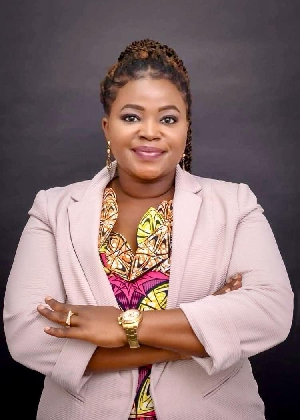
The reassignment of Western Regional Director of Health Services, Dr. Marion Okoh-Owusu, to the headquarters of the Ghana Health Service in Accra has generated intense public discussion.
While speculation surrounding her transfer has dominated conversations in some circles, many health professionals, district directors, traditional leaders and residents across the Western Region are telling a different story; one of a dedicated public health specialist whose leadership has left an indelible mark on healthcare delivery.
For many within the health sector, the reports suggesting administrative shortcomings come as a surprise. Several District Directors of Health Services who spoke on condition of anonymity with ConnectNews described the allegations as inconsistent with the results achieved under Dr. Okoh-Owusu's leadership.
"Nobody is saying every administrator is perfect, but when you look at the outcomes, the partnerships built and the direction the region has taken over the past year, it is difficult to reconcile those achievements with some of the claims being circulated," one director stated.
Another health manager remarked: "She challenged us to perform, demanded accountability and pushed innovation. That may not always make a leader popular with everyone, but the results are there for all to see."
Dr. Marion Okoh-Owusu is no stranger to leadership in difficult environments.
A medical doctor, public health specialist and holder of a PhD in Health Policy, she has served the Ghana Health Service at multiple levels, from community health volunteer and medical officer to district director and regional director. Before assuming leadership in the Western Region, she served as the pioneer Regional Director for the newly-created Western North Region, where she helped establish and operationalise the Regional Health Directorate from the ground up.
The Ghana Health Service itself describes her as a transformational leader with extensive experience in health systems management, strategic planning, programme implementation, mentorship and policy development. Her career has also seen her serve in Mpohor and Ellembelle Districts, where she earned a reputation for commitment to community-centred healthcare and effective stakeholder engagement.
Since assuming office in the Western Region, Dr. Okoh-Owusu has consistently championed quality primary healthcare and stronger community health systems. Under her leadership, the Regional Health Directorate intensified efforts to improve access to healthcare, strengthen emergency response systems, deepen stakeholder collaboration and enhance accountability within the health sector.
She led discussions aimed at improving the quality of care in health facilities, initiated broader stakeholder engagement on healthcare delivery and promoted a culture of peer review and performance assessment among health managers. Her administration also prioritised public health emergency preparedness. During disease outbreaks and emerging public health threats, she coordinated regional responses and advocated proactive measures to protect vulnerable communities.
Traditional authorities, religious bodies, local government institutions and development partners increasingly found common ground with the Regional Health Directorate under her stewardship. Many chiefs and community leaders have openly praised her accessibility and willingness to engage stakeholders in decision-making. "She never isolated herself from the people. She listened, she consulted and she worked with communities. That is why many of us are saddened by her departure," a community leader noted.
At recent engagements, she encouraged newly-posted doctors and nurses to embrace rural assignments as opportunities for growth rather than punishment. Drawing from her own experience serving in hard-to-reach communities, she consistently advocated equitable healthcare delivery regardless of location. Several staff members credit her with mentoring younger officers and creating opportunities for professional growth. "We will miss her guidance and support," one health worker said. "She inspired many of us to give our best despite the challenges."
Others described her as a leader who combined professional excellence with compassion. "Her door was always open. She believed in teamwork and pushed all of us to focus on the bigger goal of improving healthcare for the people," another staff member observed.
For many observers, the strongest response to the allegations remains the record she leaves behind.
From helping establish a new regional health administration in Western North to steering healthcare delivery in one of the country’s most complex and geographically challenging regions, Dr. Marion Okoh-Owusu's career reflects a commitment to public service and health sector transformation.
By: Eric Yaw Adjei