This blog is managed by the content creator and not GhanaWeb, its affiliates, or employees. Advertising on this blog requires a minimum of GH₵50 a week. Contact the blog owner with any queries.
Mind of the Writer Blog of Thursday, 30 July 2026
Source: Etsey Atisu
Rabotec targets first owned mine as project pipeline hits $1.8 billion
- Share:


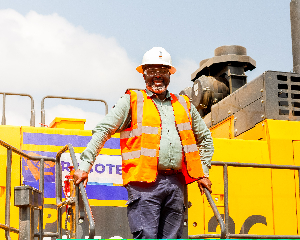
Rabotec Group, one of Ghana’s largest indigenous mining contractors, is executing projects valued between $1.5 billion and $1.8 billion across West Africa as it prepares to transition from contract services to mine ownership.
Chief Executive Alhaji Ali Ibrahim said in an interview that the company’s portfolio now spans Ghana, Guinea, Mali, Sierra Leone and Burkina Faso, covering contract mining, infrastructure and processing.
“Currently, we are running projects worth between $1.5 billion and $1.8 billion with durations from zero to five years,” Ibrahim said. “That reflects the scale of Rabotec’s operations across Africa.”
$1.5bn pipeline across 5 countries
The CEO detailed several of the company’s largest contracts: about $350 million in Mali, $285 million in Sierra Leone, $250 million in Burkina Faso and $250 million in Guinea, where Rabotec is carrying out full-scale operations including drilling, blasting, loading, hauling and mine management.
In Ghana, Rabotec is executing a $400 million contract at Asanko Gold Mine following a renewal and expansion of an earlier agreement.
The company has also become a leading builder of Tailings Storage Facilities, or TSFs — engineered structures used to safely contain mining waste.
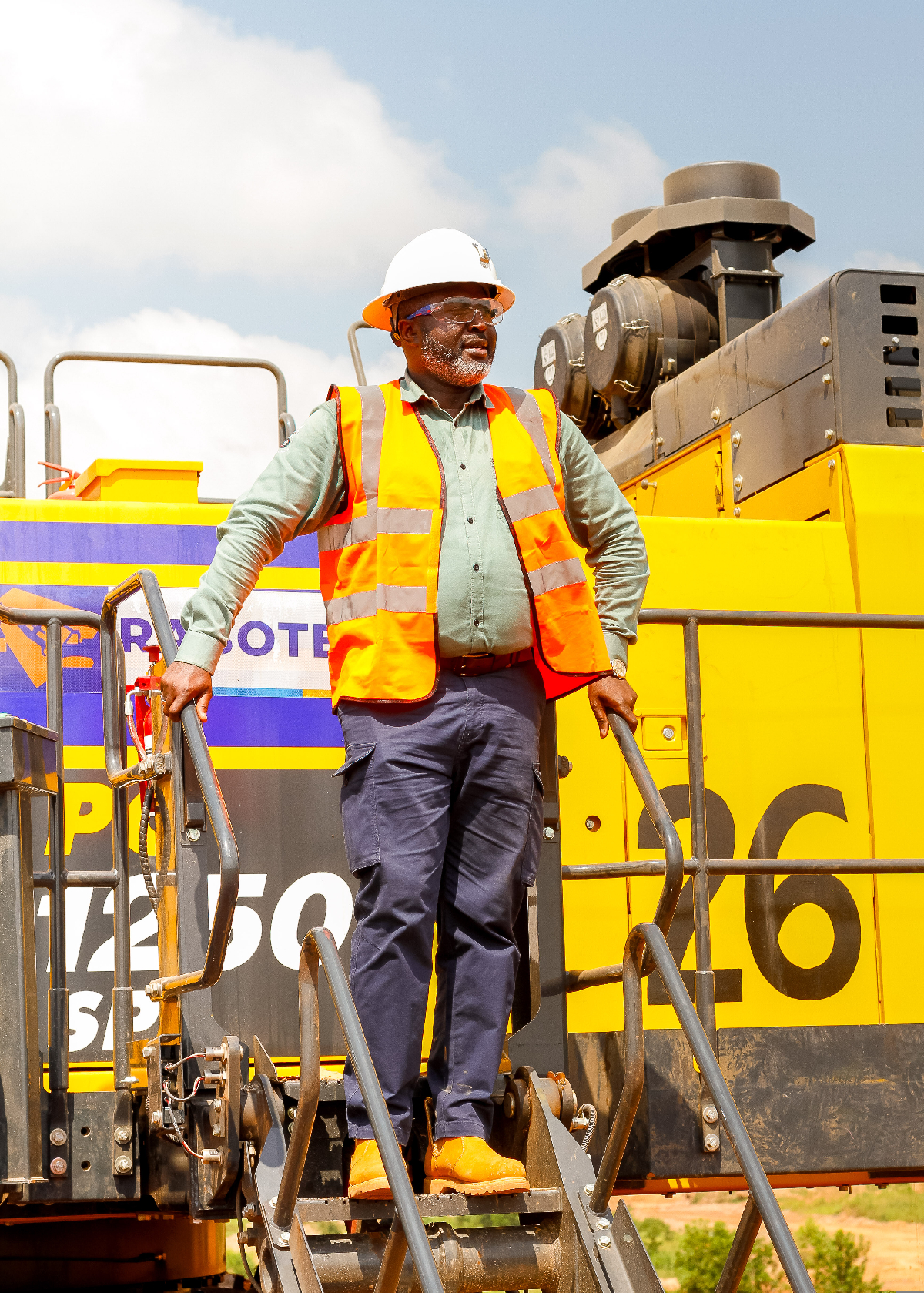
“TSF construction is one of our strongest areas. We have built most of the large-scale tailings storage facilities in Ghana, and we have also delivered major projects outside the country,” Ibrahim said.
He said every TSF is designed to meet regulatory requirements and undergoes periodic inspections by environmental and mining authorities.
From contractor to owner
Rabotec, founded in 2002, is now pursuing a longer-term ambition: owning and operating its own mines.
“My ambition is clear. Very soon, you will hear of Rabotec Mine. We are developing concessions in Ghana and other African countries, and we are working towards becoming mine owners,” Ibrahim said.
“Within the next five years, I want Rabotec to have a fully operational, Rabotec-owned gold mine. I want us to be mine owners and mine operators, not just contractors.”
He said Ghana’s policy encouraging mining companies to outsource operations to specialized contractors has helped indigenous firms scale.
“The government’s contract mining policy is one of the greatest advantages for companies like ours. It is helping us grow into a Tier One mining contractor,” he said.
Rabotec now employs more than 5,000 people directly and 15,000 indirectly across its operations, according to Ibrahim. The company says it prioritizes local hiring and training.
“Every country we enter, I try to minimize the number of expatriates because we want to develop the local workforce. My focus has always been developing people,” he said.
Ibrahim added that he has personally trained and mentored more than 300 employees who entered mining with no prior experience.
Navigating setbacks and regulation
The expansion has not been without challenges. Ibrahim said one Rabotec site was attacked this year by unidentified individuals who set fire to equipment worth nearly $13 million.
“We were hit by a calamity. Some unknown people attacked one of our operational sites and burnt equipment worth almost $30 million. But we have overcome it and moved on,” he said.
Other hurdles include volatile exchange rates, community disputes and evolving local-content regulations.
“Most countries in the sub-region are adopting Ghana’s localisation policies. We comply with local content requirements everywhere we operate, but the changing regulations remain a challenge,” he said.
Rabotec has obtained ISO certification and is exploring what Ibrahim called “green mining technologies” to align with global ESG standards.
Call for mining innovation
Beyond operations, Ibrahim is pushing for Ghana to export mining technology, not just minerals.
“My biggest focus is not just to say Ghana is the heart of mining in Africa. We should be able to develop a system that other nations and continents will come here to pay for because it was created by Ghanaians,” he said.
Citing industry data, he said Ghana still holds mineral resources estimated at nearly three times what has been extracted over the past century.
“We have over 300 years of mineral resources ahead of us. It is time for Ghana to create mining systems that the world will come here to buy,” he said.
He also urged greater support for indigenous businesses.
“The biggest challenge is not finance. It is Ghanaians believing in Ghanaians,” Ibrahim said.
Quiet CSR work
On philanthropy, Ibrahim said he deliberately keeps most charitable work out of the public eye. Initiatives include supporting hospitals and orphanages, flood relief, and a program to employ former inmates.
“Not everybody in prison is a criminal. Sometimes circumstances put people behind bars, and when they come out, they deserve another chance,” he said. “Some of them are working at my sites today as drivers, equipment operators and skilled artisans.”







Opinions