This blog is managed by the content creator and not GhanaWeb, its affiliates, or employees. Advertising on this blog requires a minimum of GH₵50 a week. Contact the blog owner with any queries.
Harry Graphic Blog of Tuesday, 16 December 2025
Source: Harry Graphic
What the 2026 Government of Ghana Budget Means for Gender Equality and Women Economic Empowerment
- Share:


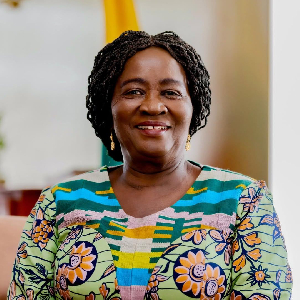
In Ghana, where women form 50.7% of the 34.1 million population, more than half under 25, gender equality is not just a moral imperative but an economic necessity. Yet, entrenched disparities persist. Women hold only 41 out of the 276, mere 14.9% of parliamentary seats, 17.4% of ministerial positions, only 4.1% were also elected as assembly members in 2023, and a mere 17.85% of paid employment opportunities.
The Mastercard Index of Women Entrepreneurs 2022 ranks Ghana third (after Uganda and Botswana) globally for women business ownership concentration at 37.2%, with women leading nearly four in ten enterprises. Despite this entrepreneurial density, a $42 billion continental gender financing gap leaves Ghanaian women entrepreneurs underserved, finding it more difficult to access credit due to perceived risks and collateral shortages. The 2026 Budget Statement and Economic Policy, presented by Finance Minister Dr. Cassiel Ato Forson on November 13, 2025, under the theme "Resetting for Growth, Jobs, and Economic Transformation," confronts these realities head-on. With a GH¢401 million injection into the Women’s Development Bank (WDB) (the largest single fiscal commitment to women-led enterprises) and embedding gender quotas into law, the budget's cornerstone for financial inclusion and targeted expansions in social cohesion projects, apprenticeships, and AfCFTA capacity-building, it charts a course toward women's economic empowerment and agency. However, against a 0.505 national gender index, highlighting a 0.338 economic parity deficit (0.662 economic index) and 0.197 empowerment and representation (voice and agency) score per the African Gender Index 2023, these commitments must move beyond rhetoric and dismantle structural barriers to deliver measurable gains and reshape women's roles as economic architects.
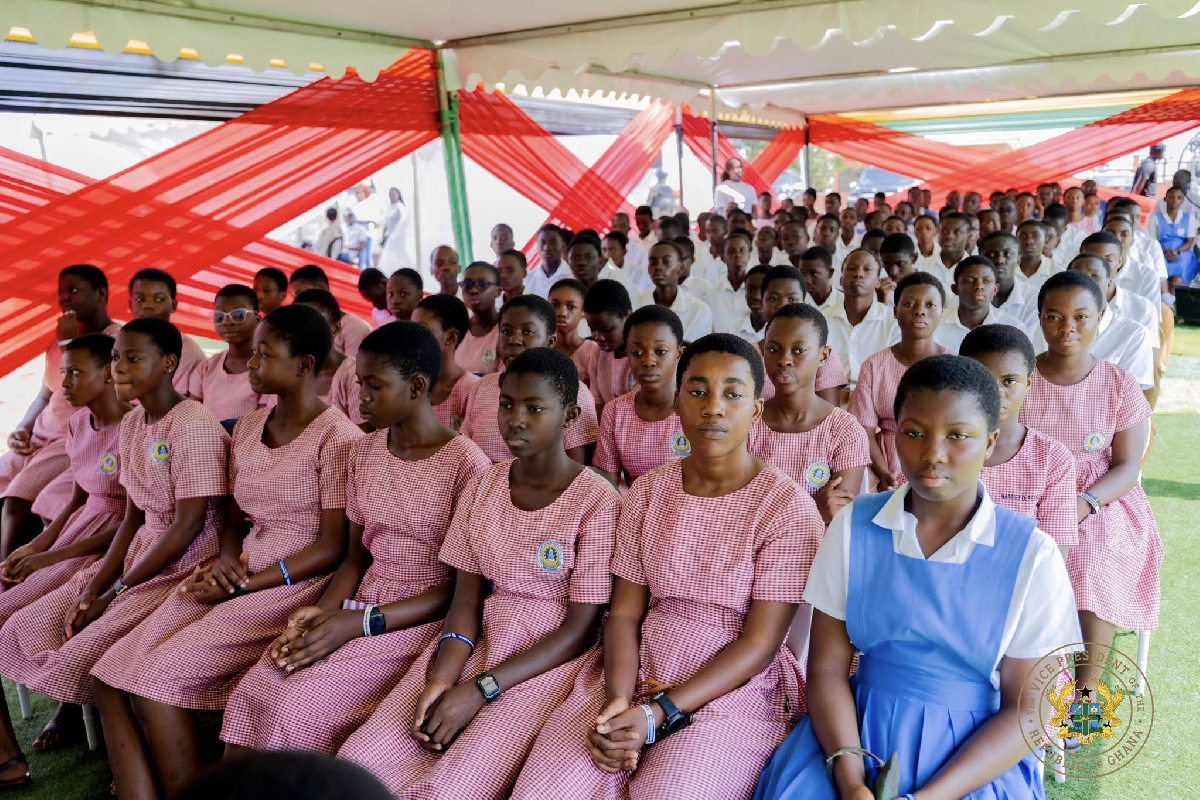
Ghana's gender realities paint a picture of untapped potential shadowed by systemic barriers. Labor force participation stands at 61.5% for women versus 64.6% for men for 2024, but 79.3% of employed women are mired in vulnerable roles as against (self-employment without contracts or benefits) compared to 56.9% of men for 2023. Agriculture, absorbing 52% of women workers, exemplifies this trap with only 15 to 30% of them being reached by agricultural extension programmes. According to the Ministry of Food and Agriculture (MoFA 2023), 30% men own land for agricultural purposes while women’s share is 8%. This land ownership discrepancies, gives men more access to and control of land for agricultural purposes. Usually after land acquisition, most men do the initial clearing and ploughing but leave the rest of farm activities like planting, weeding, maintenance, harvesting, and marketing of farm produce for women. Most women also work as unpaid labour on land owned by men. Women provide free labour for household chores without demanding wages for their labour, slashing productivity and trapping families in subsistence cycles.

Education edges toward parity, with 74.2% of girls completing lower secondary school in 2019 (versus 75.3% of boys), yet less than 20% of tertiary STEM-related academic discipline graduates are women, limiting entry into high-growth sectors as only 24% of tech roles are filled by women and fewer than 20% of tertiary education age females are enrolled in tertiary education, a condition that restricts women’s ability to seek better paying jobs and advance in their career. Health metrics compound the crisis: 234 maternal deaths per 100,000 live births in 2023, a 58.24% adolescent fertility rate (births per 1,000 women ages 15-19), and one in seven women (14%) aged 15-49 have experienced sexual violence and 33% of women age 15–49 have experienced physical violence since age 15, indicating prevalence of human right abuse in the country which requires stringent measures to address. Economically, firms with female ownership hover at 31.6%, while women's share of total employment lags at 17.85% (against 31.15% of men). These imbalances, rooted in patriarchal norms assigning 66.3% of household heads to men (as of 2008 data), yield a 0.662 economic index score stronger than empowerment but far from parity.
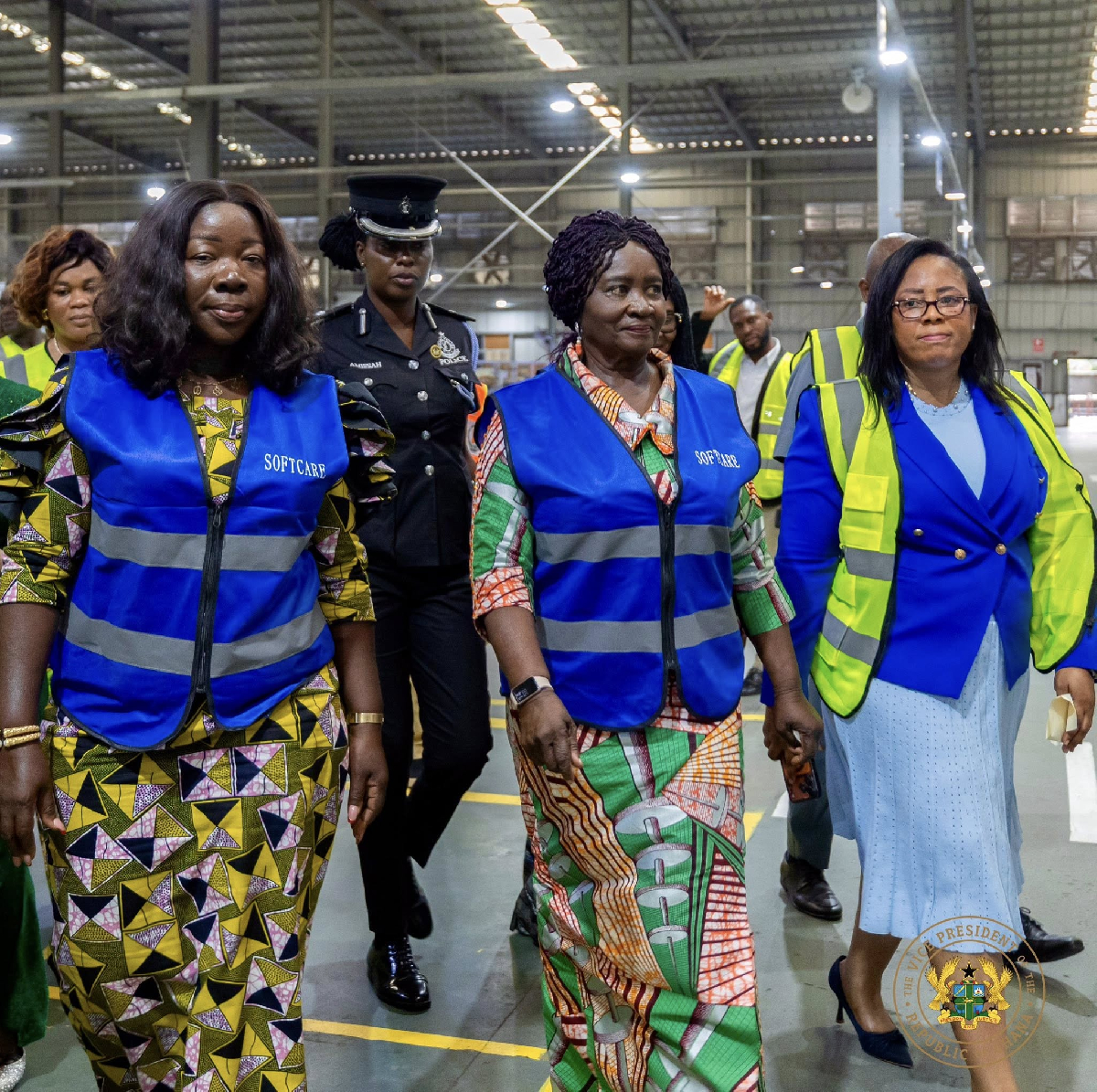
The budget's blueprint directly targets these fault lines, channelling resources into women's economic engines while fortifying social safeguards. At its heart lies the Women Development Bank (WDB), capitalized with GH¢401 million in fresh equity, the budget's boldest stroke for financial inclusion. This follows a GH¢51.3 million seed in 2025, addressing a continental $42 billion credit chasm that starves women entrepreneurs despite women leading 44.6% of micro, small, and medium enterprises (MSMEs) in Ghana and accounting for over 30% of business ownership, ranking the country third globally after Botswana and Uganda, women’s entrepreneurial activity continues to outpace that of men, according to the Mastercard Foundation Women Entrepreneurship Index (2022). Launching operations in early 2026, the WDB will deploy concessional loans at rates 2-3% below commercial benchmarks, tailored to MSMEs in agriculture, trade, and services sectors where women dominate but underperform, financial literacy on digital invoicing and bookkeeping, and advisory on value-chain integration across 16 regions. Rural branches in all 16 regions will prioritize informal operators, where 88.3% of women's jobs cluster, offering not just capital but bundled financial literacy and business advisory to navigate everything from bookkeeping to digital invoicing. Consider agriculture, employing 52% of women: the WDB will underwrite loans for climate-resilient inputs like drought-resistant seeds, equipment, and solar irrigation, countering the high rate of landlessness that blocks investment. Partnerships with rural banks and community lenders will extend reach to rural women farmers such as northern savannas, where women's shea butter processing exporting 130,000–150,000 metric tonnes, worth about $118 million but yields meagre profits due to poor aggregation.
Credit guarantees will slash collateral demands, drawing from Afreximbank's Affirmative Finance Action for Women in Africa (AFAWA) model, which empowered 400 Ghanaian women-led MSMEs via $20 million from the Green Climate Fund to Ecobank in 2023. By formalizing 80% of informal women-led firms, the WDB could elevate their paid employment share from 17.85% and inject GH¢1.2 billion (USD 100 million) into GDP through productivity leaps translating to 12% overall growth if scaled. Complementing this, the Microfinance and Small Loans Centre (MASLOC) advances enterprise tools, distributing GH¢159,276 in equipment to micro-entrepreneurs prioritizing women and youth and recovering GH¢8.5 million in loans to recycle capital. The Gulf of Guinea Northern Regions Social Cohesion (SOCO) Project exemplifies infrastructure's gender lens, completing 365 community assets like schools, health centres, rural roads, water systems creating 28,107 jobs, mainly for women, youth, and persons with disabilities. In 2026, 384 new subprojects, 138 ongoing completions, and grants to 690 Common Interest Groups plus 310 producer associations will sustain livelihoods, channelling 80% of GH¢8.9 billion District Assemblies Common Fund directly to local execution.
Apprenticeships and skills sharpen women's tools: GH¢170 million funds the National Apprenticeship Programme, training 5,910 youth emphasizing women in agriculture chains via the District Skills Roadshow. The GH¢100 million National Coders Programme and GH¢160 million 'Adwumawura' support digital upskilling, closing the 19.8% female STEM gap and enabling e-commerce for 65.3% informal traders. Aquaculture under Grow24 targets women cooperatives with fingerlings, cages, and feed, mirroring oil palm's National Policy (2026–2032): cultivating 100,000 hectares for 250,000 jobs, with a Smallholder Fund offering credit and training to women/youth, emulating Malaysia's inclusive models. AfCFTA integration accelerates: two regional dialogues in Central and Volta equipped women/youth MSMEs for export, with the National Coordination Office partnering Ghana Revenue Authority on Rules of Origin compliance. The Women in Trade, Agribusiness and Industry Programme bolsters cross-border access, formalizing informal chains where women dominate 80% of petty trade.
The National Employment Trust de-risks high-potential sectors for women/youth, while GH¢1.1 billion for LEAP shields vulnerable households—indexing to inflation against 52% value erosion since 2013.
This financial firepower dovetails with political levers to amplify women's voices. The budget commits to tabling the Affirmative Action (Gender Equity) Act's Legislative Instrument in Parliament in 2026, enforcing 30% female quotas in decision-making roles rising to parity by 2034. Public institutions must now earmark budgets for gender programs, directly funnelling WDB resources to MSMEs while mandating anti-discrimination recourse. This tackles the 0.197 empowerment score, where 14.6% parliamentary and 15.7% ministerial female shares reflect norms sidelining women from boards and cooperatives. The revised National Gender Policy Cabinet-approved in 2025 will embed gender desks in every ministry, auditing WDB disbursements and tracking MSME formalization rates. For women in trade, where 65.3% participate informally, this means streamlined registration via the Ghana Enterprises Agency, cutting fees by 50% for female applicants and integrating them into export pipelines under the African Continental Free Trade Area (AfCFTA). A National Sanitary Pad Policy promotes school equity, distributing 6.6 million sanitary packs to cut absenteeism, extending to senior high in 2026; ten girls' schools get ICT labs to bridge digital divides.
Economic empowerment isn't isolated from social anchors, the budget weaves in protections to safeguard women's gains. The Social Protection Act, 2025 (Act 1148) fully operationalized with its instrument by year-end expands LEAP cash transfers, indexing payments to inflation to reverse a 52% real value drop since 2013 and estimated to tafrget 400,000 households from the current 58,000 people. The Ministry of Gender, Children, and Social Protection sensitised 5,297 people on teenage pregnancy and gender-based violence, provided care to 237 children in correctional centres, and offered welfare services to 45 elderly persons and over 3,000 vulnerable citizens and, delivering trauma care to 135 trafficking survivors and awareness to 770 stakeholders. The revised Domestic Violence Policy fortifies this, mandating GBV risk screenings in WDB loans—ensuring a woman scaling her shea cooperative isn't derailed by abuse. The WDB must evade the Development Bank Ghana's fate pledging 10% women lending but delivering under 5% due to lax monitoring. Gender-disaggregated dashboards, mandated via MoGCSP, will track disbursements, targeting a 20% uptick in female MSME loans by 2027. Enforcement of the Affirmative Action instrument demands parliamentary muscle, countering delays like the stalled Wife Property Rights Bill.
In summary, the 2026 budget is a litmus test for Ghana's gender compact. GH¢401 million for the WDB could formalize 31.6% female-owned firms, spike their 17.85% employment share and fuel 8-12% GDP growth. Affirmative quotas may vault women to 30% leadership by 2026, while GBV safeguards protect fragile gains. But without ironclad enforcement via MoGCSP dashboards and parliamentary oversight these could evaporate like prior pledges. As 55.7% of Ghanaians are under 25, with women as half the equation, this isn't charity; it's calculus. The budget charts a course from exclusion to equity, but Parliament, the Government, MoGCSP, Ministry of Finance, and civil society must steer it home ensuring women's economic fire ignites a prosperous dawn for all.
The Writer: Julius Karl D. Fieve is an innovative Gender and Development Finance Expert over 12 years of experience driving impactful initiatives across Africa. He is also a rice farmer, cultivating over 200 acres of rice in the Central Tongu District of the Volta Region. Julius holds master’s degrees-an MSc in Africa and International Development from the University of Edinburgh, UK, an MSc in Economics and BSc. Actuarial Science, both from the Kwame Nkrumah University of Science and Technology (KNUST).