This blog is managed by the content creator and not GhanaWeb, its affiliates, or employees. Advertising on this blog requires a minimum of GH₵50 a week. Contact the blog owner with any queries.
GH Blinks Blog of Sunday, 1 February 2026
Source: Gh Blinks Atule Joseph Atanga
Unlocking Ghana’s “Green Gold”: Why the Nation Needs a Soybean Promotion Board
- Share:


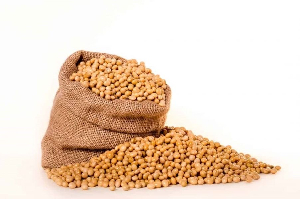
Ghana stands at a critical agricultural crossroads. Soybeans (Glycine max L. Merr.), long cultivated in Asia, were introduced into the Gold Coast during the colonial period, much like cocoa (Theobroma cacao L.). Over time, ecological realities shaped their adoption. Cocoa thrived among southern smallholder farmers where it integrated easily into traditional tree-crop systems, while soybeans proved more suitable for northern smallholder farmers within the extensive savanna agroecology.
The introduction of soybeans in northern Ghana was intended to complement staple food crops, serve as a potential cash crop, and improve soil fertility in nutrient-depleted savanna soils. Cocoa, by contrast, evolved into a national “political crop,” and with the establishment of the Ghana Cocoa Board, it became the backbone of Ghana’s economy, propelling the country to become the world’s second-largest cocoa producer after Côte d’Ivoire.
Soybeans, however, remain underdeveloped despite having comparable strategic potential.
Soybean: Ghana’s Emerging “Green Gold”
Soybean remains a relatively new and underutilized crop in Ghana—an emerging “green gold” with the capacity to revitalize the agricultural sector if given the same institutional focus once afforded to cocoa. Ghana currently produces about 300,000 to 350,000 metric tons of soybeans annually, far below the estimated national production potential of roughly 700,000 metric tons.
National demand, driven largely by livestock feed, aquaculture, and food processing, exceeds 600,000 metric tons per year—nearly double current production. This persistent supply gap forces Ghana to spend millions of dollars annually importing soybeans and soymeal, draining foreign exchange and exposing domestic industries to global price volatility.
To bridge this gap, Ghana needs a dedicated Soybean Promotion Board to build on the advocacy work of the Soya Value Chain Association of Ghana (SVCAG) and coordinate a national strategy for soybean development. This is no longer merely an option; it is a national economic necessity.
Powering Ghana’s Poultry and Aquaculture Industries
Soybeans are the primary protein source in animal feed formulations. Feed accounts for 60–70% of total livestock production costs, with soybeans and soymeal representing the dominant protein input. Ghana’s poultry industry, valued at over US$1 billion annually, and the rapidly expanding aquaculture sector are constrained by the high cost and unreliable supply of imported feed ingredients.
An effective Soybean Promotion Board would help ensure a stable and affordable supply of locally produced soybeans and soymeal. This would enable poultry, livestock, and fish producers to scale operations, reduce costs, and meet rising domestic demand. Currently, about 70–75% of Ghana’s soybeans are used for animal feed, making increased production essential for sustaining these industries.
Boosting Smallholder Wealth and Restoring Soil Health
Soybean is a transformative crop for smallholder farmers, particularly in the six northern regions that account for approximately 96% of Ghana’s soybean production. A Soybean Promotion Board could lead region-specific strategies to improve productivity, reduce costs, stabilize farm-gate prices, and strengthen market linkages, ensuring greater value retention for farmers.
When integrated into cereal-based systems, soybeans significantly diversify incomes. Studies across northern Ghana indicate that soybean adoption can raise smallholder household incomes by 30–70%, depending on yields, market access, and rotation practices.
Agronomically, soybeans offer major environmental benefits. Through nitrogen fixation, they add about 40–80 kilograms of nitrogen per hectare to the soil—roughly equivalent to two bags of urea—reducing reliance on expensive chemical fertilizers. Soybean rotations also suppress Striga hermonthica, a destructive parasitic weed common in northern cereal-growing areas, improving subsequent crop yields.
With the right institutional support, soybeans could become a major national cash crop—complementing and potentially rivaling cocoa—while reducing poverty among northern farmers.
Ghana’s Strategic Advantage in Non-GMO Soybeans
Ghana holds a unique competitive advantage as a producer of predominantly non-GMO soybeans. Although the National Biosafety Authority has approved certain genetically modified varieties, the country’s non-GMO soybean value chain remains a high-value strategic asset.
Certified non-GMO soybeans can attract price premiums of 10–20%, depending on buyer requirements. Ghana is well positioned to supply premium markets in the European Union, Japan, and the United States, where strict labeling laws and consumer preferences favor clean-label products such as tofu, soy milk, tempeh, and fermented foods.
Globally, over 90% of soybeans produced in major exporting countries like the United States and Brazil are genetically modified. This creates a niche opportunity for Ghana to supply identity-preserved, non-GMO, and deforestation-free soybeans. Traditional non-GMO varieties are also preferred for their superior flavor and texture, particularly for fermented foods such as dawadawa and emerging soy-based meat alternatives.
Demand for organic and GMO-free animal products is also growing. Non-GMO soymeal is essential for poultry and livestock products marketed under organic or GMO-free labels—a niche expanding in Ghana’s urban markets. A Soybean Promotion Board could support certification, enforce quality standards, and advocate predictable export policies.
Reducing Dependency on Proprietary Inputs
Traditional non-GMO soybean seeds are generally more affordable than proprietary GMO seeds that require annual licensing fees. They also align well with low-input and integrated pest management systems commonly used by smallholders.
By supporting balanced regulation and protecting traditional seed systems, a Soybean Promotion Board could reduce farmer dependency on costly proprietary inputs while promoting long-term soil health and resilience.
Addressing Malnutrition and Strengthening Food Security
Soybeans are rich in protein and essential amino acids, making them an affordable solution to protein-energy malnutrition, particularly in rural and low-income communities. A formal Soybean Promotion Board could facilitate the integration of soy-based foods into national nutrition programmes such as the Ghana School Feeding Programme.
Promoting local processing of fortified flours, oils, and complementary foods would improve diets, stimulate rural agro-processing, create jobs, and strengthen food system resilience.
Conclusion
A Soybean Promotion Board would provide the focused institutional framework needed to address systemic challenges in Ghana’s soybean sector, including limited access to improved seed, low mechanization, weak market coordination, and policy uncertainty.
By coordinating efforts among government agencies, the Ministry of Food and Agriculture, researchers, farmers, and private-sector stakeholders, Ghana can unlock the billion-dollar potential of its soybean economy across feed, food, and export markets.
Investing in soybean development is not merely an agricultural strategy—it is a pathway to economic justice for smallholder farmers, reduced import dependency, stronger livestock industries, and improved national food security.
About the Author
George Agana Awuni is an Assistant Research Professor at Mississippi State University. He holds a PhD in Life Sciences from Mississippi State University, an MSc in Plant Sciences from Tuskegee University, and a BSc in Natural Resources Management from Kwame Nkrumah University of Science and Technology.
Before pursuing further studies in the United States, he served three terms as an elected Assemblymember for Gowrie in the Bongo District Assembly. He previously worked with the Fisheries Commission in Ghana’s Upper East Region and has over 10 years of collaborative soybean research experience with the Savanna Agricultural Research Institute (SARI) through the Mississippi Agricultural and Forestry Experiment Station (MAFES).





Entertainment