This blog is managed by the content creator and not GhanaWeb, its affiliates, or employees. Advertising on this blog requires a minimum of GH₵50 a week. Contact the blog owner with any queries.
Ernest Senanu Dovlo Blog of Saturday, 6 December 2025
Source: Ernest Senanu Dovlo Dovlo
Photovoice study reveals hidden struggles of young women living with HIV in Lower Manya Krobo Municipality
- Share:


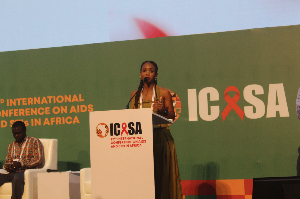
A new photovoice study has shed light on the often-overlooked daily experiences of young women living with HIV in the Lower Manya Krobo Municipality, revealing how stigma, poor infrastructure and financial barriers continue to shape their health outcomes.
Presenting her research at the 23rd International Conference on AIDS and Sexually Transmitted Infections in Africa (ICASA) in Accra, Ghanaian public health researcher, Miss Rachel Lawerh, said the participatory method gave young women the freedom to document the realities they face.
“Participants take pictures of things that have meaning for them and they use that to discuss what their life experiences are,” she explained.
“So it allows participants to be creative. It also allows them to highlight the stories that are important to them and it gives room for an exhibition where we have community leaders come in and look at these pictures and the challenges that the people have identified within their communities and they talk about how to solve them.”
The photographs and discussions revealed that stigma at home leaves many young women without support, forcing them to rely on hospitals and counselling points as safe spaces.
“Some of them mention that they are not able to disclose their status and get support from their families due to stigma but when it comes to the VCTs at the hospitals in their communities, they are able to talk to some of the hospital health workers who serve as a source of support for them,” Miss Lawerh noted.
The study also highlighted structural barriers that complicate access to treatment, including poor road networks and long travel times. “If you go to Lower Manya Krobo Municipality, where I come from, the roads are poor and that is also affecting someone’s ability to get to the hospital because they say they stand by the road side for hours. When it rains, it floods but they need to go to the hospital and they are unable to do that,” she said.
Miss Lawerh’s findings show that the lived experiences of young women extend far beyond medical treatment, pointing to deeper social and economic vulnerabilities. She emphasised the need not to view HIV “ from the lens of promiscuous behaviour.”
She called for stronger community-led initiatives to support affected young women, stressing that “community based organisations need to come together and see how best they can support these girls.”