This blog is managed by the content creator and not GhanaWeb, its affiliates, or employees. Advertising on this blog requires a minimum of GH₵50 a week. Contact the blog owner with any queries.
DC Kwame Kwakye Blog of Wednesday, 1 April 2026
Source: KWAME KWAKYE
UN Slavery Resolution: Ghana’s Call Or Not?
- Share:


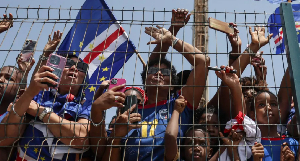
Last week, at the United Nations headquarters in New York, Ghana, championed by H.E. John Dramani Mahama and in support by the African Union (AU), led a charged referendum of a host of nations across the continents and geo-political zones of the world to demand reparations through a vote to declare the Trans-Atlantic Slave trade, a chattel endeavour that occurred and was sustained for several generations between the 15th and 19th centuries, the ‘gravest crime against humanity’. The move garnered 123 votes in favour of the notice to rapidly foster affirmative action to gain reparations and other justices including the return of looted ancient cultural artefacts. The US, Israel and Argentina voted in opposition to the declaration. Immediately, in the glory of what was supposed to be a landmark victory and ultimate defining moment for Ghana, thereby putting her in the fore of both regional and global affairs championing the cause of not only African countries affected by that slave trade but all of Africa altogether, Ghana’s big move at the UN was indeed met by a great degree of opposing backlash from individuals, communities and even agencies all over the world. This was most evident in the USA which was arguably the ultimate destination in that slave trade and has since forever been dealt arguably the most existence-altering blow of ruinous anomalies that constitute the destructive legacies of that slave trade which have survived a lifetime up until this very day – in terms of identity, politics, development and socio-economics. At home, the Ghana foreign delegation might have been lauded for their feat achieved, but abroad, it was and has been a whole different story – one of opposition. The opposition in this situation calls out Ghana for what is perceived to be an insidious move, conspiring in influence, to acquire reparations not rightfully due her – calling the nation a ‘tether’; others, even at home in Ghana, echo sentiments of Ghana having misplaced priorities at the expense of her own citizens in more immediate and dire predicaments; another school of thought opines Ghana has no place in such conversations of reparations for the sake of that ruinous slave trade due to her own complicity in it. Since that day at the UN, celebrations for Ghana’s feat have somewhat being cut short due to the world, especially on social media, has become but one big melting pot of ideas and sentiments. In this conversation, sentiments in opposition question if it is really Ghana’s call to make or not, or if it is one made in misplaced priority her misplaced in priority.
It is most understandable why Ghana would have made the move it made at the UN last week. For decades now, especially in this past one, Ghana, for her relative peaceful nature and history, for the most part, tied with her immaculate flora and fauna, has become the ultimate go-to destination for tourists – especially those from the African diaspora seeking a great, strong sense of psychological, emotional and even spiritual closure due to the plights of their forebears taken to the Americas and elsewhere as slaves. This sub-cultural trend had its place cemented in stone in the wake of the ‘Year of Return’ initiative in 2019 and raked in an exponential scale of revenue for our dear nation. Obviously, ever since, Ghana has been in the forefront of new narratives and initiatives to marry relations and discourses between indigenous Ghanaians, and even Africans in a broader spectrum, with the our brethren in the diaspora – especially across the Americas, and most noticeably, or at least stereotypically, in the USA. Undoubtedly, it can be argued then that Ghana’s actions and rhetoric at the UN last week was but all in good faith – a statement of goodwill – a pan-African solidarity and advocacy; a testament to Ghana and Africa’s resilience and boldness in the face of adversity in a global system that deals Ghana and Africa a card of dehumanization always. Unfortunately, it has only opened old wound of sentiments many diasporic Africans feel against Africa for what they claim is Africa’s complicity in the slave trade – a rhetoric that has lingered in the air and on social media for the past 5 years at least – one which is a foundational ideology of the self-professing movement of the FBA’s – Foundational Black Americans who see African and even Caribbean immigrants as ‘tethers’ – individuals who want to leverage the Black Americans’ fight for civil reforms and social justice, by the descendants of the same chattel slave trade in question, for their own undeserving benefits. These FBAs always sound an alarming call for indigenous Africans to take accountability for what their ancestors did to theirs, claiming the indigenous African was rightly and directly involved in the midst of this inhumane endeavour which is the Trans-Atlantic slave trade. Importantly, it is noteworthy that it is not only the so-called FBAs who think like this, but others, even Ghanaian and African indigenes as well as other people across the world of both African and non-African origin, share in the same sentiments, thoughts and opinions idiosyncratic of the FBAs. Let us play the devil’s advocate for a while – take a pause for a moment and take a ride in the seat of FBA ideology and sentiments of their sympathizers and see the matter at hand from their view.
The first view into this conversation is one into the rear mirror – in retrospect. The Trans-Atlantic chattel slave trade was not a magical conjuring of evil events perpetrated against humanity exclusively by the white man; it was a system, aided substantially in part, by blacks themselves whose own kindred and neighbours were sold as mere items – bare commodities – for profit. The white man did not act alone but in collaboration with the blacks (most mercenaries and non-warring dissidents alike) who did the white man’s bidding acting as middle-men in that trade through other barter trades, raids, sieges and conflicts acquiring persons for sale. In other cases too, it were chiefs, kings and other free persons who sold other free and enslaved people to the slavers in substantial and mass numbers, than sometimes necessary to the white man to greedily maximize commercial profits and rake in exponential revenue for their respective states, as it has been discovered in the cases of ancient Dahomey, Oyo and Ife in today’s South-eastern Benin and South-western Nigeria collectively nicknamed the ‘slave coast’ in those times. All this was, even then, a clear compromise of their won principles of community and dignity at the expense of their own stainless legacies today. Other times, these leaders and other free people did sell their own people to the warfare-sophisticated whites on their side in conflicts or opposing discourses in exchange for protection which led to the constitution of protectorates in the decades to follow. To these notions, it may be counter-argued that even though slavery systems existed long before the coming of the white man, blacks did not enslave their own kindred or neighbours in the same dehumanizing ways as the trans-atlantic slave trade. This counter-sentiment notwithstanding, the same principles prevail and there is no room for excuses, measurements or critical justifications: slavery is slavery and indigenous African can and shall be held accountable. This is relevantly so especially if a pan-African spirit of solidarity and identity should hold any water across the Atlantic. Despite nuanced genealogical origins and modern-day ethnic stratifications, we are all, at the end of the day, one people. What further compounds this whole issue of the indigenous Africans’ complicity in the trans-atlantic slave trade is what is perceived to be their little to no resistance whatsoever offered against the slavers or the ways by which this particular slave trade was perpetuated via diplomacy in the coastal areas unlike it was comparatively in the hinterlands. For instance, in the case of what is today Ghana, it is widely-criticized that the Bond of 1844 signed between the British and a unified Fante consortium of leaders meant to give Fantes protection against a perceived Asante imperialist hegemony was all a front to allow the British and Fante leaders an illegal way to continue profiteering from the slave trade amongst other avenues all in the name of commerce and diplomacy since the British legally abolished all forms of slavery across its empire a decade earlier. It is noteworthy that this perceived little to no resistance against the whites in the coastal areas unlike in the hinterlands gave life to colonization well into the 1880s where in 1884, Africa was partitioned into parts by colonial powers which is a landmark event triggering the ‘scramble for Africa’ and altering the course of the destinies of her people, home and abroad, beyond seeming repair and complete reunion. In 1900, the Yaa Asantewaa broke out with Asante royalty members captured and exiled whereas around the same time in the coast areas like Dixcove, Prestea, Shama, Sekondi-Takoradi, Elmina, Cape Coast, Winneba, Osu, Ada, Keta, etc, churches and schools and other institutions were built to calm the conscience of colonialists keeping these places relatively peaceful. With all these references, one can not help but wonder why forces in the coastal areas and hinterland never unified to curb this slave trade but rather benefited from it on their own respective terms. This is complicity and for that reason, it is not Ghana’s place to ask for reparations.
Moreover, skeptics in this matter, both home and abroad, wonder how Ghana is indeed going to practically manifest the acquisition of the reparations in question. They wonder what institutions and agents are involved in all of this. They wonder what the duration to get the reparations will be and what feasible policies will be formulated and implemented to achieve that end. The ultimate question is regarding who exactly, and by what authentic or due rights or claims, will get the reparations – they wonder if it will be persons and/or households in Africa or elsewhere or both. In that light, the main concerns thereof will be by what standards/measures will the Ghana government make sure of who gets what. It is a thin line between advocacy and falling out of place and touch with the same group of people in a humanitarian cause you intend to champion on their very behalf. Another concern is whether or not Ghana seeks to get the reparations alone or if Ghana’s attained reparations will be a precedent for other nations to fight for theirs. Sceptics argue that Ghana will stand a better chance of actualizing reparations if it would have rather tabled the issue before the UN in a unified alliance with counterpart foreign delegations from every country that lost its people to the Trans-Atlantic Slave Trade. These are the same countries that lost a greater proportion of its people to the trade, due to having a greater land area, than Ghana did. In this regard, these countries even hold a greater moral right to seek reparations than Ghana does, in the first place – for instance, Mali, Burkina, Nigeria, Cameroon, Angola and DR Congo. Skeptics further argue countries with actual descendants of the trans-atlantic slave trade who still remain substantially marginalized and impoverished, most notably the USA and Brazil, bear the ultimate moral right to ask for reparations, not delegated people from countries deemed complicit in that history.
Furthermore, the UN already declared the Trans-Atlantic slave trade as a ‘crime against humanity’ in 2001 and it adds that it should have always been seen as such. Undoubtedly, now in 2026, there should have been substantial development, visible and sustainable, as one would expect. Ghana’s UN move is nothing short of the grandest display of goodwill by a nation steadfast in its development with a point to prove as an exemplary international actor diligent in her efforts and preparations to take centre-stage in the grand play of global politics. This feat notwithstanding comes at a time where sentiments back at home still remain volatile as there are barely bi-partisan strides to ride on the wake of the changing times and achieve development goals right at the closure of the first quarter of this new year. Most notably, out of all of Ghana’s pressing issues on home soil including the seemingly undying hydra-like monster which is galamsey, the issue of the inadequate beds in emergency cases at Korle-Bu Teaching Hospital stands out the most in most recent times. But as fate would have it, just a day or two after the UN resolution, the Ministry of Health donated beds to Korle-Bu Teaching Hospital – a claim that has since been clarified by Prof. Titus Beyuo, the Board Chair of the hospital in question, citing the beds were actually procured by the hospital before news of the donation by Health Minister, Kwabena Mintah Akandoh, hit the media. With this, one can not help but wonder if it is easier and cheaper to fly a foreign delegation to New York than it is to buy about 200 beds for an Accra hospital; herein lies the sentiment of Ghana having misplaced priorities with regards to the UN resolution, especially when the UN had already given a similar resolution in 2001. For this, many deem Ghana’s UN move a waste of time, effort and resources at the expense of the welfare of the indigenous citizenry.
Looking on forward navigating the many vicissitudes of life, it is indeed a huge cause of worry if, in 2026, sub-Saharan nations are still lobbying for support abroad decades after independence. It is strongly held a sentiment that Ghana’s reparations movement simply does not give her, and others she represent, a good look amongst their peers. It is indirectly a statement of admission, on Ghana’s part, that she is and will forever be at the mercy of others, especially those branded as her former oppressors right at the table of nations who feed indirectly and directly from Ghana and Africa’s plate. These are the same so-called ‘white’ countries that are controversially viewed, by themselves as well as others, as are her metaphorical saviours forever reinforcing a mentality and cultural trend that the African can not handle her affairs brilliantly to achieve an actual feasible, visible and sustainable development. God forbid we continue blaming the white man for our woes owing to the long-standing legacies of this trans-atlantic slave trade. It is a sentiment of shame to realize Ghana and even a number of other African countries have had political independence longer than many diasporic African-related peoples, who are deemed rightful heirs to reparatory fortunes and other support and justice, have had civil rights and feasible social reforms and justice for the sake of dignity and humanity – most especially black Americans who disapprove of this Ghana UN resolution the most due to the fact that they are arguably the set of people who have suffered the ramifications of this slave trade the most of all the modern descended peoples of the colloquial ‘New World’. It is most depressing to think Ghana and Africa is still stunted in terms of growth and the sustainability thereof in discourses of global development. It is a greater shame and source of uncomfortable truth to realize almost every race or civilization of people throughout the history of mankind have been enslaved in one way of the other. Most notably is the Trans-Saharan slave trade which predates its successor, the Trans-Atlantic slave trade, and displaced people from their origins just like the latter did. The former did also claim more quantifiable casualties significantly than the trans-atlantic slave trade did. Imagine if all these peoples and their modern-day nations sought reparations: for sure, nobody will be able to account for the practicality of such a paradigm should it come into existence. Imagine south-eastern Europeans in the Balkans, other Mediterranean peoples and people from the Levant holding Italy responsible for the sins of ancient Rome. Imagine people in the British Isles and France asking for reparations from Italy for the same ancient Roman Empire’s atrocities. Imagine the same British people, French people, Germans and some Russians asking for reparations from the Scandinavian monarchies of today for what ancient Norse people and Vikings did to them. Imagine indigenous peoples across North Africa, Western and Central Asia and even on the eastern and north-eastern coast of Africa ask for reparations from Saudi Arabia and other wealthy nations across the Arabian Peninsula. Imagine some Syrians asking for reparations from Turkey and Iraq and vice-versa. Imagine the peoples of the sub-Indian continent in southern Asia ask the British monarchy. Imagine China, some Russians, people in western Asia and parts of the Middle East ask for reparations from Mongolia. Perhaps North Africans and Levantine people (especially Turkey) owe Spain, Greece, Italy reparations too. Perhaps Turkey owes Greece and other Balkan states reparations. Perhaps China owes reparations to Koreans, the Japanese and other people in Western Asia and across the Orient; the Japanese as well owes reparations to other south-east Asians. Imagine Filipinos ask Spain for reparations. Imagine both British and French people ask the other for reparations due to their shared history of conflicts internally and externally; as well as Spanish and Portuguese people asking the other for reparations in the Iberian Peninsula. Imagine West Africans in the Sahel asking North African nations for reparations. Perhaps Sudan is owed reparations by Egypt or Greek-descended people owed reparations by Iran for ancient Persia’s dealings. It is needless to mention people in the Americas today being owed reparations by Italy, Spain and Portugal. Indigenous peoples across the Americas too are owed reparations by Mexico, Colombia, Venezuela and Peru in the same regard. Let us not forget indigenous peoples across the Pacific, in Micronesia, Oceania and Australasia and their reparations due them from the US and UK governments. Lastly, imagine how Israelis and Jews elsewhere feel about Arabs and Nazi and if they decided to ask Egypt, Saudi Arabia, Syria, Turkey, Iraq, Iran and Germany for the atrocities against their ancestors and most significantly the Holocaust of the most recent past century. If reparations were to be paid to everyone, it shall be another lifetime of a vast transfer of wealth back and forth across the oceans and continents of our planet and holds the potentiality of not being fair or equitable for all persons eligible and involved. Besides, a nation’s colonial or enslavement history is no excuse for its developmental woes in today’s modern world as many formerly enslaved/colonized country have moved on and done well for themselves. Ghana should be no exception.
It should be a great wonder to the mind that many other fellow African countries have not asked for reparations and it remains the 8th wonder of our modern world why Ghana has since positioned itself so in this issue. Ironically, should anyone be paid reparations, it shall be descendants of slaves across the Americas today by the government of the same countries that were evidently complicit in the trade and profited from it one way or the other across the Western and South-western coasts of Africa and even in the interior central parts of the continent – notably Senegal, Guinea, Burkina Faso, Niger, Nigeria, Benin, Mali, Cameroon, DR Congo, our dear Ghana, amongst others. In today’s geo-political and global socio-economic climate and power-play, if any concrete institution is to be held accountable to pay reparations, then it must be the Catholic and Anglican churches as well as other religious institutions who all had the ear of the leading leaders and powerful entities of the world during the Trans-Atlantic slave trade. These religious entities, via the various orders and missions who carried out questionable ulterior motives under the guise of evangelism and conversion, were perhaps even more powerful than the monarchies and other powers of Medieval and Renaissance Europe when all the atrocities of the Trans-atlantic slave trade transpired. They were both actively and passively counsels and practical partners to the founders and financiers of the endeavours that birthed this slave trade starting from expeditions to obtain a range of commodities for consumption and industrialization. The Catholic church, the Anglican church and other Christian-oriented organizations had their fair share of peddling faith and that chattel business for their own material gain – this is evident today in the chapels, cathedrals, and other places of worship that are found in former slave trade establishments that have survived today in many nations – for example in Elmina, Cape Coast, etc. For the sake of its inherent creed and indoctrination of peace, love and fairness for all humanity, these religious institutions could have used their influence at the very early stages of this slave trade to quell it once and for all, but rather turned their eye away from the plights of mere human beings. Religious institutions, other clergy personalities and politicians only influenced lawmakers to abolish the slave trade almost 4 centuries later after its inception some two centuries ago. Given the positions of these religious entities in the world today, with their heritage of wealth and influence, it can be argued strongly they owe people and nations reparations today – same people and nations that follow in their doctrine and creed ironically.
In the wake of Ghana’s UN resolution, people now wonder what is so peculiar about the black man always seemingly begging and playing the victim in the same scenarios others have emerged from stronger and better. The opposition to Ghana’s move at the UN here on home soil is embodied by the stance of Afenyo-Markin, the minority leader of the Ghana Parliament whose sentiments on the issue echo distrust and disaaproval. He represents a substantial, albeit minority, public sentiment that dismisses the UN resolution citing indigenous participation in the slave trade. Notably, Israel, the US, which ironically houses the UN HQ and Argentina all opposed the resolution with the US practically arguing the UN resolution is a far-cry from its primary mission and vision for establishment. In other words, the UN is an establishment to secure and sustain peace in the world and not serve reminders of an ugly past in creating and stratifying atrocities, according to history, which might very well undermine other peace’s sense of dignity and humanity just to promote that of others. Besides, for the US, the trade was not illegal at the time. The US adds that the rhetoric of the resolution’s plans was not simple and precise to be adequately comprehended in a thoroughly legal context. Israel voted in opposition on the grounds that the Holocaust is a more grave crime against humanity than the Trans-Atlantic slave trade. However, the numbers show about 3 times the casualties of Jewish death in the 20th century was recorded in the Trans-atlantic slave trade or perhaps exponentially more. As for Argentina, they share the same ideas as Israel and the US on the issue. Ironically, a move that was supposed to champion the cause of a trans-Atlantic relations and a unified front for a more humane world in the course of history – to bring us all together – rather puts everyone more asunder. Celebrations seemingly have since been cut short as sentiments flare up and fly all over the place regarding this conversation. Kudos to the Ghana MFA for a tremendous feat achieved. It is a question left unanswered whether or not this is Ghana’s fight in this way in the first place, in the right way or ever at all. Whatever a school of thought one may belong to in this matter, one thing is most ultimately evident. The truth is slavery still exists to this very day in many under-represented and undocumented ways. The Trans-atlantic Slave trade was no new slaves-based venture, but it is unequivocally the most horrific case of dehumanization in most recent memory in our shared history which has been arguably the most documented, discussed and reference than any other instance in history which witnessed human enslavement or any other form of grave atrocity dealt humanity. The Trans-Atlantic slave trade’s legacies remain in the world today in almost-equal proportions and ramifications for the world. Unfortunately, the many reports on slavery today are seemingly one big conspiracy theory. The Ghana MFA in conjunction with the presidency have strongly assured the public of concrete steps to be taken in order to ensure this resolution’s implementation manifests as soon as possible. In good faith already in the wake of all this, a Dutch agency has since reach out to Ghana with a stern promise to return some previously-looted ancient artefacts, as disclosed by Honourable Dr. Ekwow Spio-Garbrah, Ghana’s Special Envoy for Reparations. Evidently, everything is fast in motion and the future holds a greater deal of promise for us as Ghanaians and Africans. Still yet, this UN resolution event should open and leave open a very important conversation regarding how we view the past, the lessons to be learnt from it, especially in the case of the struggles other nations have face; and the way forward. It is no time to be cynical nor solicit help as eternal victims, but to be strong with heads held high. It is time to be introspective, retrospective and put many layers of the opinions regarding the issue of reparations at hand all into perspective for the sake of the feasibility of our prosperity and development’s sustainability. The world watches on. God bless our homeland, Ghana.
By Solomon Boateng, Creative Artist, Tutor, Writer and Freelance Researcher