This blog is managed by the content creator and not GhanaWeb, its affiliates, or employees. Advertising on this blog requires a minimum of GH₵50 a week. Contact the blog owner with any queries.
DC Kwame Kwakye Blog of Tuesday, 30 September 2025
Source: KWAME KWAKYE
Pragya Summit: reorganize association into smaller groups for easy supervision and accountability purposes - Dr. Kwamena Minta Nyarku
- Share:


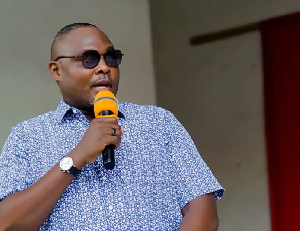
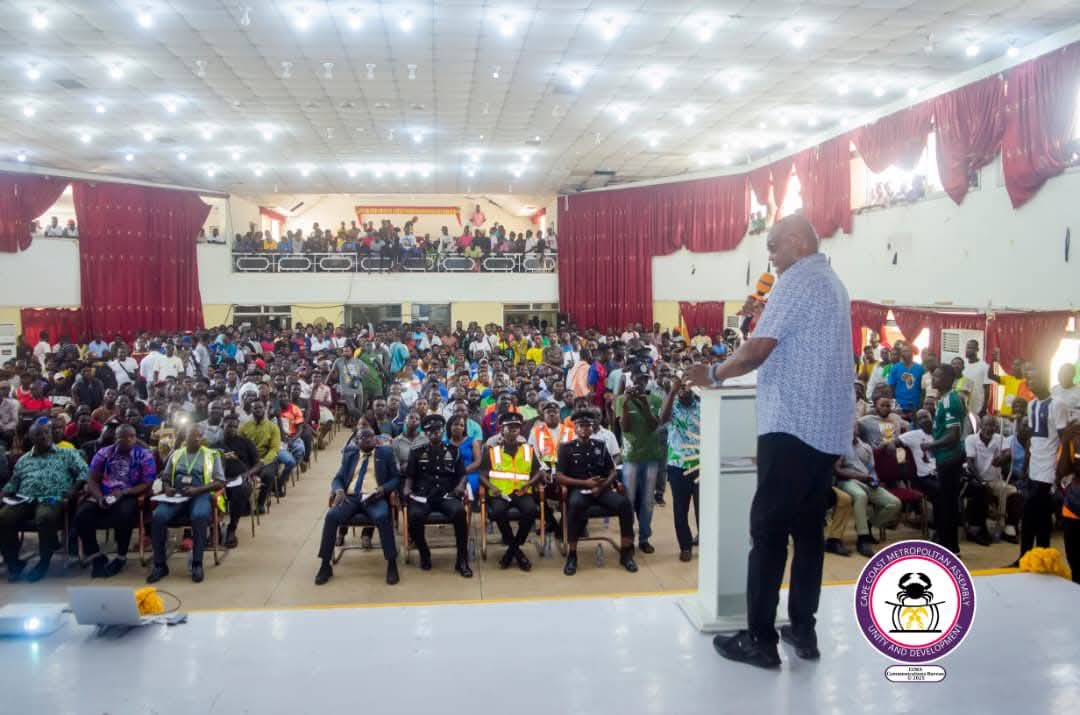
Cape Coast - In an effort to optimize the operations of tricycle riders, commonly referred to as 'Pragya', within the historic city, the Cape Coast Metropolitan Assembly, in conjunction with the Members of Parliament for both Cape Coast North and South, hosted a day-long summit, urging all riders to comply with road regulations, while considering the needs of pedestrians and other road users.
Aims of Summit
The Summit held at the Centre For National Culture in Cape Coast, on Tuesday, September 30, 2025 aimed to address the challenges the riders face during their work and also highlighted some recklessness exhibited by some riders posing a danger to themselves, pedestrians, and commuters. It also sought to encourage riders to adhere to the new regulations to smoothen their operations within the metropolis.
Supervision and Management of Riders
On effective supervision of the riders, the Member of Parliament for Cape Coast North, Dr. Kwamena Minta Nyarku, affectionately called Ragga, suggested three ways to ensure the smooth running and supervision of riders within the metropolis.

Firstly, he observed that to facilitate effective management of the Pragya Association within Cape Coast, it was essential for the association's leaders to decentralize power into smaller station-based units. Thus, for instance, riders operating on the Abura to Bonkus routes should constitute one group, and Abura to Akotokyir into another group, in that order. This, in his opinion, would enhance supervision and facilitate the tracking of their activities should any adverse incidents occur in a specific area.
To achieve this, all tricycles within a particular group should be given distinct numbers and stickers for easy identification.
Secondly, Ragga, while acknowledging the illegality of tricycle operations, suggested that their tolerance within the metropolis should not be taken for granted. He emphasized that it was imperative for the riders to comply with road traffic regulations to minimize accidents.
He stressed, "Though unemployment has gone down, road accidents have, unfortunately, gone up. I'm therefore appealing to all riders present to treat passengers with utmost care to safeguard their lives by preventing accidents," he stated.
Thirdly, he respectfully submitted to the Metropolitan Chief Executive Officer, George Justice Arthur, to explore new ways to allow riders to use the highway as a matter of urgency. He suggested the assembly compel riders to use reflectors to enhance visibility at night, all geared towards smoothing their operations.
He further recounted situations where at dawn one encounters some of these riders on the highway without lights and reflectors, challenging the association leaders to ensure that their members utilize reflectors.
Call for age reduction for riders
Regarding the age requirements for riders, he lamented the current situation, proposing that, in conjunction with his colleague, they are advocating for a review of the law that sets the riding age at 25 years. Currently, there is a review seeking to lower it to 21, but Ragga believes a further reduction of the minimum age required to operate commercial motor vehicles should be set at 18.
"If you want to marry, seek employment and enter the job market, one needs to be 18 years old; why is the minimum age for Pragya riders higher? Together with other colleagues, we're lobbying for a reduction of the age to 18 years", he emphasised.
Appeal to DVLA to Organize Training of Riders
To streamline the operations of riders going forward, training is requisite. Ragga appealed to the Driver and Vehicle Licensing Authority (DVLA) to coordinate training sessions for the riders, particularly on road signs and other road traffic regulations.
Clients Complaints and Appeal to Riders
The MP took the opportunity to appeal to all riders, especially those within the Cape Coast North Constituency, to treat University of Cape Coast students with utmost professionalism and respect. Respect is reciprocal, urging all riders to respect students, assuring them that if that happens, most of them would patronise Pragya far more than Uber and taxis.
"Treat your clients as kings and they will always give you jobs. Whatever can be done to make your work easy will be done, and you must equally do your part", stressed Ragga.
Uniforms for Pragya Riders
As part of the identification and improvement of visibility for the riders, the Cape Coast MCE, George Justice Arthur, assured the riders that the assembly would support and commit to improving urban transportation infrastructure.
He advised the riders to adhere to the new directives by wearing their uniforms and reflectors at all times. Furthermore, he encouraged all riders to ensure that their tricycles are registered with the DVLA. "Any pragya not registered with the DVLA would not be permitted on our roads", stressed the MCE.
Hon. Arthur further assured the riders of the steadfast support from President John Dramani Mahama, Cape Coast South MP Kwaku Ricketts-Hagan, and Cape Coast North MP Dr. Kwamena Minta Nyarku, provided they adhere to all rules and regulations as outlined.
Appreciation and Way Forward
The Secretary for the Pragya Riders Association, Kwaku Sam, took the opportunity to commend the assembly for engaging with them. He noted that, considering the number of employment opportunities Pragya has offered to the youth, he urged stakeholders to consider organising similar summits to enhance the riders' skills and find innovative ways to improve urban mobility with their inclusion.
He expressed gratitude to the elders for the opportunity to engage with them, pledging that the association's members would adhere to all they had been taught to ensure sustainable urban mobility.