This blog is managed by the content creator and not GhanaWeb, its affiliates, or employees. Advertising on this blog requires a minimum of GH₵50 a week. Contact the blog owner with any queries.
DC Kwame Kwakye Blog of Sunday, 31 August 2025
Source: KWAME KWAKYE
JOHN MAHAMA: The African Leader Who Knew When to Leave
- Share:


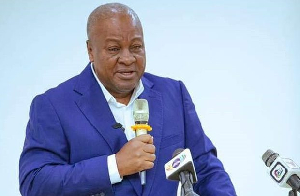
In a continent where power too often becomes a lifetime seat, John Dramani Mahama is proving that true leadership is also about knowing when to let go. His decision to step aside after his second term — without scheming for a third or rewriting the rules — sets him apart as a man who respects democracy, values his people, and understands the nobility of leaving when the applause is still ringing.
Mahama has made it clear: no third-term bid, no constitutional shortcuts, no backdoor deals. For a region where “sit-tight” politics has worn down nations, his words are a refreshing reminder that decency and democracy can still win.
A Young Leader Who Chose Democracy Over Power
Back in 2016, at just 58, Mahama accepted defeat and peacefully handed power to Nana Akufo-Addo, then 72. This was no small gesture. At the time, leaders in nearby Togo and Côte d’Ivoire were finding ways to stretch their stay in power. Mahama could have done the same. Instead, he respected the people’s will.
That choice revealed a lot about him. It showed that he was not driven by greed or ego, but by a genuine belief in Ghana’s democracy. It marked him out as a leader prepared to play by the rules, even when it hurt.
Falls, Movkery… And A Comeback
He didn’t disappear after leaving office. Mahama tried again in 2020, but the people said no. He was mocked by his rival Akufo-Addo, who told crowds in 2024 that he’d never hand over to a man he’d already beaten twice.
But Ghana had the final say. And in 2024, Mahama returned with a resounding victory , 57% of the vote and a two-thirds majority in Parliament. At 66, he proved that resilience and patience are also the marks of a true leader.
Now, as he calls this his final term, he’s made a promise: he will retire at 70. No clinging, no extension, no drama. Just service, then exit.
Standing Out In Africa
That promise matters when you look across Africa. He wants to retire at 70 — two years younger than Akufo-Addo was when he assumed office, and a year younger than Nigeria’s Bola Ahmed Tinubu when he became president. At the same time, Paul Biya of Cameroon is still clinging to power at 91. Teodoro Obiang of Equatorial Guinea has ruled since 1979. Côte d’Ivoire’s Alassane Ouattara is 82 and still in charge. Even Namibia’s newest president, Nangolo Mbumba, is 82.
By contrast, the continent’s youngest leaders, Burkina Faso’s Ibrahim Traoré (37) and Guinea’s Mamady Doumbouya (43), didn’t rise through the ballot box, but through military takeovers.
In a continent where the average president is 68 but the average citizen is 19, Mahama’s decision to step away feels like a breath of fresh air.
A Legacy Term With Results
Mahama’s return isn’t just symbolic. It’s practical. He inherited a battered economy, where the cedi was trading at 16 to the dollar and fuel prices were draining families at 16 cedis a litre. He’s pulled both back to 10, while dismantling policies that had hurt more than helped.
This isn’t just governance. It’s a repair. It’s restoration. And it’s the way Mahama wants to be remembered: not for clinging to power, but for using it well, then letting it go.
Leaving With The Cheers Still Loud
When Mahama bows out at 70, he will leave not as a man forced out, not as a leader rejected by his people, but as someone who chose the high road, who left while the applause was still shaking the walls.
That choice alone will carve his name into Ghana’s history. But more than that, it will place him among the rare African statesmen who understood that real power is not in how long you stay, but in how you leave.
By Charles McCarthy