This blog is managed by the content creator and not GhanaWeb, its affiliates, or employees. Advertising on this blog requires a minimum of GH₵50 a week. Contact the blog owner with any queries.
DC Kwame Kwakye Blog of Saturday, 23 August 2025
Source: KWAME KWAKYE
Galamsey Fight: We know what to do, we're only refusing to act rightly - Prof. Kofi Amankwa Afrifa
- Share:


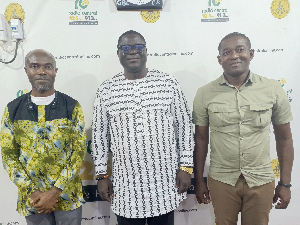
Prof. Ernest Kofi Amankwa Afrifa, the Environmental and Social Safeguards Officer for the Africa Centre of Excellence in Coastal Resilience at the University of Cape Coast, has stated emphatically that the fight against illegal mining can easily be won if the government decides to act rightly.
He emphasized that the government is aware of the necessary actions to take in order to win the fight against illegal activities.
In a panel discussion on GBC Radio Central's 'Centre Stage Show' on Saturday, August 23, 2025, and assessing the topic 'Towards Finding Lasting Solutions to Illegal Mining', he underscored that the over-politicization of issues surrounding illegal mining has been a significant impediment to resolving the issue, emphasizing that depoliticizing the problem is essential to making progress.
In outlining more reasons why the galamsey fight has become very daunting, the UCC Senior Lecturer noted that illegal mining has become a livelihood venture for most communities, becoming engrained in our culture, which has compounded the problem and contributed to the difficulty of the fight.
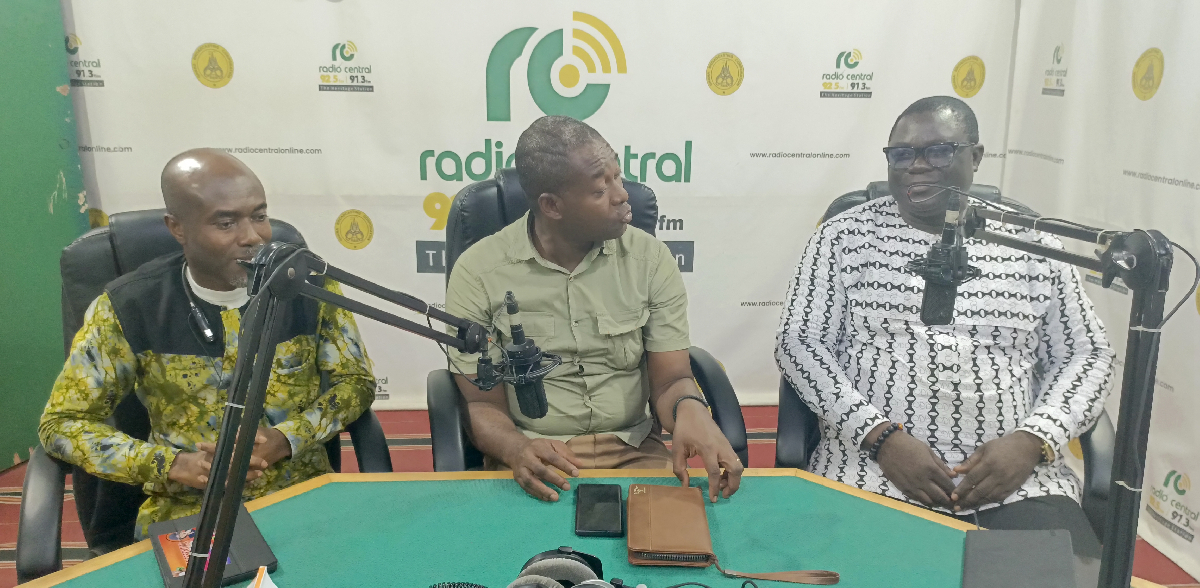
"Once it has become part of a people's culture, fighting it would be very difficult and we might not succeed in the fight", he stressed.
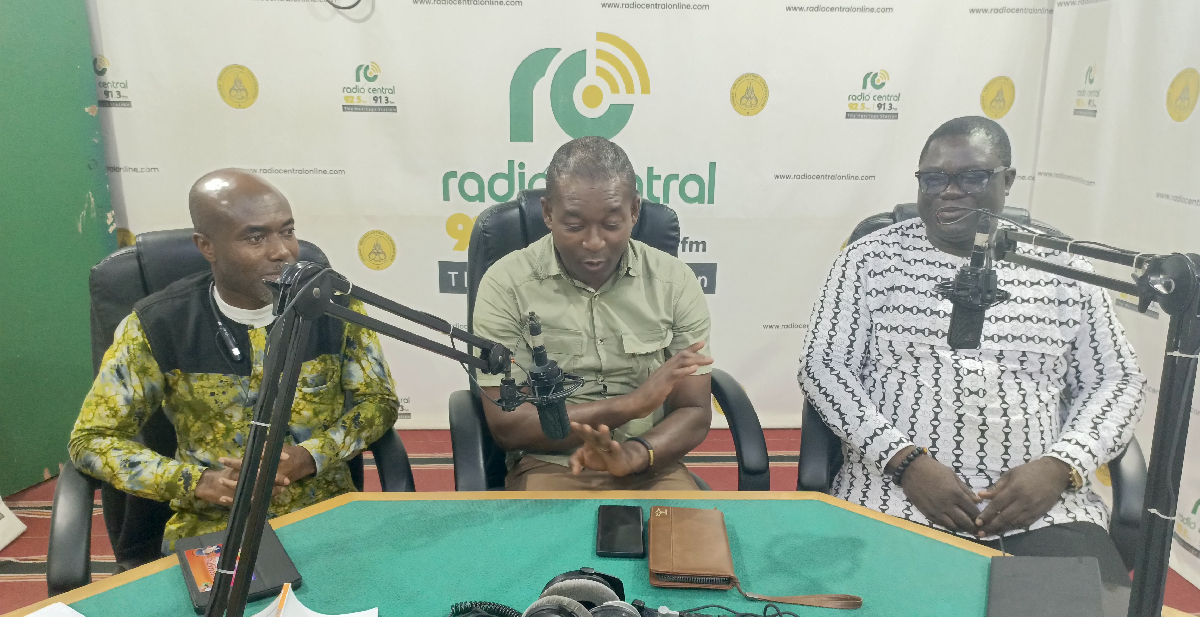
One cardinal sign that illustrates the complexity of illegal mining activities, according to Prof. Amankwa Afrifa, is the situation where citizens have been emboldened to threaten soldiers via social media, asserting that they are willing to match soldiers boot-to-boot, which epitomizes the highest mark of irresponsibility on the part of citizens towards our security.
"Soldiers are very revered in our society, and for persons involved in illegality to threaten them via social media is worrying. The less said about the police, the better", he submitted.
Emphasizing the effects of illegal activities on water resources and their subsequent consequences, Prof. Amankwa Afrifa stressed the importance of addressing the issue, noting that approximately 71% of the earth's surface is comprised of water, with saline water accounting for roughly 96%. The remaining 4% of water resources consist of freshwater, with a significant proportion accumulated around the world's ice caps.
"We don't have as much freshwater resources as most people think, to warrant jeopardizing the few we have on our land", he stressed.
Reiterating similar sentiments, Mr. Frank Tufuor of Advocacy Ghana, also a panel member, emphasized the importance of developing alternative livelihoods and creating job opportunities in communities affected by illegal mining to find lasting solutions to the issue. Furthermore, he advocated for the depoliticization of measures against illegal mining as the most effective tool in combating the problem.
Mr. Augustus Dontoh, a teacher at Nyankomase Ahenkro Senior High School, shared his perspectives and urged the Mahama government to tackle the galamsey issue with the necessary urgency. He posed a rhetorical question, inquiring what measures the country was taking to honour the memory of the 8 helicopter crash victims?
Furthermore, he stated that if meaningful measures are not taken to curb illegal mining activities, it will tarnish the government's image. He argued that the current government's stance is not encouraging, as it does not demonstrate a serious commitment to addressing illegal mining. In Dontoh's opinion, the political class is taking the citizenry for granted. "Politicians appear to be deceiving the public about their strategies for combating galamsey. This must cease," he emphasized.
Dontoh criticized the government's efforts to combat illegal mining activities, emphasizing the need for urgency, as demonstrated by the swift repeal of the betting tax and the fulfillment of the promise to govern with 60 ministers, yet struggled to comprehend why the government is failing to honour its commitment to addressing illegal mining.
"The urgency the government attached to repealing betting tax and appointing 60 ministers should be given to solving the illegal mining menace. If that isn't done, it would be a betrayal to the memory of our 8 fallen heroes", a visibly troubled teacher stated.
In their concluding remarks, all speakers unanimously agreed that the best approach for the government was to declare a State of Emergency in all mining areas, giving the government ample room to implement remedial measures aimed at rooting out the devastating illegal mining activities from our midst.