This blog is managed by the content creator and not GhanaWeb, its affiliates, or employees. Advertising on this blog requires a minimum of GH₵50 a week. Contact the blog owner with any queries.
Daniel Kaku Blog of Sunday, 3 May 2026
Source: Kaku Daniel
President John Mahama pledges to construct second gas processing plant in Ghana
- Share:


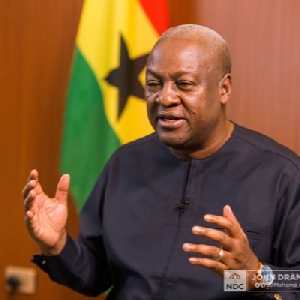
President John Dramani Mahama has pledged to construct a second gas processing plant to boost Ghana’s electricity generation capacity beyond 6,000 megawatts.
Speaking at the citizens engagement in Koforidua as part of his Eastern Region resetting tour, he explained that increasing gas supply makes the project necessary.
“Jubilee partners are investing $2 billion to bring in more gas, so we need to construct a second gas processing plant. We have also signed a contract with ENI, which is investing $1.5 billion to bring in more gas," the President said.
Referring to the existing Atuabo Gas Processing Plant, the President noted that incoming gas volumes will exceed its capacity.
“You know the Atuabo Gas Processing Plant, the gas we will receive will be more than its capacity. So we need to construct GPP2( Gas Processing Plant 2)to process the excess gas and supply it to electricity generating companies that rely on gas," he stated.
According to President John Mahama, the expansion will significantly strengthen the country's power generation capacity.
“With more gas than the existing plant can handle, when this is added to our current generation capacity, we could reach nearly 6,000 megawatts. That means for the next 10 to 15 years, even without building new plants, we should have enough electricity for Ghana,” he assured.
President Mahama also highlighted that Ghana’s improving economic outlook is driving higher electricity demand, making reliable and sustainable energy supply increasingly critical.
“We must look ahead and not wait for a crisis before acting, When we took office, consumption was about 3,500 megawatts. Now it has peaked at 4,300 megawatts, largely due to increased investment and economic activity.
"We need to improve generation and create redundancy. If we have enough power, we can even export more electricity to neighboring countries like Burkina Faso and Togo, which will earn us foreign exchange,” he concluded.