This blog is managed by the content creator and not GhanaWeb, its affiliates, or employees. Advertising on this blog requires a minimum of GH₵50 a week. Contact the blog owner with any queries.
Daniel Kaku Blog of Wednesday, 16 September 2026
Source: Kaku Daniel
Ghana Must Produce More, Not Just Trade More – Kwabena Nyantakyi
- Share:


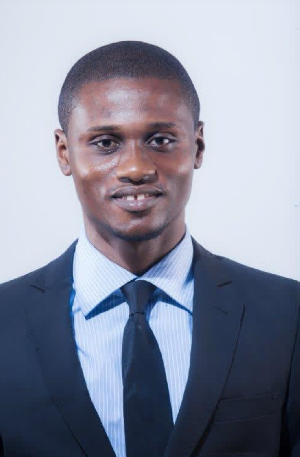
Social Analyst Kwabena Nyantakyi has urged Ghana to turn its growing number of global partnerships into tangible production, jobs and retained value, cautioning that an increase in partners does not automatically translate into development.
In a press statement issued on Monday, he said the 18th BRICS Summit in New Delhi on September 12-13, 2026 was relevant to Ghana despite the country having no formal seat at the table.
He stated that changes in global trade, finance and payment systems would affect the choices available to countries outside the bloc.
Nyantakyi indicated that BRICS, with 11 full members, now represented 49.5 percent of world population, 40 percent of global GDP and 26 percent of global trade, making it impossible to ignore. He however cautioned that aggregate size did not create a single treasury, a single foreign policy or a single industrial strategy.
He said there were practical openings for Ghana. According to him, the New Development Bank held a portfolio of $35.593 billion across 115 projects in 2025 covering clean energy, transport and digital infrastructure. He also cited reports from the BRICS Business Forum which showed that 90 percent of Russia's transactions with BRICS partners were now settled in national currencies, while 96 percent of Russia-India bilateral trade was conducted in roubles and rupees.
Nyantakyi warned against overstating de-dollarisation. He cited the Bank for International Settlements' 2025 Triennial Survey, which found that the US dollar was still on one side of 89.2 percent of global foreign-exchange trades in April 2025, compared to 8.5 percent for the renminbi.
He observed that two developments were occurring simultaneously, with the dollar remaining dominant in the wider system while BRICS was building alternatives incrementally in selected corridors.
The analyst said Ghana's fundamental challenge was production, not geopolitical alignment. He noted that while the World Bank reported growth of 6.0 percent in 2025, it projected a moderation to 4.8 percent in 2026, with Ghana Statistical Service data putting headline unemployment at 13.0 percent and youth unemployment at 21.9 percent.
He argued that every external partnership should therefore be assessed as a jobs question.
Nyantakyi stressed that Ghana must produce more and not just trade more. He urged government to demand answers from every investor on what would be produced in Ghana, which Ghanaian firms would enter the supply chain and what skills would be transferred.
He further stated that no lender, whether Western, BRICS-aligned, bilateral or private, should receive a political pass. He called for full disclosure of guarantees, collateral, take-or-pay clauses, foreign-exchange obligations and beneficial ownership.
He said Africa must remain Ghana's first platform. He urged government to leverage its hosting of the AfCFTA Secretariat in Accra and the Pan-African Payment and Settlement System (PAPSS) to reduce cross-border trade costs.
He cited World Bank data which showed that average import clearance in Ghana was about 14 days, compared to 5 days in Morocco and 7 in Vietnam, and that roads carried more than 95 percent of freight.
He also referenced the advocacy of the Africa Prosperity Network for continent-wide mobile-money interoperability, noting that African integration would become real when a business in Accra could buy, sell and settle across borders with less friction.
To enforce discipline, Nyantakyi proposed the establishment of a small Strategic Economic Partnerships Council that would score every major external deal on jobs, export earnings, technology transfer, local supplier development, environmental protection and financing cost.
He concluded that Ghana's independence in a multipolar world would not be measured by the number of summits attended or blocs joined, but by whether Ghanaian firms could produce more, sell more, retain more value and withstand external shocks.